people
Ashi Kesang Choden Wangchuck
Ashi Kesang Choden Wangchuck (born 21 May 1930) is the Gyalyum (Royal Grandmother) of Bhutan, widow of the Third Druk Gyalpo Jigme Dorji Wangchuck, mother of the Fourth King Jigme Singye Wangchuck, and paternal grandmother of the reigning Fifth King Jigme Khesar Namgyel Wangchuck. A daughter of the Dorji family of Bhutan and Sikkim, she has been a central figure in the Wangchuck dynasty for more than seven decades.
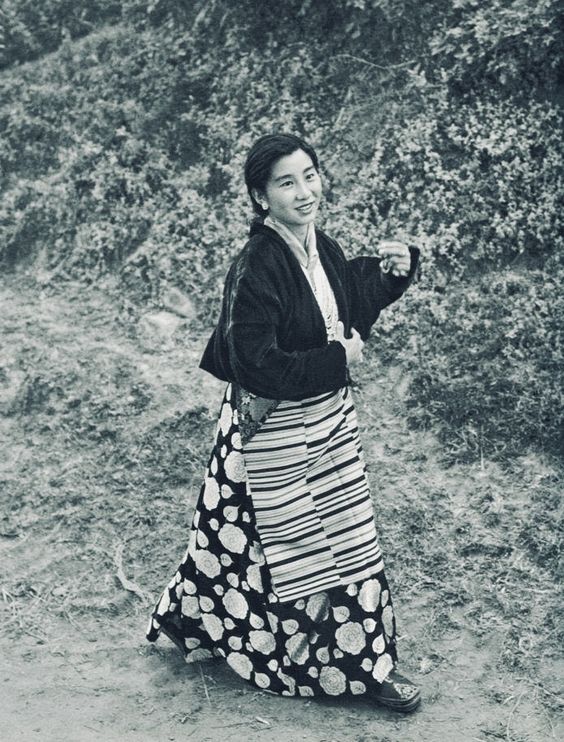
Ashi Kesang Choden Wangchuck (born 21 May 1930) is the Gyalyum, or Royal Grandmother, of Bhutan. She is the widow of the Third Druk Gyalpo, Jigme Dorji Wangchuck, whom she married on 5 October 1951, and the mother of the Fourth King, Jigme Singye Wangchuck. Since the abdication of her son in 2006, she has been the paternal grandmother of the reigning Fifth King, Jigme Khesar Namgyel Wangchuck.[1]
Born into the Dorji family, the dominant aristocratic lineage that supplied Bhutan's first generation of chief ministers, she is also the younger sister of the assassinated Prime Minister Jigme Palden Dorji. Her life has spanned the reigns of four Wangchuck kings and the transformation of Bhutan from an isolated Himalayan kingdom with no roads or currency into a constitutional democracy and member of the United Nations. At 95, she remains one of the most senior members of the royal family and a living link to the pre-modern kingdom.[2]
Full name: Ashi Kesang Choden Wangchuck (née Dorji)
Born: 21 May 1930, Bhutan House, Kalimpong, British India
House: Dorji (by birth), Wangchuck (by marriage)
Father: Raja Sonam Topgay Dorji (Gongzim)
Mother: Rani Mayum Choying Wangmo Dorji
Spouse: Jigme Dorji Wangchuck, Third King of Bhutan (m. 5 October 1951; d. 21 July 1972)
Children: Five — Ashi Sonam Choden, Ashi Dechen Wangmo, King Jigme Singye Wangchuck, Ashi Pema Lhaden, Ashi Kesang Wangmo
Title: Gyalyum (Royal Grandmother) of Bhutan
Family background
Kesang Choden was born on 21 May 1930 at Bhutan House in Kalimpong, a hill station in the Darjeeling district of British India that served as the Dorji family's base for Bhutan's trade, diplomacy and liaison with the outside world. Her father, Raja Sonam Topgay Dorji (1896–1953), served successive Wangchuck kings as Gongzim (Chief Chamberlain), Deb Zimpon and Trade Agent, and was the principal architect of Bhutan's early twentieth-century relationship with British India. He inherited these posts from his own father, Kazi Ugyen Dorji, who had advised Ugyen Wangchuck before and during his accession as the First King in 1907.[2]
Her mother, Rani Mayum Choying Wangmo, was a princess of the Sikkimese royal house, linking the Dorji family to the Namgyal dynasty of Sikkim and placing Kesang Choden within the wider network of eastern Himalayan Buddhist nobility. The couple had three sons and two daughters. Her eldest brother, Jigme Palden Dorji (born 1919), succeeded their father as Prime Minister of Bhutan in 1952 and was assassinated in Phuentsholing on 5 April 1964 — an event that remains one of the most serious political crises in modern Bhutanese history. Her elder sister, Ashi Tashi Dorji, later served as Gyaltshab (King's Representative) for Eastern Bhutan. Her younger brothers were Ugyen "Rimpoche" Dorji, recognised as a reincarnate lama, and Lhendup "Lenny" Dorji (born 1935), who briefly held the post of Acting Prime Minister in 1964 in the aftermath of his elder brother's assassination.[3]
Education
Unlike most Bhutanese girls of her generation, Kesang Choden received a formal Western-style education — a consequence of her family's cosmopolitan position in Kalimpong. She attended St Joseph's Convent in Kalimpong, a Catholic missionary school that educated many children of the eastern Himalayan elite, and subsequently enrolled at the House of Citizenship in London, a finishing institution for young women that operated in mid-twentieth-century England. This combination of Bhutanese, Indian and British schooling made her one of the most internationally educated Bhutanese women of her time and shaped her later role as a cultural interlocutor between Bhutan and the outside world.[1]
Marriage to Jigme Dorji Wangchuck
On 5 October 1951, Kesang Choden married Crown Prince Jigme Dorji Wangchuck at Ugyen Pelri Palace in Paro. Her husband acceded to the throne the following year, on the death of his father Jigme Wangchuck, the Second King, becoming the Third Druk Gyalpo. The marriage cemented the long-standing alliance between the Wangchuck and Dorji families — a tie so close that contemporaries, including the historian Michael Aris in The Raven Crown, observed it generated unease among rival Bhutanese families who felt excluded from the inner circle of power.[4]
The couple had five children:
- Ashi Sonam Choden Wangchuck (born 1953)
- Ashi Dechen Wangmo Wangchuck (born 1954)
- Jigme Singye Wangchuck, Fourth King of Bhutan (born 11 November 1955)
- Ashi Pema Lhaden Wangchuck (born 1959)
- Ashi Kesang Wangmo Wangchuck (born 1961)
The Third King is remembered as the "Father of Modern Bhutan." During his reign (1952–1972), serfdom and the last vestiges of slavery were abolished in 1958, the first motor road from Phuentsholing to Thimphu was built with Indian assistance, the National Assembly (Tshogdu) was established in 1953, the country joined the Colombo Plan in 1962, and Bhutan was admitted to the United Nations in 1971. Kesang Choden's public role during these years is modestly documented in the available literature. Bhutan had no court chronicler in the European sense, and she herself has not published a memoir. What is recorded is her consistent presence at state and religious ceremonies, her patronage of monastic institutions, and her role as hostess to the small number of foreign dignitaries who reached Bhutan during its cautious opening.
The 1964 crisis and Dorji family fortunes
The assassination of her elder brother Jigme Palden Dorji in Phuentsholing on 5 April 1964 was a personal and political rupture. The Prime Minister was shot while playing cards at the Bhutan House bungalow. A subsequent investigation implicated elements within the Royal Bhutan Army and, according to several accounts, exposed factional tensions between reformers associated with the Dorji family and conservative forces at court. An attempt on the Third King's life followed in July 1965. Kesang Choden's younger brother Lhendup Dorji briefly served as Acting Prime Minister but fell from favour later in 1964 and spent years in exile in Nepal before eventually returning. The events of 1964–65 reduced the direct political footprint of the Dorji family within the Bhutanese state, even as Kesang Choden's own position as queen consort remained secure.[5]
Accounts of the affair differ on detail and motive. Official Bhutanese sources have said relatively little publicly about the episode in subsequent decades. Independent historians, including Karma Phuntsho in The History of Bhutan (2013), treat it as a still-sensitive subject that intersects with court politics, army rivalries and the broader tensions that accompanied rapid modernisation.[6]
Regency and widowhood
By early 1972 the Third King's health had seriously deteriorated. On 22 April 1972 Kesang Choden was formally appointed regent to act on his behalf during his illness — one of the very few women in Bhutanese history to hold such a position. Three months later, on 21 July 1972, Jigme Dorji Wangchuck died of heart failure in Nairobi while travelling for medical treatment. He was 43. Their only son, the sixteen-year-old Crown Prince Jigme Singye Wangchuck, succeeded to the throne immediately, becoming at the time the youngest reigning monarch in the world.[1]
From 1972 her title shifted from Queen Consort to Queen Mother, in Dzongkha Gyalyum (རྒྱལ་ཡུམ). She did not remarry. During the Fourth King's long reign (1972–2006) she remained a senior figure at court but kept a deliberately low public profile compared with her four daughters-in-law — four sisters from the Yangtse-based Ngalop family who married her son in a single ceremony in 1988. Observers describe her role in this period as that of a private matriarch rather than a public figurehead, focused on religious practice, family, and the education of her grandchildren.
Religious and cultural patronage
Throughout her widowhood, the Gyalyum has concentrated her public activity on religious patronage and cultural preservation. According to the Royal Grandmother's own publicised charitable activities, she provides subsistence allowances to around 500 monks and tshampas (lay tantric practitioners) at monasteries across Bhutan and the wider Himalayan region, including institutions in Bumthang, Dokar Phurdrub Gompa and Euto Gompa in Paro, Nyala Gompa in Trongsa, and Jangsa Gompa in Kalimpong — the town of her birth.[1]
She is associated with the commissioning of the third temple at Kurjey Lhakhang in Bumthang in 1990, a major Nyingma pilgrimage site where Guru Rinpoche is said to have meditated. She has taken a sustained interest in the preservation of Bhutanese textiles, silversmithing and traditional crafts. In the 1970s she encouraged craftsmen to adapt old Bhutanese silver designs — incorporating motifs such as peonies, dancing yaks, deer, snow lions and birds into items like the chakar tri-me betel box — helping to keep these idioms commercially and ceremonially current. The Royal Textile Academy, founded in May 2005, is primarily credited to her daughter-in-law Queen Mother Ashi Sangay Choden Wangchuck rather than to the Gyalyum herself, though the Royal Grandmother has supported the wider textile-preservation movement.[7]
The Fifth King's reign
When her son Jigme Singye Wangchuck abdicated in December 2006 in favour of his eldest son, Kesang Choden's formal title became Gyalyum Chenmo — "Great Royal Grandmother" — though in common Bhutanese usage she is simply the Royal Grandmother. She was present at her grandson's coronation on 6 November 2008, at the first democratic elections held earlier that year, and at the royal wedding of Jigme Khesar Namgyel Wangchuck and Queen Jetsun Pema on 13 October 2011 in Punakha Dzong. Photographs of these occasions show her in traditional kira and at the head of the senior women of the royal family.
In the 2020s she has continued to appear publicly at major state, religious and family occasions. Bhutanese press coverage of these appearances is largely limited to official photographs released through the Royal Office and Kuensel, and detailed accounts of her private activities are not published. She is widely described in Bhutanese public life as the only living Queen Grandmother of a reigning monarch in the world.[8]
Historical significance
Kesang Choden's importance in modern Bhutanese history rests on three overlapping facts. She is the last surviving consort of a pre-constitutional Druk Gyalpo and one of the very few direct witnesses to the court life of the 1950s and 1960s, a period for which written sources remain thin. She embodies the Dorji-Wangchuck alliance that effectively governed Bhutan during its mid-century modernisation — an alliance whose strengths and tensions shaped the assassination of her brother and the reshaping of Bhutanese politics thereafter. And through her son and grandson she connects the reigning Wangchuck dynasty to the aristocratic networks of Sikkim and pre-Independence British India.
Sourcing on her personal life is limited by both Bhutanese convention and the absence of an authorised biography. Most publicly available biographical detail derives from the genealogical entries in Wikipedia, school history textbooks produced for Bhutan's Ministry of Education, the Dorji family entries in works by John Ardussi and Karma Phuntsho, and occasional Kuensel coverage of royal events. Michael Aris's The Raven Crown: The Origins of Buddhist Monarchy in Bhutan (1994) remains the most scholarly English-language treatment of the dynasty into which she married, though it stops well short of the present.[9]
See also
- Jigme Dorji Wangchuck — her husband, Third King
- Jigme Singye Wangchuck — her son, Fourth King
- Jigme Khesar Namgyel Wangchuck — her grandson, Fifth King
- Jigme Palden Dorji — her brother, assassinated Prime Minister
- Sonam Topgay Dorji — her father
- Dorji family of Bhutan
- Wangchuck dynasty
- The Raven Crown
References
- "Kesang Choden (queen)" — Wikipedia
- "Sonam Topgay Dorji" — Wikipedia
- "Dorji family" — Wikipedia
- "Jigme Dorji Wangchuck" — Wikipedia
- "Jigme Palden Dorji" — Wikipedia
- Phuntsho, Karma. The History of Bhutan. Random House India, 2013 — WorldCat
- Royal Textile Academy of Bhutan — official site
- Kuensel Online — Bhutan's national newspaper
- Aris, Michael. The Raven Crown: The Origins of Buddhist Monarchy in Bhutan. Serindia, 1994 — WorldCat
View online: https://bhutanwiki.org/articles/ashi-kesang-choden-wangchuck · Content licensed CC BY-SA 4.0