Jigme Dorji Wangchuck
From BhutanWiki, the people's encyclopedia of Bhutan · people · Reviewed
This article is about a living or recently deceased person. Edits must be supported by reliable, verifiable sources. Unsupported or potentially defamatory content will be removed.
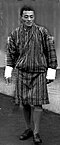

His Majesty Jigme Dorji Wangchuck (1929–1972) was the third Druk Gyalpo of Bhutan, reigning from 1952 until his death in 1972. He is widely regarded as the "Father of Modern Bhutan" for his sweeping reforms that transformed the country from a medieval feudal state into a developing modern nation.[5][1] His reign saw the abolition of serfdom, the creation of democratic institutions, the launch of planned economic development, and Bhutan's entry into the international community.[3]
Modernization Reforms
Abolition of Serfdom
In 1956, Jigme Dorji Wangchuck abolished serfdom and slavery, freeing bonded laborers and redistributing land to former serfs. This was a revolutionary act that fundamentally altered Bhutanese social structure.
National Assembly[2]
In 1953, he established the Tshogdu (National Assembly), Bhutan's first legislative body. While initially advisory, the Assembly represented a significant step toward representative governance, with members drawn from the public, the civil service, and the monastic body.
Legal Reform
He codified Bhutan's laws, replacing the patchwork of local customs and decrees with a national legal code. He established the High Court and a system of district courts, creating a more uniform justice system.
Economic Development
Under the Third King, Bhutan launched its first Five-Year Development Plan in 1961, with significant assistance from India. The plan focused on building basic infrastructure — roads, schools, hospitals — in a country that had virtually none. The construction of the Paro-Thimphu highway in the 1960s was a landmark achievement, connecting Bhutan's political capital with its only airport.
International Relations
Jigme Dorji Wangchuck opened Bhutan to the world. Key milestones included:
- Joining the Colombo Plan in 1962
- Becoming a member of the Universal Postal Union in 1969
- Admission to the United Nations in 1971
He also moved the capital from Punakha to Thimphu in 1961, establishing a permanent seat of government.
Assassination Attempt and Death
In 1964, the Third King survived an assassination attempt linked to a political crisis following the murder of his Prime Minister, Jigme Palden Dorji. The incident exposed tensions within the ruling establishment. Jigme Dorji Wangchuck died of a heart attack in Nairobi, Kenya, in 1972 at the age of 43, leaving his 16-year-old son to succeed him.
Legacy
The Third King is remembered as a visionary reformer who single-handedly dragged Bhutan into the modern era while maintaining its sovereignty and cultural identity. Schools, hospitals, and institutions across Bhutan bear his name.
References
Related articles
Know something about this topic? Edit this article or . Anonymous contributions welcome — no account required.