culture
National Dress of Bhutan
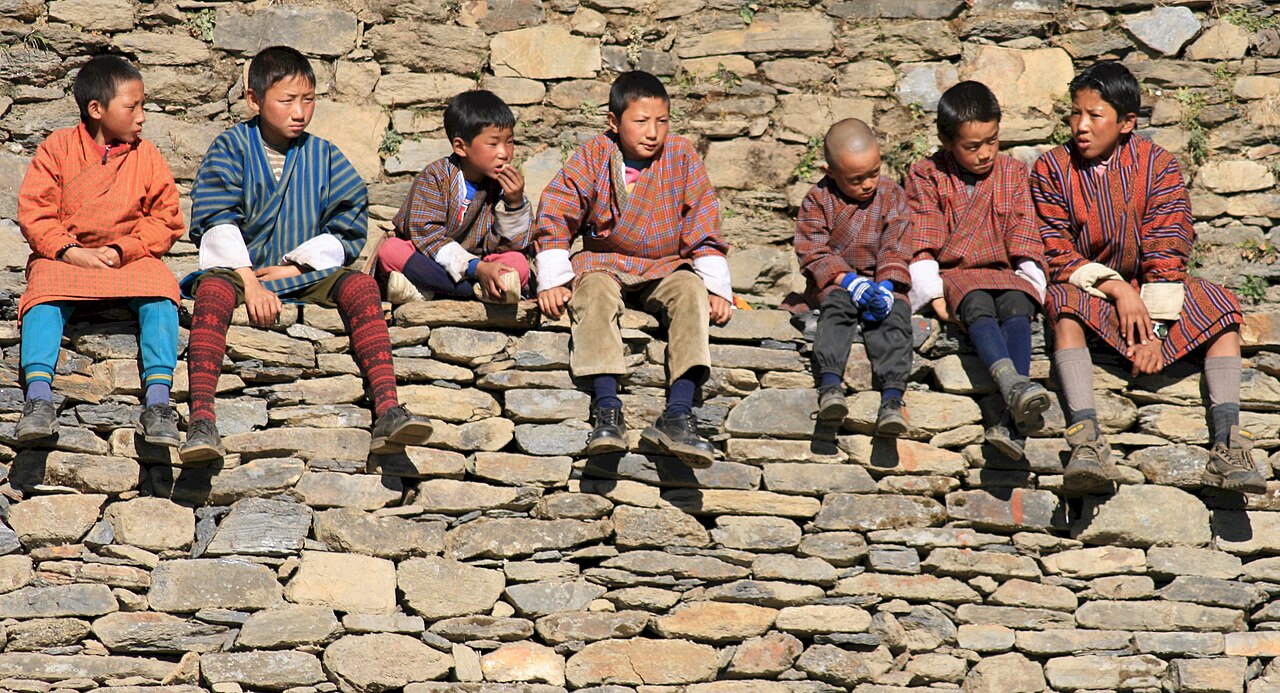
The national dress — gho for men and kira for women — is mandated by Driglam Namzha in official settings and is one of the most visible expressions of Bhutanese cultural identity.

Bhutan's national dress — the gho for men and the kira for women — is among the most visible expressions of Bhutanese cultural identity. Wearing traditional dress is mandated by the Driglam Namzha code of etiquette in government offices, schools, dzongs, and all official events.[1]
The Gho
The gho is a knee-length robe for men, tied at the waist with a cloth belt called a kera. The robe is folded in such a way as to form a large pocket (hem) at the front, traditionally used to carry items. In the Zhabdrung's time, the gho was mandatory only for members of the elite, but it was gradually adopted by the wider male population and made compulsory in 1989.[1]
The Kira
Women wear a long-sleeved blouse called a wonju made of silk, polyester, or lightweight cotton, over which they fold and clasp a large rectangular cloth called a kira to create an ankle-length dress.[2] The kira is secured with a brooch (koma) at each shoulder and a woven belt (kera) at the waist. Over the kira, a short jacket called a tego is worn.[2]
Ceremonial Scarves
Kabney (Men)
Men wear a kabney, a large silk scarf draped from the left shoulder to the opposite hip. The colour of the kabney indicates the wearer's rank:[1]
- Saffron: reserved for the Druk Gyalpo (King) and the Je Khenpo (Chief Abbot)
- Orange: Lyonpos (ministers and senior government officials)
- Red: Dashos (high officials and male members of the royal family)
- Green: judges
- Blue: National Council members
- White: commoners (raw silk with fringes)
Rachu (Women)
Women wear a rachu, a narrow embroidered cloth draped over the left shoulder. Unlike the kabney, the rachu is the same for all women regardless of rank, typically woven from raw silk with rich decorative patterns.[2]
Legal Mandate
The 1989 royal decree elevating the dress code from recommended to mandatory remains in effect. Bhutanese citizens must wear the gho or kira in schools, government offices, during festivals, and on formal occasions.[1] The dress code is seen as essential to maintaining a distinct national identity and differentiating Bhutan from its larger neighbours.[3]
See also
- Lhotshampa Traditional Dress
- National Museum of Bhutan
- National Library and Archives of Bhutan
- Blue Poppy
- Raven as Bhutan's National Bird
References
- "Clothes in Bhutan: The Gho, Kira, Kabney, Rachu." Facts and Details.
- "Gho and Kira, the traditional dress of Bhutan." Taste of Bhutan.
- "Undercover Identity." Works That Work Magazine.
- "Bhutanese Men's Garment (Gho)." Rubin Museum of Himalayan Art.
- "Traditional costumes and the evolution of kira." Daily Bhutan.
View online: https://bhutanwiki.org/articles/bhutan-national-dress · Content licensed CC BY-SA 4.0