Keiji Nishioka
From BhutanWiki, the people's encyclopedia of Bhutan · people · Verified
This article is about a living or recently deceased person. Edits must be supported by reliable, verifiable sources. Unsupported or potentially defamatory content will be removed.
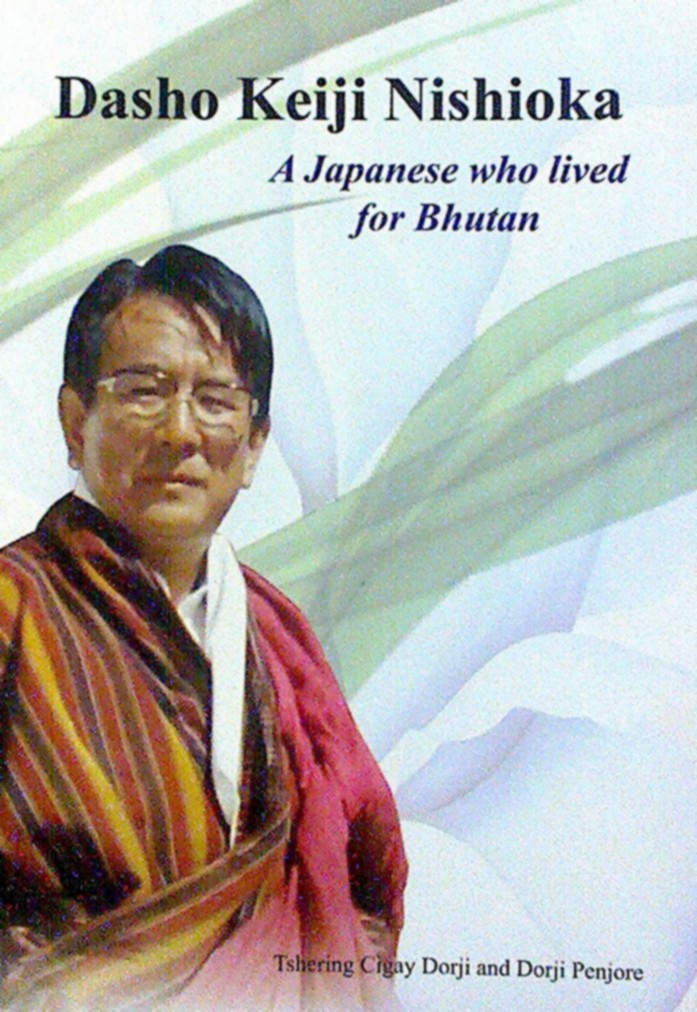
Keiji Nishioka (西岡 京治, Nishioka Keiji; 1933–1992) was a Japanese botanist and agricultural development expert who dedicated the final 28 years of his life to Bhutan, arriving in 1964 as a Colombo Plan technical expert and remaining until his death on 26 March 1992. Nishioka is one of the most revered foreign figures in Bhutanese history, universally known as "Dasho" Nishioka — after the title of honour conferred upon him by King Jigme Singye Wangchuck in 1980, making him the first foreigner to receive this distinction — and affectionately called "Japan Saab" (Mr Japan) by ordinary Bhutanese. He is credited with transforming Bhutanese agriculture, introducing new crops and cultivation techniques, constructing bridges and irrigation systems, and pioneering community-based development methods that influenced Bhutan's broader approach to national development.[1][2]
Nishioka's legacy extends far beyond the technical improvements he introduced. His life in Bhutan became a symbol of selfless international service, cultural humility, and the power of sustained, respectful engagement between peoples. In death, he was posthumously awarded the Druk Thugsey medal, Bhutan's highest civilian honour, in 1999. His story has been the subject of a Japanese manga series, a Bhutanese documentary film, and a memorial museum in Paro, and he remains a central figure in Bhutan-Japan relations.[3][4]
Early Life and Training
Keiji Nishioka was born in 1933 in Osaka, Japan. He studied agriculture and plant science at Osaka Prefecture University (now Osaka Metropolitan University), developing a particular interest in botanical research and tropical agriculture. After graduating, he joined the ranks of Japanese technical experts who were deployed to developing countries through the Colombo Plan, the multilateral framework for technical cooperation in Asia established in 1950. Nishioka's training in plant science and his interest in practical agricultural improvement would prove ideally suited to the challenges he would encounter in Bhutan.[1]
In 1964, Nishioka was dispatched to Bhutan, arriving with his wife Satoko. At that time, Bhutan had only recently begun its first five-year development plan (1961-1966) and was one of the most isolated countries in the world. There were virtually no modern roads, no telephones, and minimal contact with the outside world. Agriculture was the backbone of the economy, but farming methods had changed little over centuries. The Nishiokas arrived to find a country of extraordinary natural beauty and cultural richness but also one where subsistence agriculture, food insecurity, and geographic isolation posed fundamental development challenges.[2][5]
Agricultural Transformation in Paro
Nishioka's initial assignment was in Paro dzongkhag, one of western Bhutan's most important agricultural valleys. In 1966, he established an experimental farm at Bondey, near the historic Paro Dzong. The Bondey farm became the laboratory for Nishioka's agricultural experiments, where he trialled crops previously unknown to Bhutanese diets and tested cultivation techniques adapted to local conditions. Working patiently with local farmers, Nishioka introduced Japanese white radish (daikon), Chinese cabbage, ordinary cabbage, carrots, potatoes, and improved varieties of apple. He also introduced modern rice cultivation techniques that increased productivity by approximately 40 per cent in the areas where they were adopted.[1][2]
Nishioka's approach was distinctive for its patience and cultural sensitivity. Rather than imposing external models, he worked alongside Bhutanese farmers, learning their traditional practices and introducing innovations incrementally. He conducted trials on local varieties to identify those best suited to Bhutanese soils and climatic conditions, and he trained Bhutanese extension workers to disseminate the new techniques beyond his immediate area of work. This approach — which anticipated by decades the "participatory development" methods that became standard practice in international development — earned him the trust and respect of farming communities across western Bhutan.[2]
Zhemgang Integrated Development Project
In 1976, Nishioka expanded his work to Zhemgang dzongkhag in central Bhutan, one of the country's most remote and underdeveloped districts. Here he led an integrated rural development project that went far beyond agriculture. Over the following years, Nishioka and his Bhutanese colleagues constructed 17 suspension bridges spanning the deep river gorges that isolated communities from one another and from markets. He also oversaw the construction of irrigation canals, farm roads, and health clinics, and introduced improved animal husbandry practices.[1][3]
The Zhemgang project demonstrated Nishioka's holistic understanding of rural development: that improving agricultural productivity alone was insufficient if communities lacked the physical infrastructure to transport their products to market, the health services to keep farmers productive, and the water management systems to sustain intensified cultivation. His integrated approach — combining agricultural extension with infrastructure, health, and institutional development — influenced the Japanese International Cooperation Agency's (JICA) broader approach to development cooperation in Bhutan and beyond.[6]
Dasho Title and Recognition
In 1980, King Jigme Singye Wangchuck conferred upon Nishioka the title of Dasho, an honour equivalent to knighthood that had never before been bestowed upon a foreigner. The title recognised not only Nishioka's technical contributions but also his deep personal commitment to Bhutan, his cultural humility, and the affection in which he was held by Bhutanese communities. The conferral of the Dasho title transformed Nishioka from a respected technical expert into a figure of national significance, and it cemented his place in the public consciousness as a man who had chosen Bhutan as his home and devoted his life to its people.[1][2]
Death and Posthumous Honours
Keiji Nishioka died on 26 March 1992 in Bhutan, the country he had called home for 28 years. He was cremated in a ceremony attended by senior government officials, and his passing was mourned across the country. In 1999, seven years after his death, the Royal Government of Bhutan posthumously awarded Nishioka the Druk Thugsey ("Son of Bhutan") medal, the country's highest civilian honour. He remains the only Japanese citizen to have received this distinction, and the award reflected the depth of gratitude felt by the Bhutanese people and government for his life's work.[3]
Legacy and Memorials
Nishioka's legacy is preserved through multiple memorials and cultural expressions. The Dasho Nishioka Memorial Museum was inaugurated in Paro in 2014, on the fiftieth anniversary of Japan-Bhutan cooperation. The museum, located near the Bondey farm where Nishioka began his work, houses photographs, personal effects, agricultural implements, and exhibits documenting his 28-year contribution to Bhutan. A statue of Nishioka stands at Bondey, and his name is invoked in virtually every discussion of Bhutan-Japan relations.[4]
In Japan, Nishioka's story has been told through a popular manga series and television documentaries, making him one of the most well-known figures in Japanese public consciousness associated with international development. His wife Satoko, who accompanied him throughout his years in Bhutan and continued to visit the country after his death, has also been recognised for her contributions and has spoken publicly about their shared life in the kingdom.[5]
Nishioka's impact on Bhutanese agriculture is measurable: the crops he introduced — including daikon, cabbage, and improved potato varieties — remain staples of the Bhutanese diet; the bridges he built continue to serve communities in Zhemgang; and the extension methods he pioneered shaped the institutional development of Bhutan's agricultural sector. More broadly, his life embodied the ideal of development cooperation as a genuine partnership, grounded in respect, cultural sensitivity, and a deep personal commitment that transcended professional obligation.[2][3]
References
- Wikipedia. "Keiji Nishioka." https://en.wikipedia.org/wiki/Keiji_Nishioka
- Dorji Penjore. "Dasho Keiji Nishioka: A Japanese Who Lived for Bhutan." https://dorjipenjore.wordpress.com/dasho-keiji-nishioka-a-japanese-who-lived-for-bhutan/
- Kuensel. "Celebrating the Life of Japan Saab." https://kuenselonline.com/celebrating-the-life-of-japan-saab/
- JICA. "JICA President Tanaka Visits Bhutan." June 2014. https://www.jica.go.jp/english/about/president/archives_tanaka/140627_04.html
- NHK World. "Nishioka: The Man Who Changed Bhutan." https://www.nhk.or.jp/archives/en/stories/series-nishioka/
- JICA. "Bhutan." https://www.jica.go.jp/bhutan/english/index.html
- Ministry of Agriculture and Livestock, Bhutan. https://www.moal.gov.bt/
- The Japan Times. "The Japanese farmer who became a hero in Bhutan." https://www.japantimes.co.jp/news/2014/06/28/national/japanese-farmer-became-hero-bhutan/
Related articles
Know something about this topic? Edit this article or . Anonymous contributions welcome — no account required.