Tek Nath Rizal
From BhutanWiki, the people's encyclopedia of Bhutan · people · Verified
This article is about a living or recently deceased person. Edits must be supported by reliable, verifiable sources. Unsupported or potentially defamatory content will be removed.
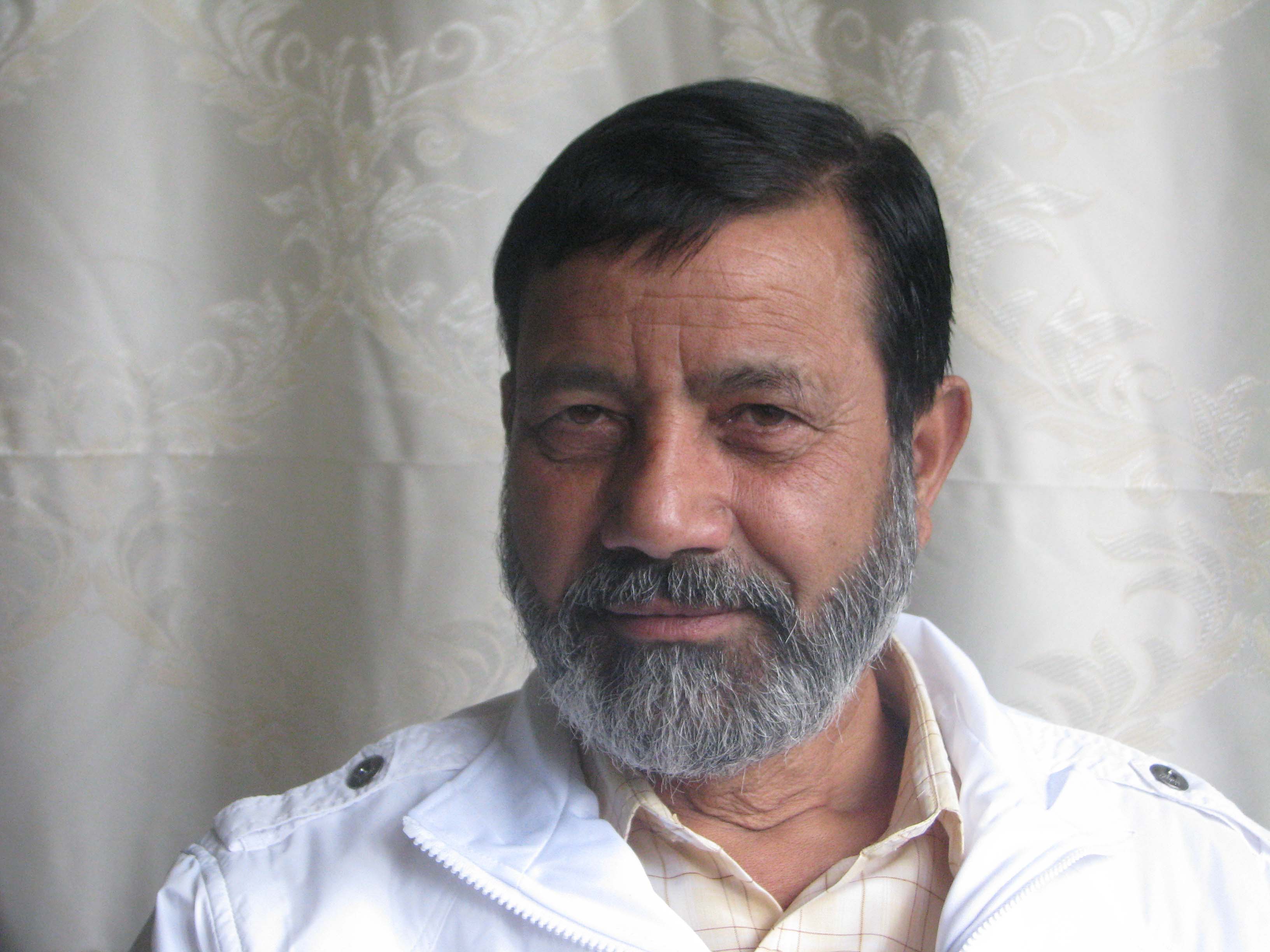
Tek Nath Rizal (Nepali: टेक नाथ रिजाल; Dzongkha romanisation varies) is a Bhutanese former civil servant, member of the Royal Advisory Council (Lodoi Tshogde), and political prisoner. He was arrested by Nepali police in November 1989, handed to Bhutanese authorities, held for more than four years before trial, and convicted in December 1993 under the National Security Act 1992 on charges including treasonable acts against the Tsa-Wa-Sum and sowing communal discord. He was sentenced to life imprisonment, detained at Chemgang Central Jail near Thimphu, and released by royal amnesty in December 1999 after a decade in custody.[1]
Rizal's case is the single most thoroughly documented political-prisoner file in Bhutan's post-1949 record. Amnesty International issued a formal appeal for his release in 1994 (ASA 14/002/1994), the UN Working Group on Arbitrary Detention adopted Opinion 48/1994 and Revised Decision 3/1996 finding his detention arbitrary, and the Inter-Parliamentary Union's Committee on the Human Rights of Parliamentarians maintained a long-running case file on him under reference BHU01. Subsequent political-prisoner cases brought before international bodies — including the 2024 WGAD Opinion 60/2024 on Birkha Bahadur Chhetri, Kumar Gautam, and Sunman Gurung — are routinely measured against the precedent his case established.[2]
Early life and civil service career
Rizal was born on 16 February 1948 in Lamidara (also rendered Lamidanda), in what is now Tsirang Dzongkhag in southern Bhutan. He was a member of the Lhotshampa community of Nepali-speaking, predominantly Hindu southern Bhutanese. He entered the Royal Civil Service and rose through district-level postings to a seat on the Royal Advisory Council, the body that advised the Druk Gyalpo on matters of state. From 1985 he represented southern constituencies on the Council, a position that gave him direct access to Druk Gyalpo Jigme Singye Wangchuck and to the senior bureaucracy.[3]
Until the late 1980s Rizal's biography was a conventional one for a southern Bhutanese establishment figure: an insider whose loyalty to the throne was not in question and whose career advanced through the same patronage routes as those of his Ngalop counterparts. The break came with the implementation of the Citizenship Act 1985 and the 1988 census in southern Bhutan.
The 1988 petition and fall from favour
The 1985 Citizenship Act tightened the criteria for Bhutanese nationality and required documentary proof of residence in 1958. The 1988 census operationalised those criteria in southern Bhutan and resulted in the reclassification of large numbers of Lhotshampa as non-nationals. In April 1988 Rizal, together with Bhakti Dahal and other southern Bhutanese officials, submitted a petition to the king raising concerns about the conduct of the census and the treatment of the Lhotshampa population. The Royal Government of Bhutan characterised the petition as seditious; Rizal was removed from the Royal Advisory Council and briefly detained.[1]
After his release he left for Nepal in 1989, where he helped found the People's Forum for Human Rights, Bhutan, one of the first Bhutanese exile organisations. The Forum compiled and circulated accounts of the southern crisis to international audiences. The historian Michael Hutt, in Unbecoming Citizens (2003), treats Rizal's 1988 petition and subsequent organising as the proximate trigger for the government's reframing of Lhotshampa political activity as a national-security threat rather than a grievance to be administered.[4]
Arrest in Nepal and extradition
On 16 November 1989 Rizal was arrested in Birtamod, eastern Nepal, by Nepali police and handed to Bhutanese authorities at the Phuentsholing border crossing. The transfer took place outside any formal extradition framework: Nepal and Bhutan had no extradition treaty, no Nepali court order had been issued, and the move was effected by inter-governmental arrangement rather than judicial process. Amnesty International characterised the transfer as unlawful under international standards and the IPU Committee on the Human Rights of Parliamentarians took up his case on the same basis.[1]
Rizal was held in pre-trial detention for more than four years, much of it incommunicado. The first WGAD opinion in his case, Opinion 48/1994 (1 December 1994), addressed this period; the WGAD subsequently issued Revised Decision 3/1996 on 24 May 1996, both finding the detention arbitrary.[5]
1993 trial and conviction under the National Security Act
Rizal was tried before the High Court of Bhutan in 1993 and convicted on 16 November 1993, four years to the day after his arrest. The principal charges were brought under the National Security Act 1992, which forbids "treasonable acts against the Tsa-Wa-Sum" — the king, country, and people — and prohibits acts said to "create misunderstanding or hostility between Bhutan and friendly countries" and to sow communal discord. He was sentenced to life imprisonment.
The Royal Government of Bhutan characterised the trial as just and impartial. International human-rights bodies disagreed. Amnesty International found that the proceedings did not meet basic fair-trial standards: the trial was held largely in closed session, defence access was constrained, and the charging statute was, in Human Rights Watch's later phrasing, "draconian and vaguely worded". The four-year pre-trial detention itself remains one of the longest documented in any modern Bhutanese case.[1]
Detention at Chemgang Central Jail
Rizal served his sentence at Chemgang Central Jail (also rendered Chamgang), the principal long-term detention facility for political cases, located in the hills above Thimphu. Conditions during the 1990s were not independently monitored by international observers; the International Committee of the Red Cross conducted periodic visits in this period but ceased its visits in 2012 for reasons that have not been publicly explained by either party.
In his memoir Torture Killing Me Softly: Bhutan Through the Eyes of a Mind Control Victim, published by Human Rights Without Frontiers Nepal and the Group for International Solidarity in 2009, Rizal recounts solitary confinement, physical and psychological pressure, and what he describes as the use of mind-control techniques against him in detention. The mind-control claims are first-person and have not been independently corroborated. The broader account of harsh detention conditions at Chemgang is consistent with later testimony by Madhukar Monger (released August 2023) and Ram Bahadur Rai (released July 2024), and with the documentation gathered by Human Rights Watch and the Global Campaign for the Release of Political Prisoners in Bhutan in 2023–2026. Readers should treat the memoir as primary first-person testimony — vivid, valuable for context, and not the sole basis on which any specific factual claim about another individual should rest.[6]
International campaign and 1999 release
Amnesty International adopted Rizal as a prisoner of conscience and ran sustained urgent-action campaigns on his behalf throughout the 1990s. The Inter-Parliamentary Union, which treats former Royal Advisory Councillors as parliamentarians for case-handling purposes, maintained file BHU01 on him from 1991 onwards. Bilateral pressure from Western governments and from Indian and Nepali parliamentary contacts was raised in periodic exchanges with Thimphu, although the Royal Government did not publicly acknowledge external pressure as a factor in its handling of the case.
Rizal was released on 17 December 1999, Bhutan's National Day, under a royal amnesty granted by the Fourth King. The Royal Government framed the release as an act of clemency rather than as compliance with the WGAD opinions. He had served just over ten years in custody, of which roughly six were post-conviction.
Life in exile after 1999
Following his release Rizal settled in Nepal, where he has lived since. He participated in some of the bilateral Bhutan–Nepal verification rounds on the refugee camps in eastern Nepal, although he and other Lhotshampa leaders criticised the verification framework as procedurally weighted against the refugees. When the UNHCR-coordinated third-country resettlement programme began in 2007, Rizal opposed it on the grounds that resettlement would foreclose any future right of return and effectively absolve Bhutan of responsibility. The position placed him at odds with the great majority of camp residents, who eventually accepted resettlement to the United States, Canada, Australia, and other countries.
Rizal has continued to write and speak publicly from Kathmandu. His published works include Torture Killing Me Softly (2009), From Palace to Prison: The Saga of a Councillor Arraigned as Ngolop, and the Nepali-language Nirbasan ("Exile"). He has also given evidence to international bodies and academic researchers documenting the Lhotshampa expulsion.[7]
2023 Nepal arrest and refugee-fraud allegations
In May 2023 Nepali police arrested Rizal in Kathmandu in connection with a long-running investigation into a scheme that allegedly produced fraudulent refugee documentation for non-refugees seeking third-country resettlement. According to reporting in OnlineKhabar and other Nepali outlets, investigators alleged that Rizal's name and reputation had been used by intermediaries to authenticate false applications, and that he had received payment in connection with the scheme. Police characterised him as having been manipulated by a criminal network operating around the eastern Nepal camps rather than as a primary architect of the fraud. Rizal denied wrongdoing. Bhutanese diaspora opinion divided sharply over the allegations: some treated them as a credible late-career fall, others as a politically motivated attempt to discredit one of the few surviving senior figures of the original Lhotshampa movement.[8]
The 2023 allegations are a separate matter from the 1989–1999 detention and do not bear on the international human-rights findings about that detention. They are recorded here because any current biographical entry on Rizal that omitted them would be incomplete.
Legacy and historiographical position
Within the Bhutanese human-rights record, Rizal's case occupies a particular place because of the density of independent documentation around it. Most subsequent political-prisoner cases have been documented after the fact, on the basis of released-prisoner testimony and family accounts; Rizal's case was documented contemporaneously by Amnesty, the IPU, and the WGAD while he was still in custody. The 1994 Amnesty appeal, the WGAD opinions, and the IPU file together constitute the longest sustained international scrutiny of any individual Bhutanese detention.
His petition of 1988 is also treated by historians of the period as a documentary marker. Hutt's Unbecoming Citizens uses it to date the moment at which Lhotshampa grievance crossed from administrative complaint into the political-security category that the National Security Act would codify in 1992. The fact that the petitioner had until weeks earlier been a senior Royal Advisory Councillor — not a marginal activist — is the feature most often cited as the reason the petition provoked the response it did.
Rizal's post-1999 trajectory — opposition to resettlement, the 2023 arrest, the contested place in diaspora politics — has not displaced the older record. The benchmark cases against which the current Chemgang and Rabuna roster are now measured are still framed in language that traces back to the 1994 Amnesty appeal: prisoner of conscience, arbitrary detention, treasonable acts against the Tsa-Wa-Sum.
See also
- List of Bhutanese political prisoners
- National Security Act 1992
- Chemgang Central Jail
- Global Campaign for the Release of Political Prisoners in Bhutan
- Lhotshampa
- Bhutanese refugee crisis
- Citizenship Act 1985
References
- Amnesty International — "Bhutan: Appeal for the Release of Tek Nath Rizal", ASA 14/002/1994
- Human Rights Watch — "UN Experts Find Bhutan Illegally Holding Political Prisoners" (18 March 2025)
- Tek Nath Rizal — Wikipedia
- Michael Hutt — Unbecoming Citizens: Culture, Nationhood and the Flight of Refugees from Bhutan, Oxford University Press, 2003
- UN Working Group on Arbitrary Detention — opinions database (Opinion 48/1994; Revised Decision 3/1996)
- Human Rights Watch — "Bhutan: Political Prisoners Suffer Harsh Conditions" (10 July 2024)
- Nepali Times — "The tragedy of Tek Nath Rizal"
- OnlineKhabar — "Tek Nath Rizal in fake Bhutanese refugee scam" (May 2023)
- Tek Nath Rizal — Torture Killing Me Softly: Bhutan Through the Eyes of a Mind Control Victim, Human Rights Without Frontiers Nepal / Group for International Solidarity, 2009
- Human Rights Watch — "Last Hope: The Need for Durable Solutions for Bhutanese Refugees in Nepal and India" (2007)
Related articles
Know something about this topic? Edit this article or . Anonymous contributions welcome — no account required.