Françoise Pommaret
From BhutanWiki, the people's encyclopedia of Bhutan · people · Verified
This article is about a living or recently deceased person. Edits must be supported by reliable, verifiable sources. Unsupported or potentially defamatory content will be removed.
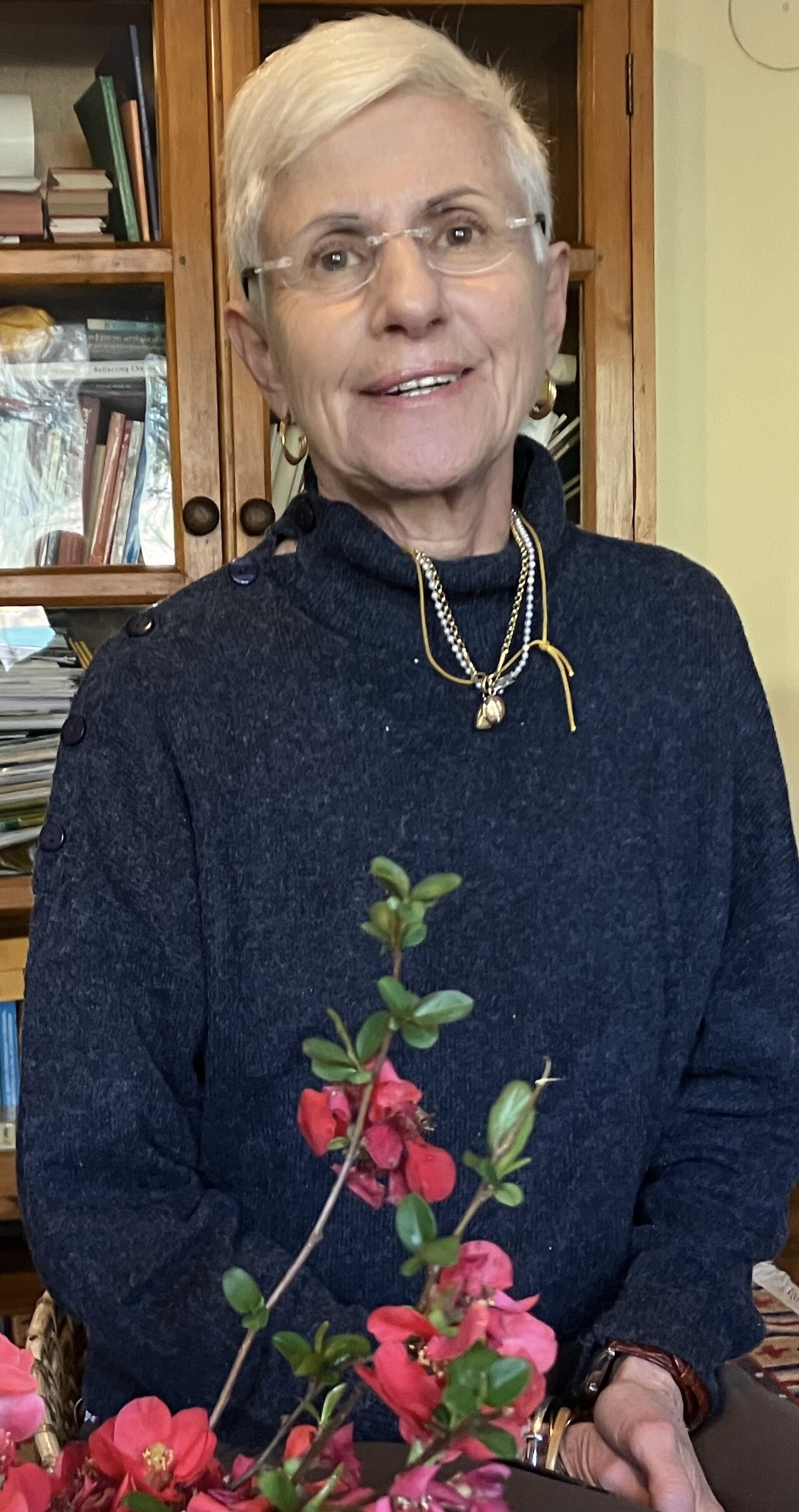

Françoise Pommaret (born 1954) is a French ethno-historian and Tibetologist widely regarded as one of the foremost Western authorities on Bhutanese history and culture. She has been associated with Bhutan since 1981, when she first arrived to work with the Bhutan Tourism Corporation, and has since dedicated more than four decades to the study of the kingdom's cultural anthropology, religious traditions, and social fabric. Her work spans academic research, popular guidebooks, and institutional capacity-building within Bhutan's own university system.[1]
Pommaret holds the position of Director of Research Emeritus at the Centre National de la Recherche Scientifique (CNRS) in Paris, France's principal public research organisation. Since 2012, she has also served as an Adjunct Professor at the College of Language and Culture Studies, part of the Royal University of Bhutan, under a memorandum of understanding between the CNRS and the university. This dual affiliation has enabled her to bridge European scholarly traditions and Bhutanese academic development, mentoring a new generation of Bhutanese researchers.[2]
Early Life and Education
Pommaret grew up in the Congo before pursuing higher education in France. She obtained a Master of Arts in the history of art and archaeology from the Sorbonne University in Paris. She subsequently studied Tibetan language at the Institut National des Langues et Civilisations Orientales (INALCO), one of France's leading institutions for the study of non-European languages and civilisations.[3]
Her doctoral thesis, focused on the phenomenon of people who return from the netherworld in Tibetan cultural areas (known as delog narratives), received the prestigious Prix Delalande-Guérineau from the Académie des Inscriptions et Belles-Lettres, one of the five academies of the Institut de France. This work established her reputation as a serious scholar of Tibetan and Himalayan religious culture and laid the groundwork for her subsequent decades of research in Bhutan.[4]
Career in Bhutan
Pommaret first travelled to Bhutan in 1981 and worked with the Bhutan Tourism Corporation between 1981 and 1986. During this period, she gained an intimate knowledge of the country's geography, monasteries, and festivals that would inform all her subsequent scholarship. After leaving the tourism sector, she participated in a range of educational and cultural projects in Bhutan, developing partnerships between French and Bhutanese academic institutions.[5]
Her research has covered a wide range of topics in Bhutanese cultural anthropology, including masked dance traditions (cham), local religious festivals (tshechu), the social organisation of Bhutanese communities, and the kingdom's architectural heritage. She is affiliated with the Centre de Recherche sur les Civilisations de l'Asie Orientale (CRCAO), a joint research unit of the CNRS, the Collège de France, and other institutions.[6]
Publications
Pommaret is the author of numerous scholarly articles and several books that have shaped Western understanding of Bhutan. Her most widely read work is Bhutan: Himalayan Mountain Kingdom, a comprehensive guidebook published by Odyssey Illustrated Guides, which has gone through multiple editions since its first publication and remains a standard reference for travellers and researchers alike.[7]
She has also contributed chapters and articles to academic volumes on Tibetan and Himalayan studies, addressing topics such as death and the afterlife in Bhutanese Buddhism, the history of Bhutan's eastern regions, and the evolution of Bhutanese identity. Her scholarly output reflects both deep archival research and extensive fieldwork conducted over decades of regular visits to Bhutan.
Honours and Recognition
In recognition of her lifetime contribution to Franco-Bhutanese cultural relations and Himalayan scholarship, Pommaret was awarded the French Légion d'honneur in 2015, one of France's highest civilian distinctions. In 2017, she received the National Order of Merit (Gold), first class, from the Kingdom of Bhutan, acknowledging her exceptional service to the study and preservation of Bhutanese culture.[8]
She has been a featured speaker at the Bhutan Echoes literary festival and continues to be actively involved in cultural heritage projects in Bhutan. Her work has been instrumental in bringing international scholarly attention to a country that, due to its geographic isolation and deliberate policies of measured engagement with the outside world, had long remained understudied by Western academia.[9]
References
- "Françoise Pommaret." Wikipedia.
- "Françoise Pommaret – Membre." CRCAO.
- "Françoise Pommaret." Wikipedia.
- "Françoise Pommaret." Wikipedia.
- "A French’s Connection and Deep Love for Bhutan." Daily Bhutan.
- "Françoise Pommaret – Membre." CRCAO.
- "Françoise Pommaret." Shambhala Publications.
- "Françoise Pommaret." Wikipedia.
- "Françoise Pommaret, PhD." Bhutan Echoes.
Related articles
Know something about this topic? Edit this article or . Anonymous contributions welcome — no account required.