Gelephu Investment and Development Corporation
From BhutanWiki, the people's encyclopedia of Bhutan · politics · Verified
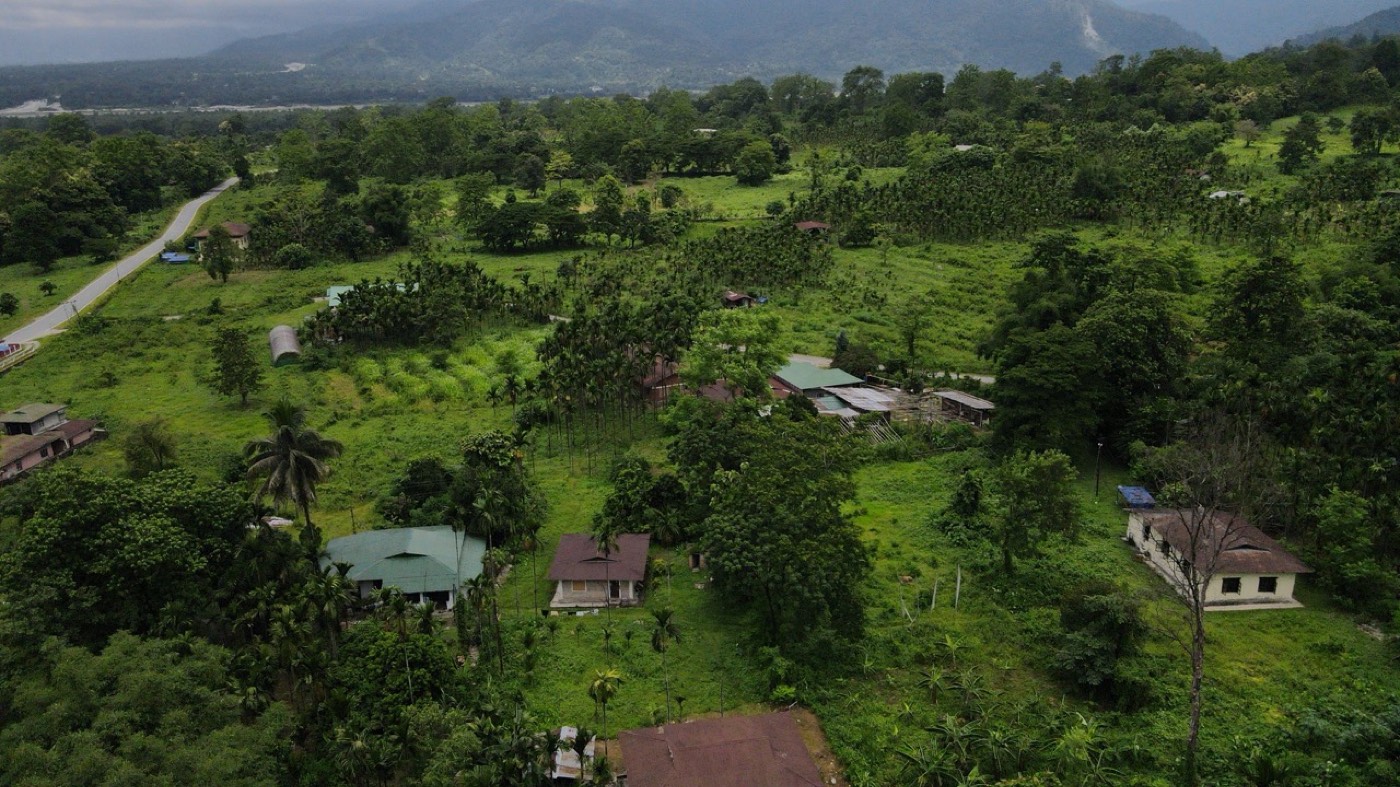
The Gelephu Investment and Development Corporation (GIDC) is the investment vehicle of the Gelephu Mindfulness City (GMC) project in southern Bhutan. It was set up to raise capital, originate investment opportunities and finance infrastructure for the Gelephu Mindfulness City Special Administrative Region (GMC SAR), and to invest more broadly on behalf of the Kingdom. The corporation describes its remit as being "to own, operate, and originate investment opportunities in both local and global businesses" that support the growth of GMC and of Bhutan as a whole.[1]
GIDC was created under a royal charter as the investment arm of the Gelephu Mindfulness City Authority (GMCA), the body that holds executive, legislative and judicial powers inside the special administrative region. Its mandate, as set out by the project, extends beyond the SAR itself: enhancing digital connectivity, driving investment in green energy such as hydropower and solar power, and supporting technology industries — including data centres and artificial-intelligence companies — that can use Bhutan's carbon-free electricity.[2]
The corporation was announced as part of a wider slate of GMC leadership appointments made by King Jigme Khesar Namgyel Wangchuck in October 2024. Its chairman is the Japanese-American technologist and venture capitalist Joichi "Joi" Ito.[2]
Background
Gelephu Mindfulness City was conceived as a special administrative region intended to draw foreign investment and create jobs by offering a distinct legal and regulatory environment within Bhutan. Financing a project on that scale — including a new international airport, transport links and an industrial and technology park — required a dedicated institution able to issue debt, hold equity and manage relationships with banks and multilateral lenders. GIDC was established to perform that function as the financial counterpart to the GMCA, which handles administration and governance.[2] The fuller account of GMC's governance structure is given in Gelephu Mindfulness City governance.
Mandate and funding model
GMC's organisers have described a "four-plus-one" funding model, and GIDC sits at its centre. The first channel is the project's own internal resources, on the principle that it must "put money on the table to mobilise other people's money". The second channel covers innovative financing schemes run through GIDC, including nation-building bonds with a stated target of around US$100 million, together with a Founding Members programme that enrols major investors and advisers; the logistics-property entrepreneur Ming Z. Mei was introduced as the first such member. The third channel is project-by-project financing, in which individual developments raise their own equity and bank loans, sometimes under private master developers. The fourth channel relies on grants and loans from multilateral institutions such as the World Bank and the Asian Development Bank. The "plus one" is the requirement that initial investments generate returns so the project remains financially sustainable.[3]
Nation Building Bond
In May 2025 GIDC launched the Gelephu Mindfulness City Nation Building Bond (GNBB), a domestic bond aimed at Bhutanese citizens living in the country, with all proceeds directed to the construction of Gelephu International Airport. The bond carried a 10 per cent annual coupon, exempt from personal income tax, with a five-year lock-in period; it was listed on the Royal Securities Exchange of Bhutan and allocated on an equal basis among subscribers, with secondary trading permitted after one year. Subscriptions were handled through five financial institutions: Bank of Bhutan, Bhutan National Bank, the Royal Insurance Corporation of Bhutan, Bhutan Development Bank and DK Bank.[4]
A parallel scheme aimed at non-resident Bhutanese was arranged with ORO Bank, described as the project's digital banking partner. Under it, non-resident Bhutanese could place fixed-term deposits, and the bank in turn subscribed to a GIDC bond supporting the airport.[5]
Leadership
GIDC is chaired by Joichi Ito, who was appointed by the King in October 2024. Ito is a venture capitalist and entrepreneur who co-founded Digital Garage and ran the early Japanese internet firms PSINet Japan and Infoseek Japan, and who was an early investor in companies including Twitter, Flickr and Kickstarter. He directed the MIT Media Lab from 2011 to 2019 and later became president of the Chiba Institute of Technology.[6]
Ito resigned as director of the MIT Media Lab in September 2019 after reporting in The New Yorker documented that the lab had concealed donations from the convicted sex offender Jeffrey Epstein, including by recording his gifts anonymously. Ito acknowledged having accepted funds from Epstein for the lab and for his own ventures, and stepped down following the disclosures.[7]
His stated GIDC responsibilities are to work with Bhutanese and international partners to attract investment and to develop digital connectivity, green energy and technology industries both within the SAR and elsewhere in Bhutan. The corporation lists its office at Dabtong House, 145 West Thori Lam, in Thimphu.[1]

Relationship to Gelephu Mindfulness City
GIDC and the GMCA are distinct bodies with complementary roles. The GMCA exercises governmental authority inside the special administrative region, while GIDC functions as its investment and financing arm, owning and originating commercial ventures and raising the capital the region needs. The two were announced together in October 2024, alongside the appointment of Liew Mun Leong, formerly of CapitaLand and Changi Airport Group, as GMC's first chief executive. The connection to the wider project, and the broader vision of GMC as a hub linking South and Southeast Asia, is set out under Gelephu Mindfulness City. The project is one expression of Bhutan's attempt to pursue economic growth within the framework of Gross National Happiness.[2]
The Nation Building Bond
GIDC's most visible capital-raising act to date is the Gelephu Mindfulness City Nation Building Bond (GNBB), launched on 2 May 2025 to help finance construction of the Gelephu International Airport. The ten-year, tax-exempt bond with a 10 per cent annual coupon was offered exclusively to Bhutanese retail investors and closed at Nu 3.347 billion (~USD 38 million), past its Nu 2 billion target, with 35,403 subscribers from all twenty dzongkhags — the widest citizen participation in the history of Bhutanese capital markets.[a][b]
References
- About Us — Gelephu Investment and Development Corporation
- Bhutan Appoints Strategic Leaders to Propel Gelephu Mindfulness City to Global Prominence — PR Newswire (3 October 2024)
- Four + one model to raise funds for Gelephu Mindfulness City — Bhutan Broadcasting Service
- Gelephu Mindfulness City Nation Building Bond launch — GIDC
- Bhutan Appoints Key Leaders to Drive Gelephu Mindfulness City and Adopts Singaporean Law — Daily Bhutan
- Joi Ito — Wikipedia
- Joi Ito, director of MIT Media Lab, resigns over ties to Jeffrey Epstein — MIT Technology Review (7 September 2019)
Related articles
Know something about this topic? Edit this article or . Anonymous contributions welcome — no account required.