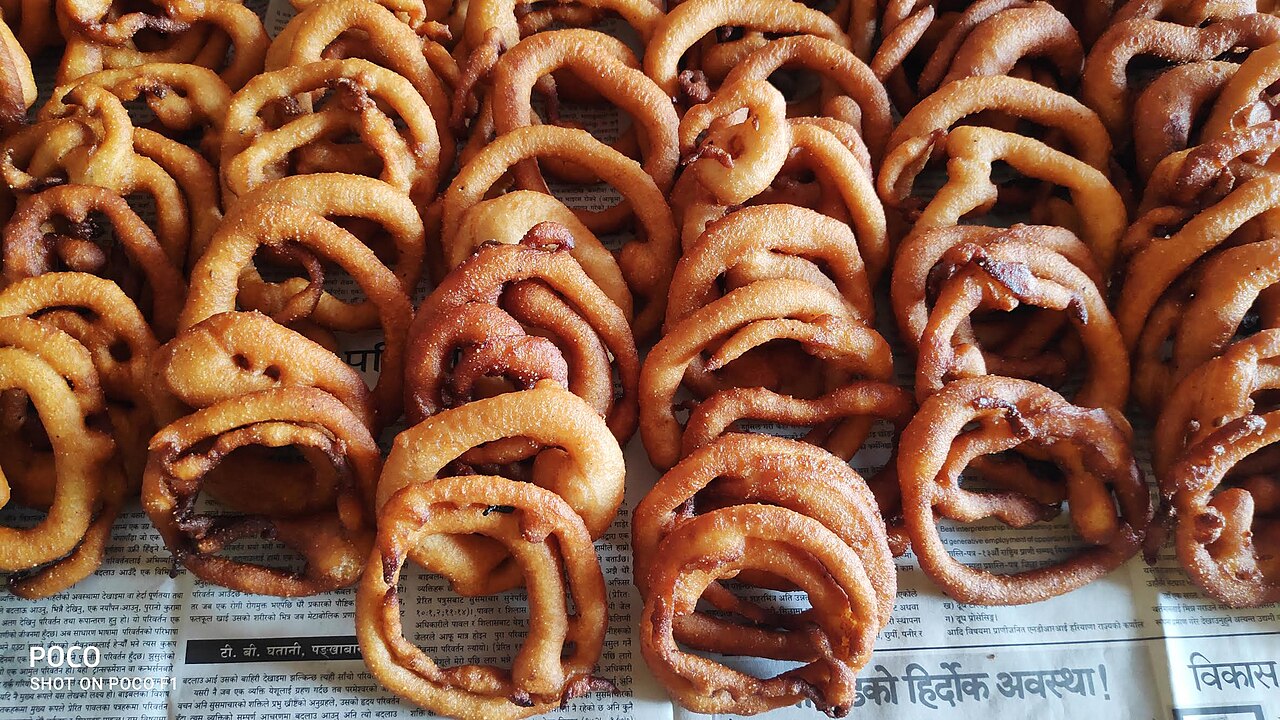

Dashain (Nepali: दशैं; also spelled Dasain), formally known as Vijaya Dashami, is the longest and most important Hindu festival celebrated in Nepal, among the Lhotshampa of Bhutan, and throughout the Nepali-speaking diaspora worldwide. The fifteen-day festival falls in the month of Ashwin (September–October) according to the Hindu lunar calendar and celebrates the triumph of the goddess Durga over the buffalo demon Mahishasura, symbolising the victory of good over evil. It is the most widely observed festival in Nepal and serves as a major occasion for family reunions, the exchange of blessings, and the renewal of social bonds.[1]
Among the Lhotshampa of southern Bhutan and the Bhutanese refugee diaspora, Dashain holds particular cultural significance as both a religious observance and an expression of communal identity. For detailed treatment of the festival in those specific contexts, see Dashain in Bhutan and Dashain and Tihar in the Diaspora.
Mythological Significance
The festival's origins lie in the Hindu mythological narrative of the battle between the goddess Durga and the shape-shifting demon Mahishasura. According to the Devi Mahatmya and the Markandeya Purana, Mahishasura had obtained a boon that made him invulnerable to any god or man. The gods, unable to defeat him, pooled their divine energies to create Durga, a warrior goddess of supreme power. The battle between Durga and the demon raged for nine nights (Navaratri), culminating in Durga's victory on the tenth day — Vijaya Dashami, the "victorious tenth." Dashain also carries associations with the Ramayana: it is held that Lord Rama worshipped Durga for nine days to gain her blessing before defeating the demon king Ravana on the tenth day.[2]
The Fifteen Days
Dashain unfolds over fifteen days, from the new moon (Ghatasthapana) to the full moon (Kojagrat Purnima). While observances take place throughout, several key days anchor the festival.
Ghatasthapana (Day 1)
The festival begins with Ghatasthapana ("establishing the sacred vessel"). A kalash (sacred pot) filled with holy water is placed at the centre of a rectangular bed of sand, and barley, maize, or wheat seeds are sown around it. These seeds are kept in a darkened room and watered daily; the resulting yellow shoots, known as jamara, are a central symbol of Dashain and are distributed during the tika ceremony on the tenth day. Jamara represents life, fertility, and the blessings of the goddess.[3]
Fulpati (Day 7)
Fulpati ("sacred flowers and leaves") marks the arrival of the most intensely observed portion of the festival. In Kathmandu, a ceremonial procession historically brought sacred items — the kalash, banana stalks, jamara, and sugar cane tied with red cloth — from the ancestral Gorkha palace to the capital. Fulpati signals the beginning of the final, most auspicious days of Dashain.[4]
Maha Ashtami (Day 8) and Maha Navami (Day 9)
The eighth and ninth days are devoted to the worship of Durga and are the occasion for animal sacrifice (bali). Temples across Nepal, most notably the Taleju temples in Kathmandu, Patan, and Bhaktapur, hold elaborate rituals in which goats, buffaloes, chickens, and ducks are sacrificed as offerings to the goddess. The government traditionally provides animals for the state sacrifices. After the offering, the meat is taken home, cooked as prasad (food blessed by divinity), and shared among family members. On Navami, artisans, mechanics, and members of the armed forces worship their tools, vehicles, and weapons — a practice reflecting the belief that Durga's power animates all instruments of work and defence.[5]
In recent decades, animal sacrifice during Dashain has attracted debate. Animal welfare advocates have called for the substitution of coconuts, pumpkins, or other symbolic offerings, and a growing number of families, particularly in urban areas, have adopted such alternatives.[6]
Vijaya Dashami (Day 10)
The tenth day is the climax of the festival. Elders apply tika — a paste of rice, yoghurt, and vermillion — to the foreheads of younger family members, placing sprigs of jamara atop their heads. The tika ceremony represents the transfer of blessings, protection, and good fortune from one generation to the next. Family members travel from across the country and abroad to receive tika from their elders, making Vijaya Dashami the single most significant occasion for family reunions in Nepali society. It is customary for the tika-giving period to extend for several days after Dashami to accommodate those who cannot travel on the day itself.[1]
Kojagrat Purnima (Day 15)
The festival concludes on the full moon night of Kojagrat Purnima. Tradition holds that the goddess Lakshmi visits homes on this night to bless those who are awake, and many families stay up through the night feasting and playing games.
Celebration in Nepal
In Nepal, Dashain is a national holiday and the country's most important annual event. Government offices, schools, and most businesses close for an extended period. Millions of people travel to their ancestral villages, creating one of the largest internal migration events in South Asia. New clothes, feasting, the flying of kites, and the erection of bamboo swings (ping) in villages are hallmarks of the season. Dashain is observed by Hindus of all castes and ethnic groups across Nepal, as well as by many Buddhists and members of other communities who participate in its social and familial dimensions.[2]
Dashain in Bhutan
Dashain was declared a national holiday in Bhutan in 1980, an acknowledgement of the country's significant Hindu minority. It is celebrated primarily by the Lhotshampa of southern Bhutan. The King of Bhutan traditionally offers Dashain tika to representatives of the Hindu community at the Devi Panchayan Mandir in Thimphu, and royal blessings are dispatched to dzongkhags across the country. The festival's status in Bhutan is intertwined with the broader history of Hindu cultural recognition and the complex politics surrounding the Lhotshampa community. For a full account, see Dashain in Bhutan.[7]
Dashain in the Diaspora
Among the Bhutanese refugee communities resettled in the United States, Canada, Australia, New Zealand, and Europe since 2007, Dashain remains a vital cultural anchor. Community organisations host large-scale tika ceremonies in hired halls, temples, and public parks, drawing thousands of participants — events in cities such as Columbus (Ohio), Pittsburgh, and Portland have attracted attendees from multiple states. Dashain serves both as a religious observance and as an occasion for the broader Nepali-speaking diaspora — including Bhutanese, Nepali, and Sikkimese communities — to affirm shared cultural identity. For extended coverage, see Dashain and Tihar in the Diaspora and Hinduism in Bhutan.[8]
Cultural Significance
Beyond its religious dimensions, Dashain functions as a powerful social institution. The tika ceremony reaffirms kinship hierarchies and intergenerational bonds; the obligation to visit elders reinforces familial solidarity across geographic distances. For Bhutanese refugees who endured displacement and the dissolution of communities, the festival carries an additional layer of meaning: it is a means of preserving cultural continuity, reconnecting with heritage, and transmitting traditions to children born in resettlement countries. The festival also serves as a bridge between Hindu and Buddhist communities in Bhutan and Nepal, as many Buddhist families participate in the social celebrations even if they do not observe the religious rituals.
See Also
References
- "Dashain." Wikipedia.
- "Dashain Festival of Nepal: Complete Guide." Magical Nepal.
- "Dashain Festival 2026 — Dates, Tika Time & Celebration in Nepal." Nepal Hiking Team.
- "Dashain Festival of Nepal: Complete Guide." Magical Nepal.
- "Sacrificial rituals during Dashain festival." The Rising Nepal.
- "After Generations of Animal Sacrifice, Nepal Is Butchering Coconuts and Squash." Atlas Obscura.
- "Dashain Festival 2026 in Bhutan." Public Holidays Asia.
- "Bhutanese Community hosts 'Dashain Tika' at David Douglas High." East PDX News.
Related articles
Know something about this topic? Edit this article or . Anonymous contributions welcome — no account required.