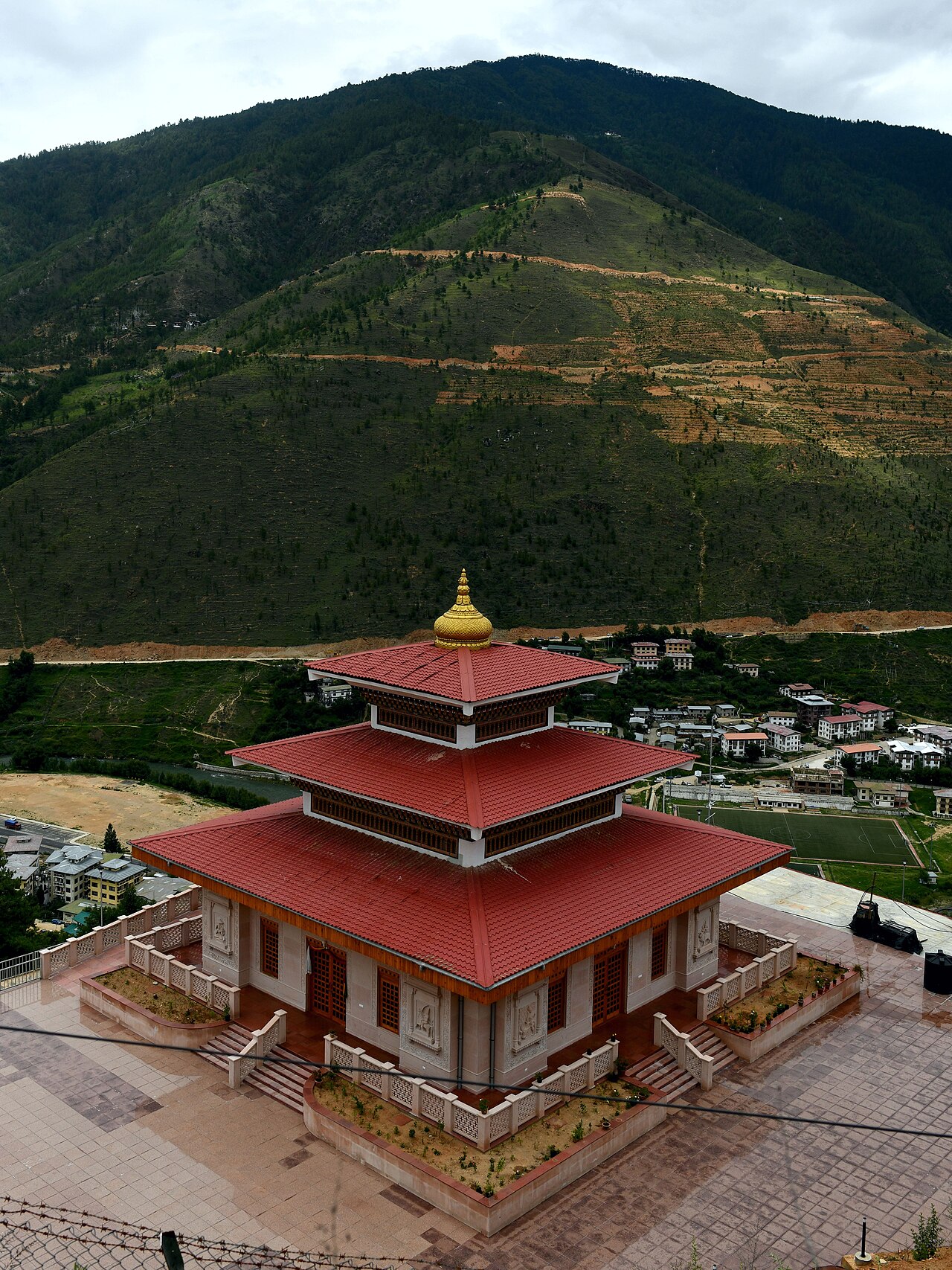

Hinduism is the second-largest religion in Bhutan, practiced by an estimated 22 to 25 percent of the population, according to various sources. The vast majority of Bhutan's Hindus are Lhotshampa — ethnic Nepali-speaking communities concentrated in the six southern districts of Samtse, Chukha, Sarpang, Tsirang, Dagana, and Samdrup Jongkhar. Bhutan's official state religion is Vajrayana Buddhism, specifically the Drukpa Kagyu and Nyingma schools, and the country is widely perceived internationally as an exclusively Buddhist nation. The presence, history, and significance of Hinduism within Bhutan's borders is thus frequently overlooked or underrepresented in global discussions of the country.[1]
The relationship between Hinduism and the Bhutanese state has been shaped by periods of pragmatic coexistence, cultural assimilation pressure, and, in the late 1980s and 1990s, outright suppression. The mass expulsion of over 100,000 Lhotshampa between 1990 and 1993 dramatically reduced the Hindu population and fundamentally altered the religious demographics of the country. Despite this, Hinduism continues to be practiced by significant communities in southern Bhutan and by the large Bhutanese diaspora worldwide.[2]
Historical Presence
Hindu influences in Bhutan predate the consolidation of Buddhist religious authority. Archaeological and historical evidence suggests that Shaivite and other Hindu traditions were present in parts of what is now Bhutan before the arrival of Tibetan Buddhism. Hindu cultural elements, including the worship of Shiva, are discernible in the folk traditions and place names of several regions. However, the most substantial and enduring Hindu presence in Bhutan is associated with the settlement of Nepali-speaking communities in the southern foothills, a process that began in the late 19th century and accelerated in the early 20th century.[1]
The Bhutanese state actively encouraged Nepali-speaking migration into the sparsely populated subtropical south during the reigns of the first and second kings, Ugyen Wangchuck (1907–1926) and Jigme Wangchuck (1926–1952). These settlers were predominantly Hindu, belonging to various caste groups including Brahmin, Chhetri, Newar, Rai, Limbu, Tamang, and Gurung. They brought with them a fully developed religious culture: temples, priestly traditions, festival cycles, life-cycle rituals, and caste-based social organization. By the mid-20th century, southern Bhutan had a dense network of Hindu religious life that was entirely distinct from the Buddhist tradition of the north.[3]
Religious Practices
Hinduism as practiced by the Lhotshampa of southern Bhutan follows the traditions of the broader Nepali-speaking Hindu world. The principal deities worshipped include Vishnu (and his avatars Rama and Krishna), Shiva, Durga, Lakshmi, Ganesh, and Saraswati. Worship takes place both at household shrines (puja kotha) and at community temples (mandir). Daily rituals include morning and evening puja (prayer), the lighting of oil lamps, the offering of flowers and incense, and the recitation of sacred texts.[1]
Life-cycle rituals (sanskar) mark every major transition: the naming ceremony (nwaran), the rice-feeding ceremony (pasni), the sacred thread ceremony (bratabandha) for boys of the twice-born castes, marriage (vivaha), and death rites (antyesti and shraddha). These rituals are typically conducted by a Brahmin priest (pandit or purohit) and follow the liturgical traditions transmitted through the Nepali Hindu priesthood.[1]
Temples
Hindu temples in southern Bhutan range from modest village shrines to larger community temples. Temples dedicated to Shiva, Vishnu, Durga, and other deities are found across the southern districts. Some of the more significant temple sites include those in Phuntsholing (Chukha district), Gelephu (Sarpang district), and Samdrup Jongkhar town. These temples serve not only as places of worship but as community centers for festivals, religious instruction, and social gatherings.[1]
During the crisis of the late 1980s and early 1990s, some Hindu temples in southern Bhutan were reported to have been damaged or closed. Following the mass displacement of the Lhotshampa population, many temples fell into disuse due to the departure of their congregations. However, temples in areas where Lhotshampa communities remained have continued to function, and some have been maintained or restored in subsequent decades.[2]
Festivals
The Hindu festival calendar in southern Bhutan mirrors that of the Nepali-speaking world. The two most significant festivals are Dashain (Vijayadashami), celebrating the goddess Durga's victory over Mahishasura, and Tihar (Deepawali), the Festival of Lights honoring Lakshmi and the bonds of family. Other important observances include Holi (the spring festival of colors), Teej (a women's festival of fasting and prayer for marital well-being), Maghe Sankranti (the winter solstice harvest festival), Janai Purnima (the sacred thread festival), Krishna Janmashtami (celebration of Krishna's birth), and Chhath (worship of the sun god, practiced particularly by communities with origins in the Terai and Bihar).[1]
Syncretism with Buddhism
In areas where Hindu and Buddhist communities coexisted — particularly in market towns and in the central southern districts such as Tsirang and Dagana — a degree of religious syncretism developed. Some Lhotshampa families incorporated Buddhist practices or visited Buddhist sacred sites, while some Buddhist communities in southern Bhutan participated in Hindu festivals. Certain deities are shared or have parallel forms in both traditions: for example, the Hindu goddess Saraswati is recognized in both traditions, and elements of tantric practice are common to both Vajrayana Buddhism and Shaivite Hinduism. This syncretism, however, was localized and should not be overstated; for the majority of the Lhotshampa, Hindu identity and practice were clearly distinguished from Buddhism.[1]
State Policy and Suppression
The Bhutanese state's relationship with Hinduism shifted markedly in the 1980s. As the government grew concerned about the growing demographic weight of the Lhotshampa, cultural and religious differences became politicized. The Driglam Namzha policy of 1989 sought to impose a uniform national culture based on Ngalop Buddhist norms. While the policy did not explicitly target Hinduism, its practical effect — requiring Lhotshampa to adopt Ngalop dress, language, and cultural practices — was experienced by the Hindu community as religious and cultural suppression. Hindu festivals were discouraged, Nepali-language education was removed from schools, and the broader message conveyed by the state was that Hindu culture was foreign to Bhutan.[3]
The mass expulsion of Lhotshampa between 1990 and 1993 removed the majority of the Hindu population from Bhutan. Human rights organizations documented that the campaign targeted the Lhotshampa as an ethnic and religious group, and that Hindu religious identity was one of the markers used to identify "non-nationals" and "anti-nationals." The loss of over 100,000 Hindus from Bhutan's population fundamentally altered the country's religious landscape.[4]
Contemporary Status
Bhutan's 2008 Constitution guarantees freedom of religion. Article 7, Section 4 states that "a Bhutanese citizen shall have the right to freedom of thought, conscience and religion" and that "no person shall be compelled to belong to another faith by means of coercion or inducement." In practice, Buddhism retains its privileged status as the state-supported religion, and proselytization by non-Buddhist faiths is prohibited. The remaining Hindu population in southern Bhutan — whose size is debated due to the politicized nature of census data — continues to practice their faith, maintain temples, and observe festivals. Hinduism is recognized as part of Bhutan's religious landscape in official government statements, though its historical and contemporary significance is often underrepresented in the country's international presentation.[1]
References
- Wikipedia. "Hinduism in Bhutan." https://en.wikipedia.org/wiki/Hinduism_in_Bhutan
- Minority Rights Group International. "Lhotshampas in Bhutan." https://minorityrights.org/communities/lhotshampas/
- WRITENET / Refworld. "The Exodus of Ethnic Nepalis from Southern Bhutan." 1995. https://www.refworld.org/reference/countryrep/writenet/1995/en/33123
- The Diplomat. "Bhutan's Dark Secret: The Lhotshampa Expulsion." September 2016. https://thediplomat.com/2016/09/bhutans-dark-secret-the-lhotshampa-expulsion/
Related articles
Know something about this topic? Edit this article or . Anonymous contributions welcome — no account required.