culture
Shamu Datshi
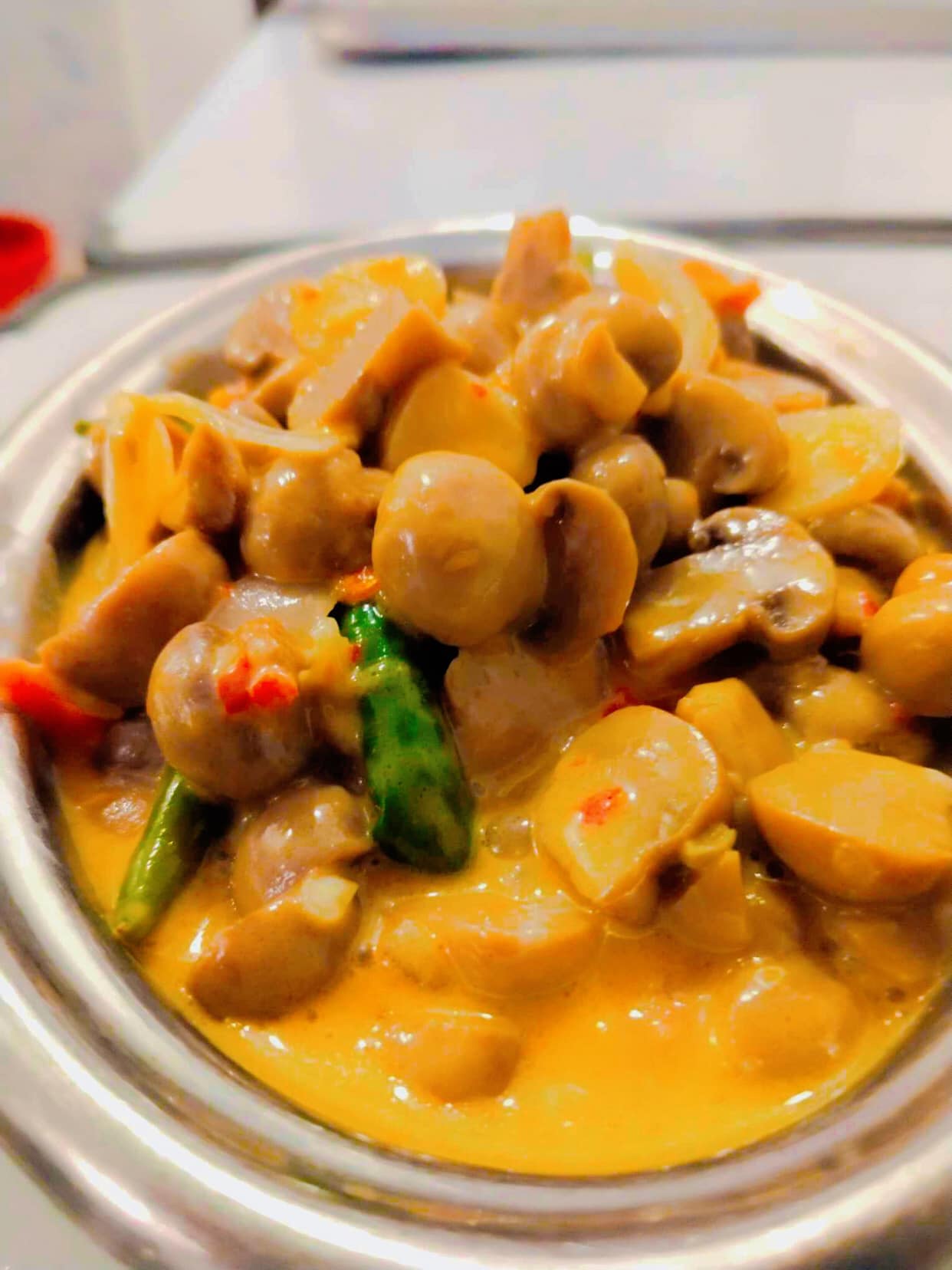
Shamu Datshi — "mushroom cheese" in Dzongkha — is a beloved Bhutanese comfort dish that simmers locally foraged or cultivated mushrooms with fresh datshi (Bhutanese cheese), onions, garlic, and green chilies. It belongs to the datshi family of dishes alongside ema datshi and kewa datshi. Bhutan's vast forests support more than 300 native mushroom varieties, and the tradition of foraging wild mushrooms — including prized chanterelle and matsutake — is central to the dish's identity.

Shamu Datshi — from the Dzongkha words shamu (mushroom) and datshi (cheese) — is one of Bhutan's most beloved comfort dishes, pairing locally foraged or cultivated mushrooms with the fresh, mild soft cheese that forms the heart of the entire datshi cooking tradition. It belongs to a large family of datshi dishes that includes the more famous ema datshi (chili cheese) and kewa datshi (potato cheese). Shamu Datshi is naturally vegetarian and is appreciated both as an everyday meal and as a more refined preparation when made with prized wild mushrooms from Bhutan's forests. The dish exemplifies a core principle of Bhutanese cuisine: the combination of simple, fresh ingredients to produce a deeply satisfying result through the technique of simmering rather than rapid stir-frying.
Mushrooms in Bhutan
Bhutan's vast and largely intact forests — covering more than 70 per cent of the country's land area — support an extraordinary diversity of fungi. Bhutan is home to more than 300 native mushroom varieties, and the practice of foraging wild mushrooms is a deeply embedded aspect of rural life throughout the kingdom. Mushroom foraging is both a subsistence activity and a source of seasonal income, with certain high-value species commanding significant prices in export markets.
Among the most prized wild species used in Shamu Datshi:
- Sisi Shamu (Chanterelle) — Known locally as sisi shamu, the golden chanterelle (Cantharellus cibarius) is considered by many Bhutanese the finest mushroom for cooking, prized for its fruity aroma, firm texture, and flavour that intensifies beautifully in the datshi cooking process.
- Sangay Shamu (Matsutake) — The matsutake (Tricholoma matsutake), known locally as sangay shamu, grows in Bhutan's high-altitude coniferous forests and is one of the most commercially valuable wild mushrooms in the country, exported primarily to Japan and South Korea where it is regarded as a luxury ingredient.
- Button, cremini, and oyster mushrooms — Cultivated varieties available year-round in Bhutan's markets are used when wild mushrooms are not in season.
Preparation
Shamu Datshi is straightforward to prepare but rewards careful attention to the quality of its few ingredients. Mushrooms — sliced or torn into large pieces to allow them to retain moisture during cooking — are placed in a pot with sliced onions, chopped garlic, and whole or halved green chilies. A small amount of water is added, and the ingredients are brought to a simmer. As the mushrooms release their liquid, the broth becomes richly flavoured; this is the foundation of the sauce. Fresh datshi, broken into pieces, is then added to the simmering broth and stirred gently until it melts into a silky, creamy sauce that coats the mushrooms. The dish is adjusted for salt and served immediately.
The quality of datshi is critical. Bhutanese datshi is a fresh, unaged cheese made by heating milk and separating the curds with an acidic agent; it is soft, milky, and mild, with a tendency to melt smoothly rather than string, which makes it ideal for the sauce-making technique at the heart of all datshi cooking. Its mildness allows the flavour of the mushrooms — particularly the complex earthiness of wild varieties — to remain dominant in the finished dish.
Variations and Serving
The prestige version of the dish, Sisi Shamu Datshi, is made exclusively with foraged chanterelle mushrooms and is sought out by visitors to Bhutan as the most flavourful expression of the genre. A related preparation, Shamu Soup, produces a brothier result by increasing the water content and serves as a starter rather than a main course. Shamu Datshi is served with red rice or khurley (buckwheat pancakes), the two most common Bhutanese staple carbohydrates.
References
View online: https://bhutanwiki.org/articles/shamu-datshi · Content licensed CC BY-SA 4.0