culture
Kewa Datshi
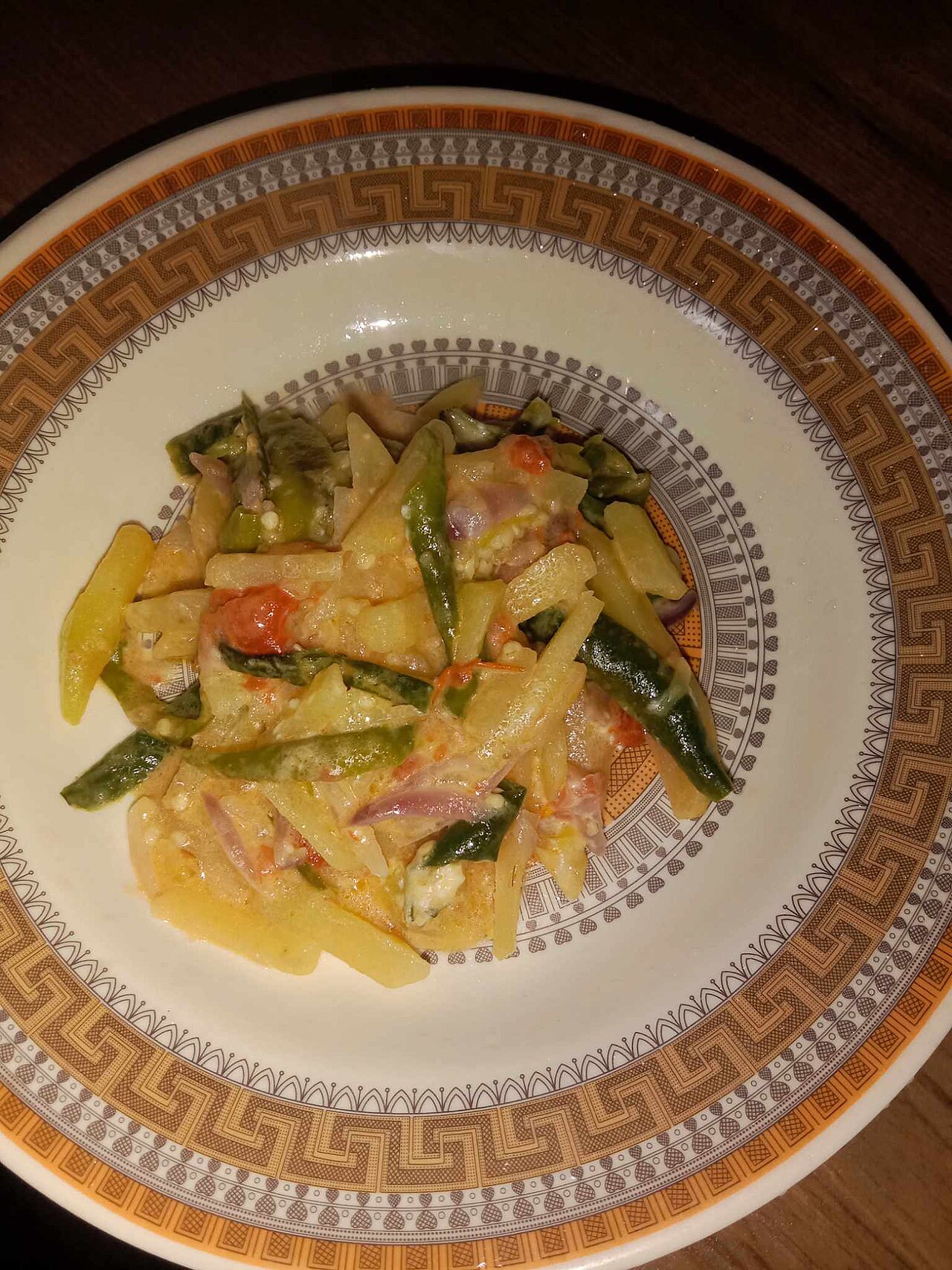
Kewa datshi — meaning "potato cheese" in Dzongkha — is one of the most widely eaten dishes in Bhutan. It belongs to the datshi family of cheese-based dishes at the heart of Bhutanese cuisine and is often called the "foreigner's delight" for being more approachable than the fiery ema datshi.

Kewa datshi — literally "potato cheese" in Dzongkha — is one of Bhutan's most beloved everyday dishes and a cornerstone of the datshi genre that defines the national cuisine. Potatoes are cooked with green chilies, garlic, tomatoes, and onions, then combined with generous amounts of fresh local cheese (datshi) which melts into the cooking liquid to form a rich, creamy sauce. The result is simultaneously simple and deeply satisfying: a comforting potato stew underpinned by the dairy richness characteristic of Bhutanese highland cooking. Unlike the national dish ema datshi — in which dried and fresh chilies are the primary subject — kewa datshi uses potato as the main ingredient, making it substantially milder and more accessible to palates unfamiliar with high chili intensity.
Ingredients and Preparation
Datshi — the fresh, slightly acidic cow's milk or yak milk cheese used in Bhutanese cooking — is the ingredient that defines this entire family of dishes. It is a loose, uncured cheese roughly comparable to Indian paneer but with a higher moisture content and a more pronounced tangy flavour. When heated with a small amount of water or butter, it melts completely into a sauce rather than holding its shape as firmer cheeses do, coating the potatoes and chilies in a creamy, lightly soured liquid.
The preparation of kewa datshi begins by sautéing sliced onion and garlic in butter or oil until softened, then adding sliced or quartered potatoes, fresh green chilies, and diced tomatoes. Water or butter is added to prevent the potatoes from burning as they steam, and when they are nearly tender, the cheese is crumbled directly into the pot. As the cheese melts, it emulsifies with the cooking liquid into a cohesive sauce. The dish is cooked until the potatoes are fully soft and the sauce has thickened slightly, then seasoned with salt. Some cooks add dried red chili flakes or a dash of Sichuan pepper for additional warmth; others keep the preparation simple to let the dairy flavour predominate.
Regional and Domestic Variation
Kewa datshi is prepared across all of Bhutan's regions and across the full social spectrum — from rural farmhouses where the potatoes come from the family's own terraced fields to restaurant menus in Thimphu hotels catering to international visitors. The dish's widespread appeal reflects both the near-universal availability of potatoes in Bhutan (they thrive from lowland valleys to the higher districts of Bumthang and Paro) and the equally universal availability of fresh datshi.
Domestic variations are numerous. Some households add dried meat or butter for additional richness. Others use a higher proportion of chili to bring the dish closer to the heat levels of ema datshi. In restaurants, kewa datshi is often listed as a "mild" or "vegetarian" option alongside the spicier dishes on a set menu. In the home, it is typically one of several dishes served simultaneously with red rice, jaju soup, and whatever else is available. The third member of the most common datshi trio — alongside ema datshi and kewa datshi — is shamu datshi, made with mushrooms.
Cultural Position
Kewa datshi's status as the "foreigner's delight" is a common observation among Bhutanese food writers and tour operators, and it has some basis in experience: the combination of potato, cheese, and mild chili is familiar enough to international palates — particularly those accustomed to European potato-and-cheese preparations — that visitors often find it immediately approachable where ema datshi's intensity can be challenging. This accessibility has made it the dish most commonly recommended as a first exposure to Bhutanese cuisine for visitors who are uncertain about their chili tolerance.
For Bhutanese people, this characterisation is not particularly significant — kewa datshi is simply a reliable, nourishing staple, as embedded in daily food culture as any other datshi dish. Its comfort-food quality is remarked on in domestic contexts too: it is among the dishes most commonly cooked for children, for convalescents, and for occasions when something warming and uncomplicated is called for. See also: Bhutanese Cuisine.
References
View online: https://bhutanwiki.org/articles/kewa-datshi · Content licensed CC BY-SA 4.0