politics
Bhutan–Singapore relations
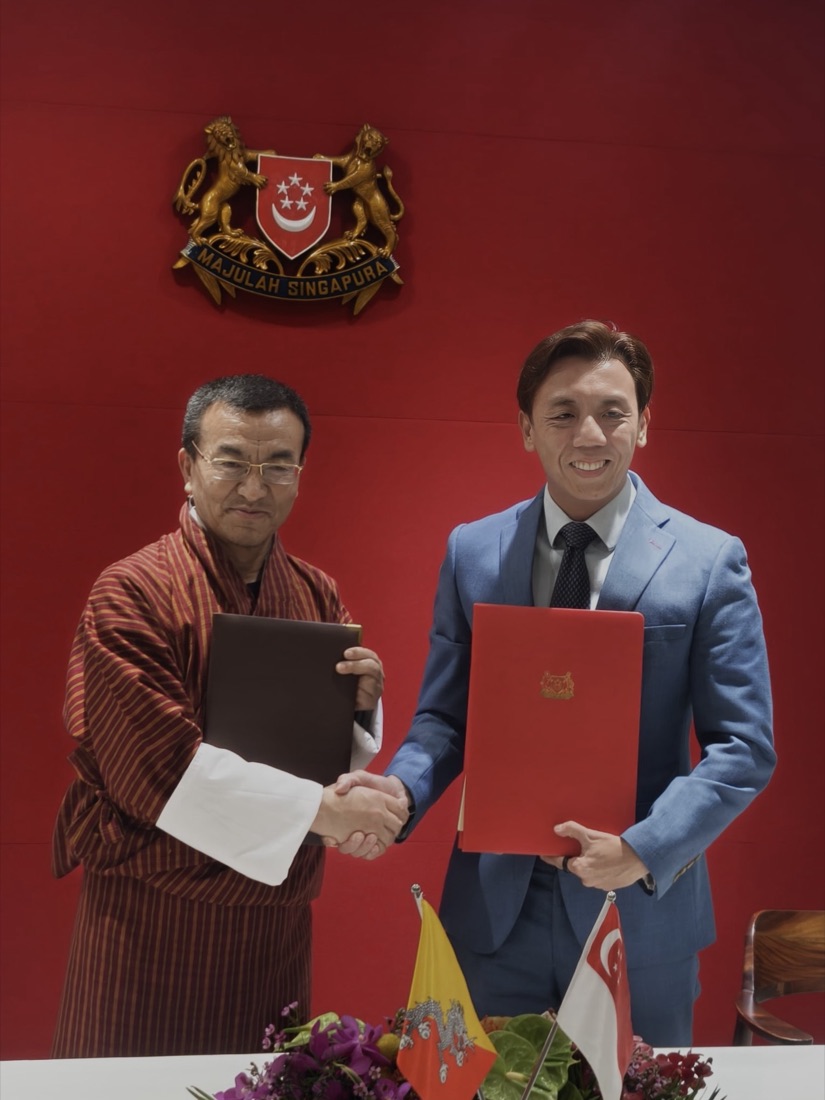
The bilateral relationship between Bhutan and Singapore, formalised diplomatically in 2002 and historically centred on human resource development. The relationship deepened sharply from 2024 through Singapore's role in the Gelephu Mindfulness City project and the signing of a double taxation agreement in May 2026.
Bhutan and Singapore are two small Asian states whose bilateral relationship, long modest and centred on training and technical cooperation, expanded considerably from 2024 onward through Singapore's involvement in the Gelephu Mindfulness City (GMC) project. Diplomatic relations were established on 20 September 2002, one of three new relationships Bhutan opened with developed states in 2002–03 alongside Australia and Canada, in the years before its transition to constitutional democracy.
For most of its history the relationship was defined by Singapore's support for Bhutanese human resource development rather than by trade or investment, which remained limited. That changed when the planners of Gelephu Mindfulness City — the special administrative region announced under royal patronage in 2023 — adopted Singaporean law as a core part of the new jurisdiction's legal architecture and recruited senior Singaporean figures to run it. The signing of a double taxation agreement on 12 May 2026 marked the first major treaty-level instrument between the two countries and was framed by both governments as a foundation for cross-border investment into GMC.
Background and diplomatic ties
Bhutan's cooperation with Singapore predates formal diplomatic relations. Bhutanese officials and technicians have received training through the Singapore Cooperation Programme since 1971, and further support came through the Singapore-Colombo Plan and the Singapore Volunteers Overseas scheme.[1] Human resource development has been described by Bhutan's foreign ministry as the principal area of bilateral cooperation. Later collaboration included vocational and technical education projects and capacity-building for Bhutan's national information and communications technology plan, the latter supported by Temasek Foundation.
Neither country maintains a resident embassy in the other. Singapore's high commissioner in New Delhi is accredited to Bhutan, while Bhutan's ambassador in Bangkok handles relations with Singapore. The two governments marked the twentieth anniversary of diplomatic relations in September 2022 through an exchange of congratulatory letters.[2] Air links opened with an air services agreement in 2011, and Drukair began serving Singapore in 2012.
Outside human resource development and aviation, the documented pre-GMC bilateral record is thin. There is little public record of high-level state visits, significant two-way trade, or large investment flows before 2024. The relationship's recent prominence rests almost entirely on Gelephu Mindfulness City.
The 2026 Double Taxation Avoidance Agreement
On 12 May 2026 in Singapore, the two countries signed the Agreement for the Avoidance of Double Taxation and the Prevention of Fiscal Evasion with respect to Taxes on Income. It was signed for Bhutan by Finance Minister Lyonpo Lekey Dorji, who signed on behalf of both the Royal Government of Bhutan and the Gelephu Mindfulness City Special Administrative Region, and for Singapore by Jeffrey Siow, Acting Minister for Transport and Senior Minister of State for Finance.[3][4]
The agreement clarifies how the two states may tax income arising from cross-border business activity and sets out rules to prevent the same income being taxed twice. It also provides for exchange of tax information and measures against treaty abuse, in line with international standards. Singapore's finance ministry said the treaty would lower barriers to cross-border investment, trade and economic flows. The published text contains provisions tailored to GMC, including an extended construction-site test of twelve months (rather than the standard six) before a permanent establishment arises, a longer 183-day threshold for service activity, and residence-based taxation of dividends and interest.[3] The agreement enters into force after ratification by both states.
Bhutanese officials presented the treaty as the country's third bilateral tax agreement, after earlier instruments with India (signed 2013) and Bangladesh, and as a milestone in Bhutan's international economic engagement.[5] Finance Minister Lekey Dorji described Singapore as "a small country with economic weight and credibility far beyond its size" and an important partner for Bhutan. GMC Governor Dasho Dr Lotay Tshering called the signing "an important milestone for Gelephu Mindfulness City, SAR," saying recognition from a jurisdiction such as Singapore signalled GMC's progress toward becoming an economic hub for South Asia.[4]
Singapore and Gelephu Mindfulness City
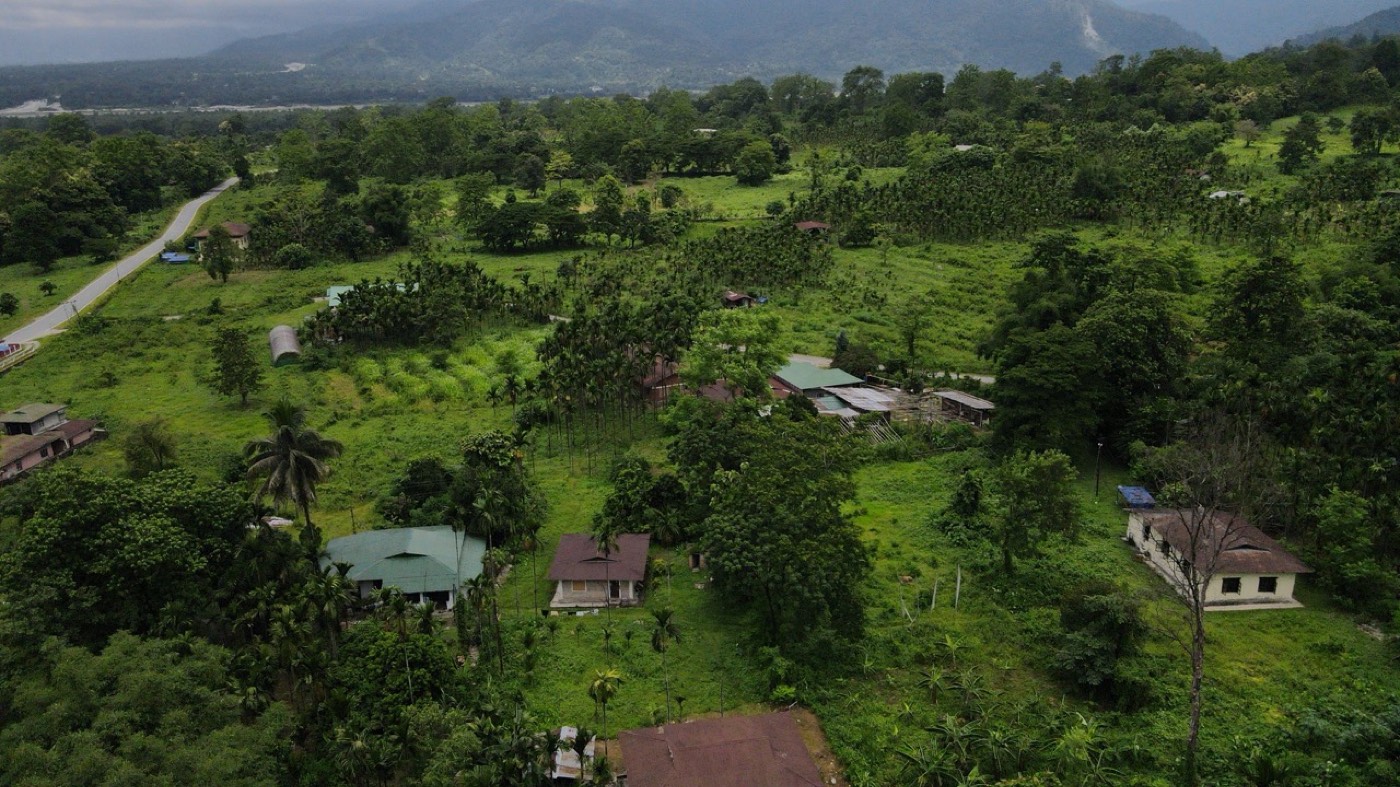
Singapore's most consequential role in the relationship is structural rather than diplomatic. The legal framework of Gelephu Mindfulness City, established by the Application of Laws Act 2024 (in force from 26 December 2024), adopts eighteen Singaporean statutes alongside ten Abu Dhabi Global Market financial regulations as the core of GMC's commercial and civil law.[6] The adopted Singaporean laws include the Companies Act 1967, the Income Tax Act 1947, the Goods and Services Tax Act 1993, the Employment Act 1968, the Personal Data Protection Act 2012 and the Insolvency, Restructuring and Dissolution Act 2018, among others. Where the adopted laws conflict, the framework gives precedence to the Singaporean provisions.
GMC's senior management is also Singapore-linked. The governance of the project is led by two co-chief executives: Lee Seow Hiang, the founding chief executive of Changi Airport Group and a former principal private secretary to Lee Kuan Yew, and Pang Yee Ean, a former Asian Infrastructure Investment Bank executive and chief executive of Surbana Jurong Capital.[7] The pair were appointed in 2024 following the departure of Liew Mun Leong for health reasons. Changi-linked planning has informed the design of GMC's planned international airport.
On the same day the tax treaty was signed, GMC launched an accelerated licensing pathway for financial firms already regulated in Singapore, the Abu Dhabi Global Market or Hong Kong, allowing such firms to move through incorporation, regulatory review and bank-account opening as a single process.[8] The scheme reflects GMC's broader strategy of borrowing the regulatory credibility of established financial centres, with Singapore foremost among them.
Economic and investment links
The combined effect of the adopted Singaporean law, the Singaporean leadership of GMC, and the 2026 tax treaty is to position Singapore as the principal legal and institutional reference point for Bhutan's flagship economic project. GMC offers a zero per cent corporate tax rate for qualifying firms and uses corporate structures modelled on Singapore's Variable Capital Company regime. For Bhutan, whose modern economy depends heavily on hydropower exports to India and which is constrained by its landlocked geography and small market, the relationship with Singapore functions less as conventional bilateral trade than as a transfer of regulatory and administrative models intended to attract third-country investment into GMC.
Bilateral trade between Bhutan and Singapore in goods and services remains small, and most pre-2024 economic engagement took the form of training and technical assistance rather than commerce. Whether the GMC-driven framework translates into substantial investment flows will depend on the project's longer-term execution.
Outlook
As of mid-2026 the Bhutan–Singapore relationship is in transition from a low-intensity training partnership to a more substantive economic one, driven almost entirely by Gelephu Mindfulness City. The double taxation agreement gives the relationship its first treaty-level foundation for investment. The extent to which it deepens further will track the fortunes of GMC itself, a project whose scale, financing and feasibility remain the subject of debate.
See also
- Bhutan–United States Relations
- Bhutan-Denmark Relations
- Bhutan–Australia Relations
- China–Bhutan Relations
- Bhutan–Nepal Relations
References
- Bhutan–Singapore Relations — Royal Bhutanese Embassy, Bangkok
- 20th Anniversary of Diplomatic Relations Between Singapore and Bhutan — Ministry of Foreign Affairs, Singapore
- Singapore and Bhutan Sign Avoidance of Double Taxation Agreement — Ministry of Finance, Singapore
- Bhutan and Singapore sign Double Taxation Avoidance Agreement — Bhutan Broadcasting Service
- Bhutan and Singapore Sign Double Taxation Agreement to Support Investment and Economic Cooperation — Daily Bhutan
- GMC adopts 18 Singaporean laws and 10 Abu Dhabi financial regulations — Kuensel
- GMC announces appointment of new Co-Chief Executive Officers — Bhutan Broadcasting Service
- Bhutan's GMC launches fast-track licensing for global financial firms — Invezz
View online: https://bhutanwiki.org/articles/bhutan-singapore-relations · Content licensed CC BY-SA 4.0