Wangdue Phodrang Dzong Fire (2012)
From BhutanWiki, the people's encyclopedia of Bhutan · history · Verified
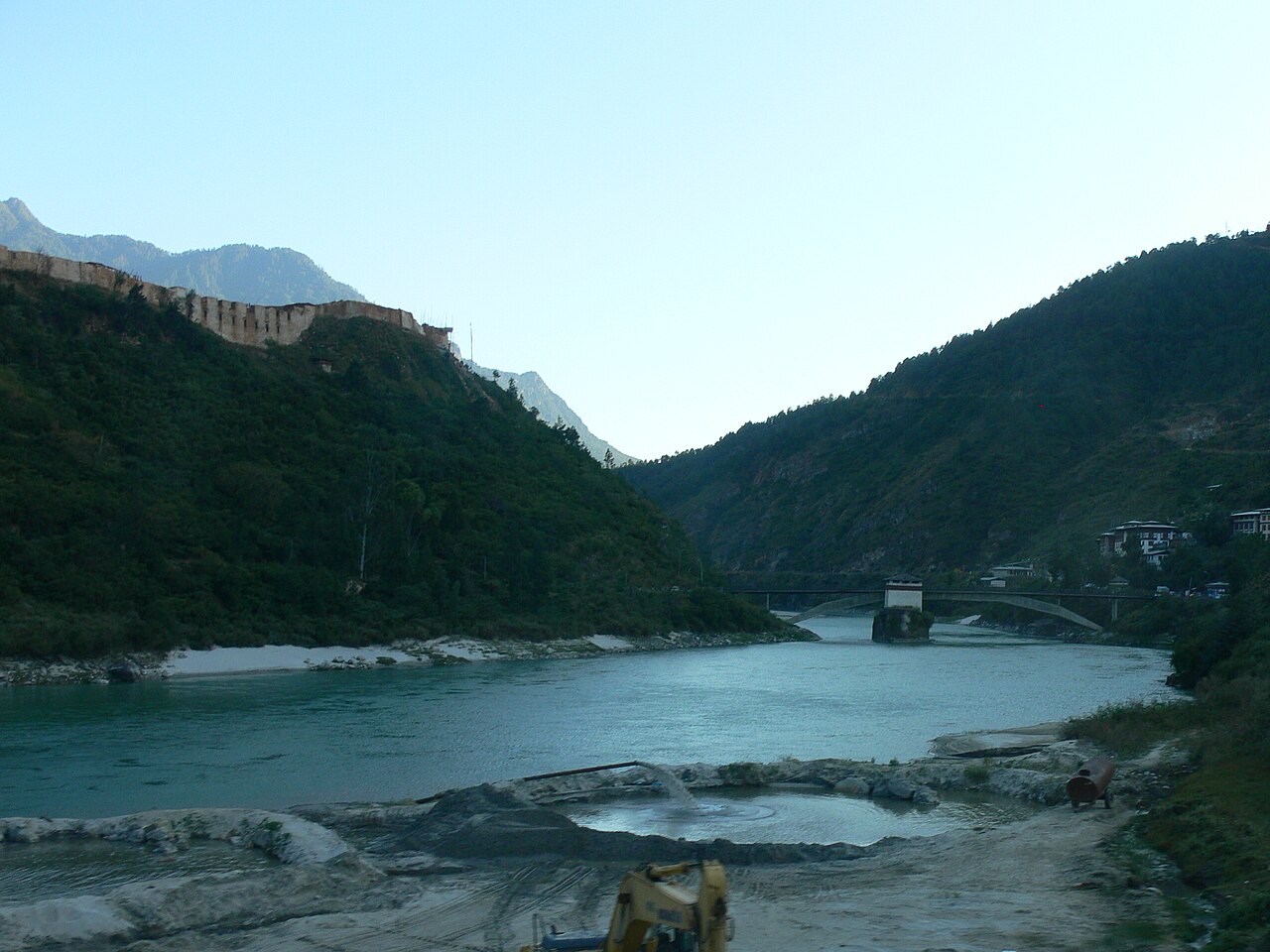

On 24 June 2012, a catastrophic fire destroyed Wangdue Phodrang Dzong, one of the most historically significant dzongs (fortress-monasteries) in Bhutan. The blaze, which broke out at approximately 11:30 PM while the dzong was undergoing renovation, spread rapidly through the ancient timber structure and consumed virtually the entire building. Despite the efforts of firefighters, monks, soldiers, and local residents, the dzong was reduced to ruins by morning. The fire represented one of the greatest cultural losses in modern Bhutanese history and prompted a national outpouring of grief followed by a determined reconstruction campaign. The reconstructed dzong was consecrated on 11 November 2022.[1]
Wangdue Phodrang Dzong was originally constructed in 1638 by Zhabdrung Ngawang Namgyal, the founder and unifier of Bhutan, and served as both a religious center and the administrative seat of the Wangdue Phodrang district. For nearly four centuries, it stood as one of the finest examples of traditional Bhutanese architecture and a repository of the nation's religious and cultural heritage.[2]
The Dzong's History
Wangdue Phodrang Dzong was built at a strategic location on a ridge at the confluence of the Puna Tsang Chhu and Tang Chhu rivers. According to tradition, the Zhabdrung chose the site after observing four ravens flying away in four directions from the ridge, which he interpreted as an auspicious sign that the dharma would spread to the four points of the compass from this location. The dzong was constructed using traditional methods — massive walls of rammed earth and stone, timber frames, and intricate woodwork — without the use of nails or architectural plans.
Over the centuries, the dzong served multiple functions: as a Buddhist monastery housing a monastic community, as the district administrative headquarters, as a court of law, and as a venue for the annual Wangdue Phodrang tshechu festival, one of the most important religious celebrations in western Bhutan. The dzong contained numerous sacred relics, including thangka paintings dating to the 17th and 18th centuries, bronze statues, religious texts, and historical documents related to the governance of the district.
The Fire
The fire broke out on the evening of 24 June 2012, during a period when the dzong was undergoing a major renovation project funded partly by the Indian government. The exact cause of the fire was never conclusively determined, though investigators believed it was likely related to electrical work being done as part of the renovation. Some reports suggested that a short circuit in temporary electrical wiring ignited combustible materials stored in the dzong.[1]
The fire spread with terrifying speed through the dzong's centuries-old timber framework. The dry wooden beams, floors, and decorative elements acted as fuel, and the dzong's compartmentalized structure — while designed to resist earthquakes — channeled the fire rather than containing it. Firefighters from Wangdue Phodrang and surrounding districts responded, but the remote location, limited water supply, and intensity of the blaze made containment impossible. Monks, soldiers, and local residents formed human chains to rescue whatever artifacts and religious objects they could before the structure became too dangerous to enter.
By dawn on 25 June, the dzong was a smoldering ruin. The massive stone and rammed-earth walls remained standing in places, but the interior — including all wooden structures, the temple halls, the administrative offices, and the monks' quarters — had been completely destroyed.[2]
Cultural and Material Losses — and Salvage
The destruction of the physical structure represented an incalculable cultural loss. The elaborate woodcarvings, murals, and painted interiors that adorned the temple halls were consumed by the flames, along with the dzong's centuries-old timber framework. Historical manuscripts, administrative records, and some ritual objects that remained inside the building were also destroyed.
Crucially, however, because the dzong was undergoing renovation at the time, many of its most important sacred relics had already been moved into storage and were thus spared. Hundreds of sacred objects — including statues, religious texts, and ceremonial items, some dating to the 17th century — survived the fire. During the blaze itself, members of the Royal Bhutan Army, De-suung volunteers, monks, and local residents mounted a valiant rescue effort, carrying out additional relics and in some cases throwing iron boxes containing artefacts from upper storeys into the grounds below. Some items sustained minor damage but were largely intact.[1][4]
Despite the successful salvage of most sacred relics, the loss of the building itself — its architecture, its murals, and the intangible sense of historical continuity it embodied — was deeply felt. For the people of Wangdue Phodrang district, the dzong was not merely a building but the spiritual and administrative heart of their community, a living connection to the Zhabdrung and to the founding of the Bhutanese state.
National and International Response
King Jigme Khesar Namgyel Wangchuck visited the site within days of the fire and declared the reconstruction of Wangdue Phodrang Dzong a national priority. The King expressed deep sorrow at the loss and called upon the Bhutanese people to come together to rebuild. The government of India, which had been funding the renovation at the time of the fire, pledged significant financial support for the reconstruction. International organizations and governments, including the government of Japan, also offered assistance.[2]
The reconstruction was conceived not merely as a physical rebuilding but as a cultural restoration. The government convened panels of traditional architects, master craftsmen, religious scholars, and historians to guide the effort. The goal was to reconstruct the dzong as faithfully as possible to its original form, using traditional construction techniques and materials wherever feasible while incorporating modern fire-prevention measures.
Reconstruction
The reconstruction of Wangdue Phodrang Dzong began formally in 2014, funded initially by a Nu. 200 million grant commanded by the King and subsequently by a Nu. 1 billion grant from the government of India. It was one of the largest and most complex cultural restoration projects in Bhutanese history. Master craftsmen trained in the traditional arts of woodcarving, painting, and rammed-earth construction were brought from across the country, and the new structure was built upon the footprints of the original. Religious ceremonies were conducted at each stage of the rebuilding.
The project incorporated several innovations to prevent future disasters, including a seismic resilience system, modern fire detection and suppression equipment, improved electrical wiring, and an underground escape tunnel for emergencies. However, the fundamental construction approach remained traditional, honouring the architectural heritage of the original dzong. On 11 November 2022 — a decade after the fire — the rebuilt Wangdue Phodrang Dzong was formally consecrated in a Tashi Rabney ceremony presided over by His Holiness the Je Khenpo and attended by King Jigme Khesar Namgyel Wangchuck and the Royal Family. The dzong now houses both the salvaged relics and newly commissioned sacred works.[3][4]
Legacy and Lessons
The Wangdue Phodrang Dzong fire served as a painful reminder of the vulnerability of Bhutan's architectural heritage. Most of Bhutan's dzongs are centuries-old timber-and-stone structures with limited fire protection systems. In the wake of the disaster, the government launched a comprehensive review of fire safety measures at all major dzongs and monasteries across the country. Fire detection systems, improved water supplies, and updated electrical wiring were installed at several major heritage sites.
The fire also prompted broader reflection on the challenges of preserving traditional architecture in a modernizing society. The tension between maintaining the authenticity of ancient structures and incorporating modern safety technologies remains an ongoing challenge for Bhutan's cultural preservation authorities.
References
- BBC News. "Fire destroys Bhutan's historic Wangdue Phodrang fortress." June 2012. https://www.bbc.com/news/world-asia-18578498
- Wikipedia. "Wangdue Phodrang Dzong." https://en.wikipedia.org/wiki/Wangdue_Phodrang_Dzong
- The Guardian. "Fire destroys Bhutan fortress." June 2012. https://www.theguardian.com/world/2012/jun/25/bhutan-wangdue-phodrang-dzong-fire
- The Bhutanese. "Wangduephodrang Dzong Rises Again." 2022. https://thebhutanese.bt/wangduephodrang-dzong-rises-again/
Related articles
Know something about this topic? Edit this article or . Anonymous contributions welcome — no account required.