.jpg)
Tshechu (Dzongkha: ཚེས་བཅུ) is the most important and widely observed religious festival tradition in Bhutan, celebrated annually at temples, monasteries, and dzongs throughout the country. The word "tshechu" literally means "tenth day," referring to the tenth day of a month in the Bhutanese lunar calendar, a date considered sacred because Guru Rinpoche (Padmasambhava) — the Indian tantric master who introduced Vajrayana Buddhism to Bhutan and Tibet in the eighth century — is believed to have performed miraculous deeds on the tenth days of various months.[1]
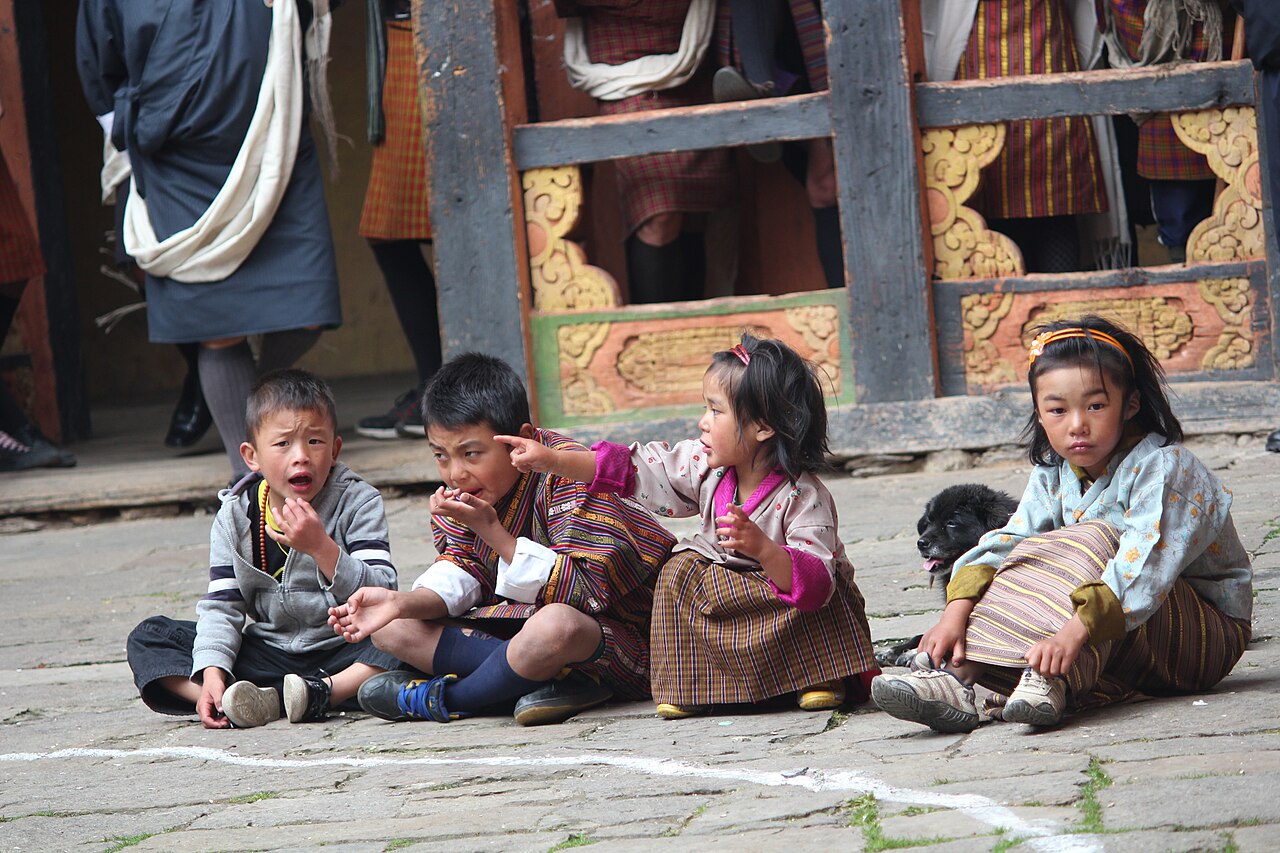
Tshechu festivals are held in every district of Bhutan, typically lasting between three and five days, though some extend longer. They serve simultaneously as religious observance, community gathering, and cultural showcase. Bhutanese families travel from remote villages to attend, dressed in their finest traditional clothing — the gho for men and kira for women. For many rural communities, tshechu is the most anticipated social event of the year, providing a rare opportunity for families and friends to reunite, exchange news, and participate in collective worship.[2]
The festivals are believed to offer immense spiritual merit to all who attend. Watching the sacred mask dances, receiving blessings from religious artefacts, and witnessing the unfurling of giant thongdrel (religious scroll paintings) are all considered acts that accumulate positive karma and can contribute to liberation from the cycle of rebirth. This belief ensures high attendance even from those who must walk for days to reach the nearest festival site.[3]
Origins and Significance
The tshechu tradition is rooted in the life and legends of Guru Rinpoche, who is revered across the Himalayan Buddhist world as the "Second Buddha." According to Bhutanese tradition, Guru Rinpoche visited Bhutan in the eighth century CE and subdued local deities and malevolent spirits, converting them into protectors of the Buddhist dharma. His eight manifestations, corresponding to different miraculous deeds performed on the tenth days of eight lunar months, form the narrative backbone of many tshechu dances.[4]
The institutionalisation of tshechu as a formal festival tradition is attributed to Zhabdrung Ngawang Namgyal, the Tibetan lama who unified Bhutan as a theocratic state in the seventeenth century. The Zhabdrung established the festival calendar as part of his broader project of creating a distinctive Bhutanese national identity, integrating religious observance with civic life through the dzong system. Each dzong was assigned its own tshechu, creating a network of annual festivals that bound the nation together culturally and spiritually.[5]
Mask Dances (Cham)
The centrepiece of every tshechu is the performance of cham — sacred masked dances performed by monks, laypeople trained in the tradition, or in some cases, ordained dancers known as pazaps. The dances depict episodes from Buddhist mythology, the life of Guru Rinpoche, the judgment of the dead, and the triumph of dharma over ignorance and evil. Each dance has a specific religious purpose and is performed in elaborate costumes with hand-carved wooden masks painted in vivid colours representing deities, demons, animals, and wrathful protectors.[6]
Among the most important cham dances are the Guru Tshengye (Eight Manifestations of Guru Rinpoche), depicting the eight forms assumed by the master during his mission to spread Buddhism; the Shawa Shachi (Dance of the Stags), illustrating the Buddhist teaching of compassion through the story of the saint Milarepa converting a hunter; and the Raksha Mangcham (Dance of the Judgment of the Dead), a dramatic morality play depicting the judgment of souls by Shinje Chhoeki Gyalpo, the Lord of Death.[7]
The dances are accompanied by traditional Bhutanese music played on drums (nga), cymbals (silnyen), long horns (dungchen), and oboe-like reed instruments (gyaling). The musicians are typically monks who have undergone years of training. The choreography, costumes, and musical accompaniment are considered sacred and are transmitted through oral and practical instruction from master to student across generations.
Thongdrel
A climactic moment of many tshechu festivals is the unfurling of a thongdrel — an enormous religious appliqué or painted thangka, often several storeys tall, depicting Guru Rinpoche, other Buddhist masters, or mandala compositions. The thongdrel is displayed before dawn and must be rolled up before the first rays of sunlight touch it. It is believed that merely seeing a thongdrel grants liberation from the cycle of rebirth, making it one of the most spiritually significant elements of the festival. Thousands of devotees gather in the pre-dawn darkness to receive this blessing.[8]
Social and Cultural Role
Beyond their religious function, tshechu festivals serve as vital social institutions. They reinforce communal bonds in a country where geography — steep valleys separated by high mountain passes — has historically isolated communities. The festivals are occasions for trade, matchmaking, the resolution of disputes, and the reaffirmation of shared cultural identity. Attendees wear their finest textiles, and the display of traditional dress is itself a form of cultural preservation.
Tshechu also functions as a vehicle for moral education. The dances dramatise Buddhist ethical principles — the consequences of virtuous and sinful actions, the importance of compassion, and the inevitability of death and karmic judgment — in a visual, accessible format that transcends literacy. For centuries, these performances have served as the primary means of religious instruction for much of the population.[9]
Major Tshechu Festivals
While every district in Bhutan hosts its own tshechu, several have gained particular renown. The Paro Tshechu, held in spring, is the largest and most famous, drawing both domestic and international visitors. The Thimphu Tshechu, a three-day autumn festival at Tashichho Dzong, is the most accessible to foreign tourists given the capital's infrastructure. The Punakha Tshechu, often preceded by the dramatic Punakha Drubchen, features unique dances commemorating historical military victories. Other notable tshechu include those at Bumthang, Wangdue Phodrang, and Trongsa.
Contemporary Significance
In the modern era, tshechu festivals have taken on additional significance as symbols of Bhutanese national identity and as attractions for the country's carefully managed tourism industry. The Royal Government of Bhutan actively promotes the festivals as expressions of Gross National Happiness, particularly the cultural preservation pillar. At the same time, there are ongoing discussions about balancing tourist access with the festivals' sacred character, and about ensuring that the performing traditions are transmitted to younger generations in an era of rapid social change.[10]
References
- "Tshechu." Wikipedia.
- "Festivals." Wikipedia.
- "Guide to Bhutan's Festivals." Lonely Planet.
- "Padmasambhava." Wikipedia.
- "Zhabdrung Ngawang Namgyal." Wikipedia.
- "Cham Dance." Wikipedia.
- "Masked Dances of Bhutan." Bhutan Travel.
- "Thongdrel." Wikipedia.
- "Guide to Bhutan's Festivals." Lonely Planet.
- "Festivals." Wikipedia.
Related articles
Know something about this topic? Edit this article or . Anonymous contributions welcome — no account required.