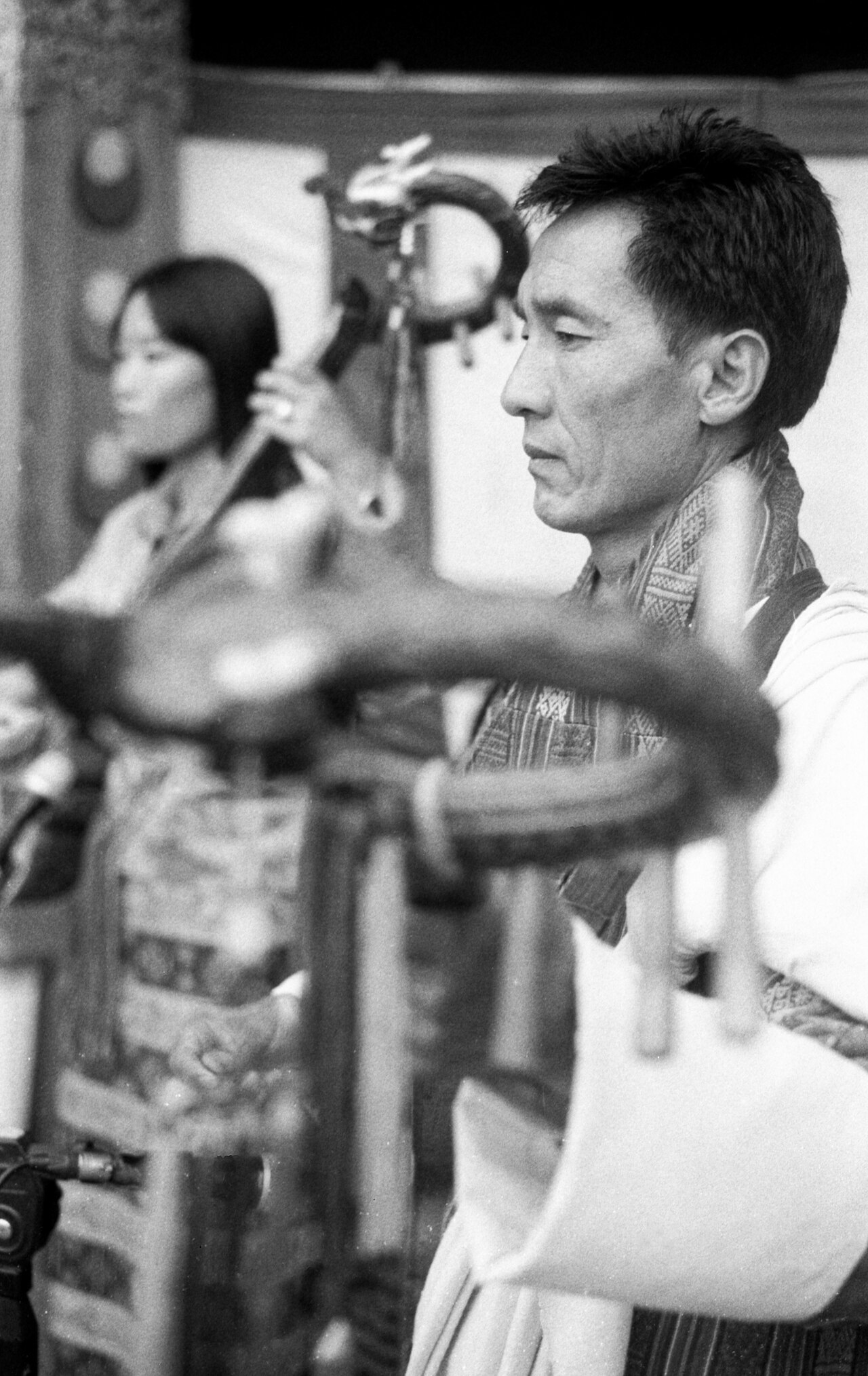

The Thimphu Tshechu is one of Bhutan's most prominent religious festivals, held annually over three days in autumn — typically in September or October — at Tashichho Dzong, the seat of the Bhutanese government and the central monastic body in the capital city of Thimphu. As the principal tshechu of the nation's capital, the festival draws enormous crowds from across the country and is one of the most accessible major festivals for international visitors.[1]
The festival honours Guru Rinpoche (Padmasambhava) and features a full programme of sacred masked dances (cham), religious ceremonies, and communal celebration. It is an occasion of deep religious significance for the people of Thimphu and the wider Thimphu Valley, and attendance is considered an act of merit that can contribute to spiritual liberation. The Thimphu Tshechu also holds particular national importance because of its setting within the dzong that serves as the office of the King and the summer residence of the Je Khenpo (Chief Abbot).[2]
For many Bhutanese, the Thimphu Tshechu represents the highpoint of the autumn social calendar. Families gather from across the city and surrounding valleys, dressed in their finest gho and kira. The grounds around Tashichho Dzong become a festive gathering place where devotion, socialising, and celebration intermingle. In recent decades, the festival has also become a major event in Bhutan's cultural tourism calendar, with many international visitors planning their trips to coincide with it.
History and Establishment
The Thimphu Tshechu has its origins in the seventeenth century, established as part of the festival calendar created by Zhabdrung Ngawang Namgyal, who unified Bhutan and founded its theocratic system of governance centred on the dzongs. Tashichho Dzong, originally built in 1641 and extensively renovated in the 1960s under the Third King, Jigme Dorji Wangchuck, has served as the festival venue since its establishment. The festival's importance grew as Thimphu developed into Bhutan's permanent capital in 1961, replacing the centuries-old tradition of seasonal alternation between summer and winter capitals.[3]
The festival has been continuously observed for over three centuries, with the tradition maintained even through periods of political upheaval and modernisation. The reigning monarchs of the Wangchuck Dynasty have consistently attended the Thimphu Tshechu, underscoring its dual function as religious observance and national ceremony.
Programme of Dances
The three-day festival features a carefully sequenced programme of masked and unmasked dances, each carrying specific religious meaning and performed by monks of the Central Monastic Body and trained lay dancers. The dances are performed in the main courtyard of Tashichho Dzong before large crowds seated in the surrounding galleries and open areas.
The programme typically includes the Zhanag Cham (Dance of the Black Hats), performed by dancers wearing broad-brimmed black hats and representing tantric practitioners who ritually destroy obstacles to the dharma. This dance commemorates the assassination of the anti-Buddhist Tibetan king Langdarma by a Buddhist monk in the ninth century. The Guru Tshengye (Eight Manifestations of Guru Rinpoche) is another central performance, dramatising the eight forms assumed by the master during his mission to spread Buddhism across the Himalayan region.[4]
The Atsara — masked clowns who serve as comic relief between the solemn dances — are a beloved element of the festival. These figures wear red masks with exaggerated features and carry wooden phalluses, engaging in ribald humour and parodies that delight the crowd. Despite their comic role, the Atsara serve a religious purpose: they represent the folly of worldly attachment and the need for humility. They also interact directly with the audience, collecting offerings and distributing blessings.[5]
Thongdrel Display
On the final morning of the festival, a large thongdrel is unfurled on the outer wall of Tashichho Dzong in the pre-dawn hours. The Thimphu thongdrel depicts Guru Rinpoche and is considered one of the most sacred religious objects in the capital. As with all thongdrel displays, it must be shown before sunrise and rolled up before the sun's rays touch it. Devotees gather in the darkness to witness the unfurling, believing that the act of seeing the thongdrel grants spiritual merit and advances the viewer toward liberation from the cycle of rebirth.[6]
Royal Attendance and National Character
The Thimphu Tshechu holds a special place in Bhutan's national life because of its location at the seat of government and the regular attendance of the royal family. The reigning king and queen typically attend at least one day of the festival, seated in a specially designated gallery. The presence of the monarch transforms the festival into a de facto national ceremony, reinforcing the intertwining of religious observance and governance that has characterised Bhutanese statecraft since the time of the Zhabdrung.
Government officials, diplomats, and dignitaries also attend, and the festival serves as an informal occasion for political and social networking. The Thimphu Tshechu thus functions at multiple levels simultaneously: as a religious event, a community gathering, a national celebration, and a diplomatic occasion.
Tourism and Accessibility
The Thimphu Tshechu is the most accessible major tshechu for international tourists due to Thimphu's status as the capital and its relatively developed infrastructure, including hotels, restaurants, and transport connections to Paro International Airport. The Tourism Council of Bhutan actively promotes the festival, and many tour operators build their autumn itineraries around it. The influx of tourists during the festival period generates significant economic activity in the hospitality and service sectors.[7]
The growing popularity of the festival with international visitors has prompted discussions about crowd management, the preservation of sacred atmosphere, and the appropriate relationship between tourism and religious observance. Authorities have taken steps to ensure that tourist access does not compromise the festival's spiritual character, including designating specific viewing areas and limiting the use of flash photography during dances.
References
Related articles
Know something about this topic? Edit this article or . Anonymous contributions welcome — no account required.