T.P. Mishra
From BhutanWiki, the people's encyclopedia of Bhutan · diaspora · Verified
This article is about a living or recently deceased person. Edits must be supported by reliable, verifiable sources. Unsupported or potentially defamatory content will be removed.
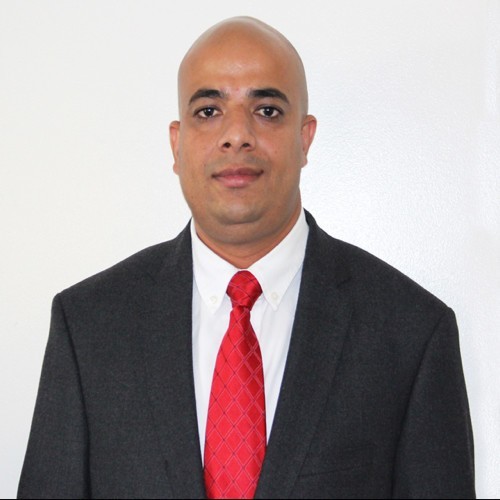
Thakur Prasad Mishra, commonly known as T.P. Mishra, is a Bhutanese refugee journalist, author, and community advocate who has played a central role in building independent media for the displaced Lhotshampa community. He co-founded The Bhutan Reporter, a monthly English-language newspaper serving refugees in the camps, and founded the Bhutan News Service (BNS), one of the most significant independent news outlets covering Bhutan and the Bhutanese diaspora.
Born in Dagana District in southern Bhutan, Mishra was expelled from the country as a young child during the systematic forced expulsion of the Lhotshampa population in the early 1990s. He spent nearly two decades in the refugee camps in Nepal before resettling in the United States, where he has continued his work as a journalist, author, and advocate for refugee rights. His career embodies the determination of the Bhutanese refugee community to document their own experience and ensure that their story is told on their own terms.
Early Life and Displacement
T.P. Mishra was born in Indrachok village, Dagana District, in southern Bhutan, into a Lhotshampa family that had lived in the region for generations. He began attending Dokap Primary School at the age of six in 1990, the same year that mass protests erupted across southern Bhutan as the Lhotshampa population demanded the restoration of their rights in the face of increasingly discriminatory government policies, including the enforcement of Driglam Namzha cultural codes and the 1985 Citizenship Act.
In 1991, Mishra's family was forcibly expelled from Bhutan. His father was arrested and tortured for 91 days by the Royal Bhutan Army, and the family was coerced into signing so-called "Voluntary Migration Forms" — documents used by the Bhutanese government to characterize the mass expulsion as a voluntary departure. Mishra, then approximately seven years old, witnessed armed soldiers beating his father. The family fled to Nepal, joining the more than 100,000 Lhotshampa who were forced out of Bhutan during the Bhutanese refugee crisis.[1]
The family initially settled in camps along the Kankai River in Jhapa District before being relocated to Beldangi-II refugee camp. During the early camp period, Mishra lost a two-year-old niece to pneumonia — one of two family members who died in the camps. He was the youngest of seven siblings.
Education
Despite the severe limitations of camp life, Mishra pursued his education within the refugee camp school system, studying through tenth grade. He later received secondary education with support from a Catholic charity. After leaving the refugee camps in 2005 to join a brother in Kathmandu, he earned a journalism degree on a full scholarship from a college in Nepal — an achievement that would define the trajectory of his career.
Journalism Career
Mishra entered exiled journalism as early as 2002, while still living in the refugee camps. Largely self-taught, he recognized that the Bhutanese refugee community needed its own media to document their experiences, counter the Bhutanese government's narrative, and provide reliable news to a displaced population living in uncertainty.
The Bhutan Reporter
Mishra co-founded The Bhutan Reporter, a monthly English-language newspaper that became the primary news source for Bhutanese refugees in the camps. The newspaper covered developments in the refugee crisis, bilateral negotiations between Nepal and Bhutan, conditions in the camps, and stories from the community. When the publication faced financial difficulties in 2007, Mishra made an international appeal through the Media Helping Media network, which resulted in funding support from the World Association of Newspapers (WAN).[2]
Bhutan News Service
In 2004, Mishra established the Bhutan News Service (BNS) in Kathmandu, Nepal. The outlet went online in 2006, significantly expanding its reach beyond the camps to the global Bhutanese diaspora. Mishra served as Editor from 2006 to 2009 and as Chief Editor from 2009 to 2011, before taking on the role of Executive Editor. Under his leadership, BNS became one of the most important independent media outlets covering Bhutan — a country where domestic press freedom is severely constrained and critical reporting on the government and the refugee crisis is largely absent from state-aligned media.[3]
Mishra also contributed articles to Media Helping Media, an international journalism support network, writing pieces including "Building a news team from scratch" and "Setting up refugee media in exile" — practical guides drawing on his experience of creating a functioning newsroom with minimal resources in a refugee context.
Literary Work
Mishra is the author of Becoming a Journalist in Exile, a book that combines memoir with practical guidance for aspiring journalists, particularly those working in exile or refugee settings. The book includes contributions from regional and international media professionals, including David Brewer (United Kingdom), Subir Bhaumik (India), I.P. Adhikari, C.N. Timsina, Nanda Gautam, Laura Elizabeth Pohl (United States), Deepak Adhikari (Nepal), and R.P. Subba. It was reviewed in Himal Southasian, a prominent South Asian affairs magazine.[4]
Mishra has also published personal essays, including "Letter to my kindergarten daughter" in Nepali Times, a reflection on the refugee experience and his hopes for his daughter growing up in a new country — a piece that resonated with many in the diaspora who grapple with the question of how to transmit their history and identity to children born far from Bhutan.[5]
Resettlement in the United States
In 2009, Mishra resettled in the United States, initially arriving in the Bronx, New York. He later relocated to Charlotte, North Carolina, and became a United States citizen in 2014. He attended the University of North Carolina at Charlotte, and developed expertise in social work — particularly work with refugee and immigrant populations — as well as nonprofit management, case management, grant writing, and community outreach.
His resettlement trajectory mirrors that of many Bhutanese refugees who, upon arriving in the United States, found themselves navigating a dramatically different society while continuing to contribute to the community and to the broader cause of justice for the displaced Lhotshampa population.
Smithsonian Oral History Project
Mishra has served as a community liaison and consultant for the Bhutanese Refugee Oral History Project at the Smithsonian Institution, funded with support from the Smithsonian's Asian Pacific American Center. Launched in 2021, the project collected 23 oral history interviews in its first phase, preserving the firsthand accounts of Bhutanese refugees — their lives in Bhutan before displacement, the trauma of expulsion, the years in the camps, and their experiences of resettlement. Mishra's role reflected his deep understanding of the community and his commitment to ensuring that the Bhutanese refugee story is preserved in one of the United States' most important cultural institutions.[6]
Continuing Advocacy
Mishra has remained an active voice in discussions about the Bhutanese diaspora, displacement, and the role of storytelling in advocacy. In 2023, he participated in the Chandni Kumar Annual Lecture on Asian Americans and Activism at the University of Maryland, appearing on a panel titled "Storytelling as Activism: The Bhutanese Diaspora and the Politics of Documenting Displacement." The panel explored how narrative and documentation serve as tools for communities seeking justice and recognition.[7]
He was also unanimously elected as a member of the executive body of the Bhutan Media Society (BMS), underscoring his standing within the community of Bhutanese journalists and media professionals.
Mishra's career — from a child expelled from his homeland, to a self-taught journalist in the refugee camps, to a published author and Smithsonian consultant in the United States — represents one of the most significant individual contributions to the documentation and advocacy of the Bhutanese refugee experience. His work has ensured that the Lhotshampa story is not only preserved but told by the community itself, rather than defined by the government that expelled them or the international agencies that managed their displacement.
References
- CNN Parts Unknown. "Becoming a Refugee." https://explorepartsunknown.com/bhutan/becoming-a-refugee/
- Media Helping Media. "T.P. Mishra — Author Profile." https://mediahelpingmedia.org/author/tpmishra/
- Wikipedia. "Bhutan News Service." https://en.wikipedia.org/wiki/Bhutan_News_Service
- Himal Southasian. Review of Becoming a Journalist in Exile by T.P. Mishra. https://www.himalmag.com/bhutanese-mists-within-the-realm-of-happiness-by-kinley-dorji-and-becoming-a-journalist-in-exile-by-tp-mishra/
- Mishra, T.P. "Letter to my kindergarten daughter." Nepali Times. https://nepalitimes.com/here-now/letter-to-my-kindergarten-daughter
- Bhutan News Service. "Why the Bhutanese Refugee Oral History Project." https://www.bhutannewsservice.org/why-the-bhutanese-refugee-oral-history-project/
- University of Maryland, Asian American Studies. "Storytelling as Activism: The Bhutanese Diaspora and the Politics of Documenting Displacement." 2023. https://www.aast.umd.edu/eventsinput/2023/4/13/storytelling-as-activism-the-bhutanese-diaspora-and-the-politics-of-documenting-displacement
- Foreign Policy Blogs. "Repatriation Still a Far Cry in Bhutan, Says Exiled Journalist." September 2013. https://foreignpolicyblogs.com/2013/09/12/repatriation-still-a-far-cry-in-bhutan-says-exiled-journalist/
Related articles
Know something about this topic? Edit this article or . Anonymous contributions welcome — no account required.