Bhutanese Refugee Camps in Eastern Nepal
From BhutanWiki, the people's encyclopedia of Bhutan · history · Verified
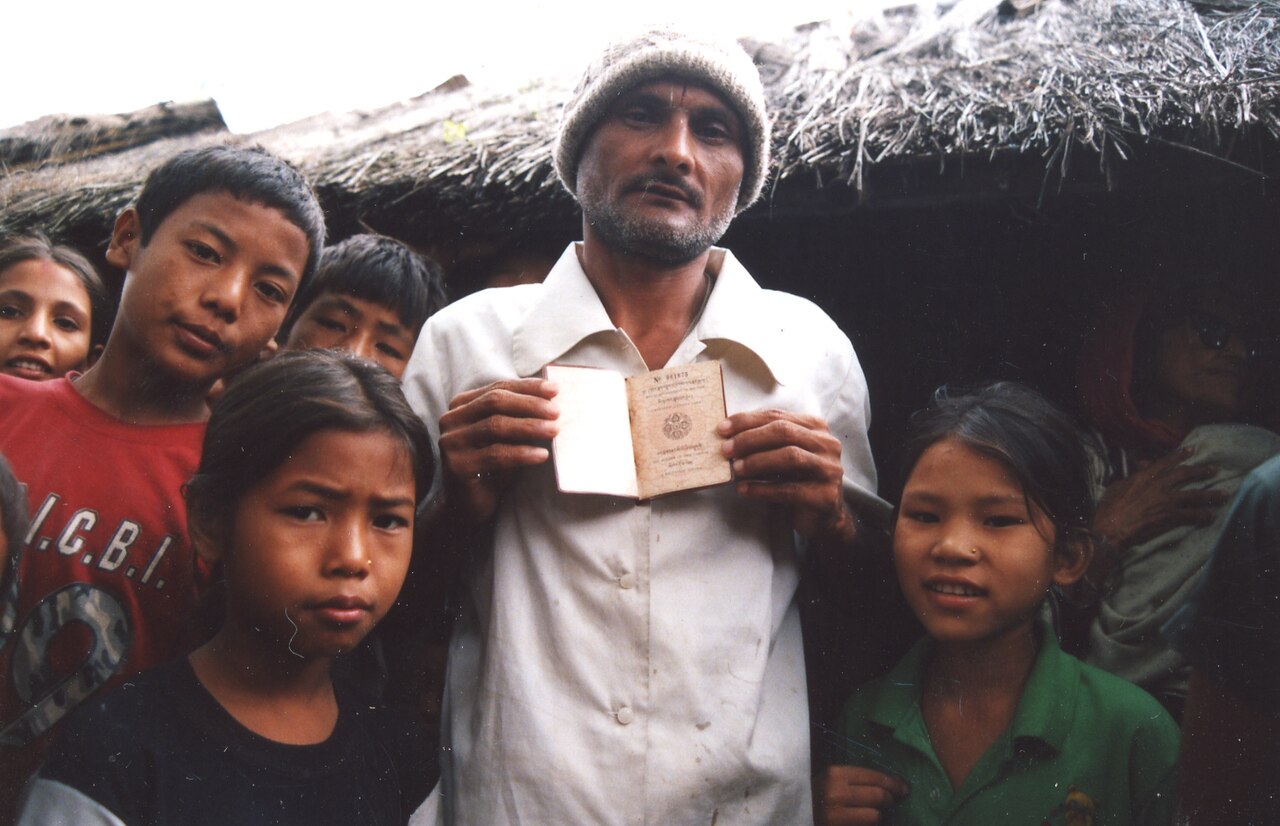

The Bhutanese refugee camps in eastern Nepal were a group of seven settlements established in the early 1990s to house over 100,000 Lhotshampa (ethnic Nepali-speaking Bhutanese) who were expelled from or fled Bhutan during the Bhutanese refugee crisis. Located in the Jhapa and Morang districts of southeastern Nepal, the camps were administered by the United Nations High Commissioner for Refugees (UNHCR) with the cooperation of the Government of Nepal.[1]
At their peak, the seven camps held approximately 108,000 refugees. For nearly two decades, their inhabitants lived in a state of political limbo — denied return to Bhutan, denied integration into Nepal, and with no resolution in sight despite years of bilateral negotiations. The camps became semi-permanent communities with their own schools, health clinics, cultural organisations, and governance structures.
Beginning in 2007, a landmark third-country resettlement programme organised by UNHCR and the International Organisation for Migration (IOM) began relocating the refugees to eight countries. By 2015, more than 100,000 had been resettled, making it one of the largest and most successful refugee resettlement programmes in UNHCR history.[2]
Establishment of the Camps
The first Lhotshampa refugees began arriving in Nepal in late 1990, crossing into the country's southeastern Terai lowlands after being expelled from southern Bhutan. The initial arrivals were housed in temporary shelters, but as the numbers swelled — driven by ongoing forced expulsions, coerced "voluntary migration," and flight from persecution — the UNHCR established formal camp infrastructure.
By 1996, seven camps had been established, all within Jhapa District except one:
- Beldangi I — Jhapa District
- Beldangi II — Jhapa District
- Beldangi II Extension — Jhapa District
- Goldhap — Jhapa District
- Khudunabari — Jhapa District
- Timai — Jhapa District
- Sanischare — Morang District
The camps were clustered near the township of Damak in southeastern Nepal. The UNHCR recognised most of the arrivals between 1990 and 1993 on a prima facie basis — meaning they were granted refugee status as a group rather than through individual asylum determinations — based on the clear evidence of systematic persecution in Bhutan.[3]
Camp Conditions
The camps consisted of densely packed settlements of bamboo huts with corrugated zinc roofing sheets, built from materials locally available in Nepal's subtropical Terai region. Living conditions were basic: families were allocated small plots within the camp, and shelters were rebuilt periodically as the bamboo structures deteriorated.
The UNHCR and partner organisations, including the World Food Programme (WFP) and various NGOs, provided basic necessities including food rations, clean water, sanitation, and healthcare. Despite these provisions, conditions were difficult — overcrowding, limited privacy, monsoon flooding, and the psychological toll of prolonged displacement were constant challenges.[4]
Education
One of the most notable achievements of the camp communities was the establishment of a functioning education system. Schools were built from bamboo, staffed largely by refugee teachers, and offered instruction from primary through secondary levels. The curriculum followed Nepali educational standards and was supplemented by programmes run by UNHCR partner organisations. Literacy rates in the camps were remarkably high, and many young refugees pursued higher education through scholarship programmes.
Health Services
Health clinics operated in each camp, providing primary care, maternal health services, and immunisation programmes. However, access to advanced medical care was limited, and refugees requiring surgery or specialist treatment faced significant barriers. Mental health services were gradually expanded in recognition of the high rates of depression, anxiety, and trauma-related disorders among the camp population.
Two Decades of Limbo
Between 1993 and 2007, the refugees existed in a state of political paralysis. Bhutan and Nepal established a Joint Ministerial Committee to negotiate the refugees' status, but fifteen rounds of bilateral talks over more than a decade produced no meaningful results.
Bhutan consistently refused to accept the return of the refugees, variously characterising them as illegal immigrants, voluntary emigrants, or criminals. The Bhutanese government agreed to a joint verification exercise in the Khudunabari camp in 2001, but classified the vast majority of its 12,000 residents as "voluntary emigrants" — a designation the refugees vehemently rejected. No further verification was conducted.
Nepal, for its part, refused to offer the refugees permanent residency or citizenship, viewing them as a temporary population whose ultimate destination was repatriation to Bhutan. The refugees were not permitted to work legally outside the camps or to own property in Nepal, trapping them in a state of dependency on international aid.[5]
Third-Country Resettlement
With repatriation blocked and local integration denied, the UNHCR proposed third-country resettlement as the only viable durable solution. In 2007, a consortium of eight countries agreed to accept Bhutanese refugees:
- United States — 84,819 (the vast majority)
- Canada — 6,500
- Australia — 5,554
- New Zealand — 1,002
- Denmark — 874
- Norway — 566
- United Kingdom — 358
- Netherlands — 327
The resettlement programme, managed by the IOM in partnership with UNHCR, began processing refugees in November 2007. By November 2015, the programme had surpassed the 100,000 mark — one of the largest refugee resettlement operations in history. By 2023, more than 113,000 Bhutanese refugees had been resettled to third countries.[6]
Camp Consolidation and Closure
As the camp populations declined through resettlement, the Nepalese government began consolidating the camps. In February 2011, Nepal announced plans to merge the remaining camps into two settlements. Timai and Goldhap were the first to close, with their remaining residents relocated to Beldangi and Sanischare. Khudunabari was closed subsequently.
By 2016, only the Beldangi and Sanischare camps remained, with a combined population of approximately 11,762 residents. These remaining refugees include those who declined resettlement (some still hoping for repatriation to Bhutan), those with unresolved legal cases, and elderly or disabled individuals for whom third-country resettlement posed particular challenges.[7]
Legacy
The Bhutanese refugee camps in Nepal represent both a humanitarian crisis and a remarkable story of community resilience. Despite decades of deprivation and political abandonment, the refugee communities maintained cultural institutions, educated their children, and organised politically for their rights. The resettlement programme, while widely regarded as a success in humanitarian terms, was also an acknowledgment of failure — the international community's inability to secure the refugees' right to return to their homeland.
For the thousands who remain in the camps and for the diaspora communities now spread across eight countries, the camps are a defining chapter of collective memory — a place of suffering, solidarity, and survival in the face of state-sponsored displacement.
References
- Bhutanese refugees — Wikipedia
- Resettlement of Bhutanese refugees surpasses 100,000 mark — UNHCR
- Last Hope: Life in the Refugee Camps in Nepal — Human Rights Watch
- Life in the Camps — BhutaneseRefugees.com
- Transitions without Justice: Bhutanese Refugees in Nepal — International Journal of Transitional Justice
- Resettlement of Refugees from Bhutan Tops 100,000 — IOM
- Silent crisis of Bhutanese refugees in their twilight years — Khabarhub
Related articles
Know something about this topic? Edit this article or . Anonymous contributions welcome — no account required.