Global Campaign for the Release of Political Prisoners in Bhutan
From BhutanWiki, the people's encyclopedia of Bhutan · diaspora · Verified
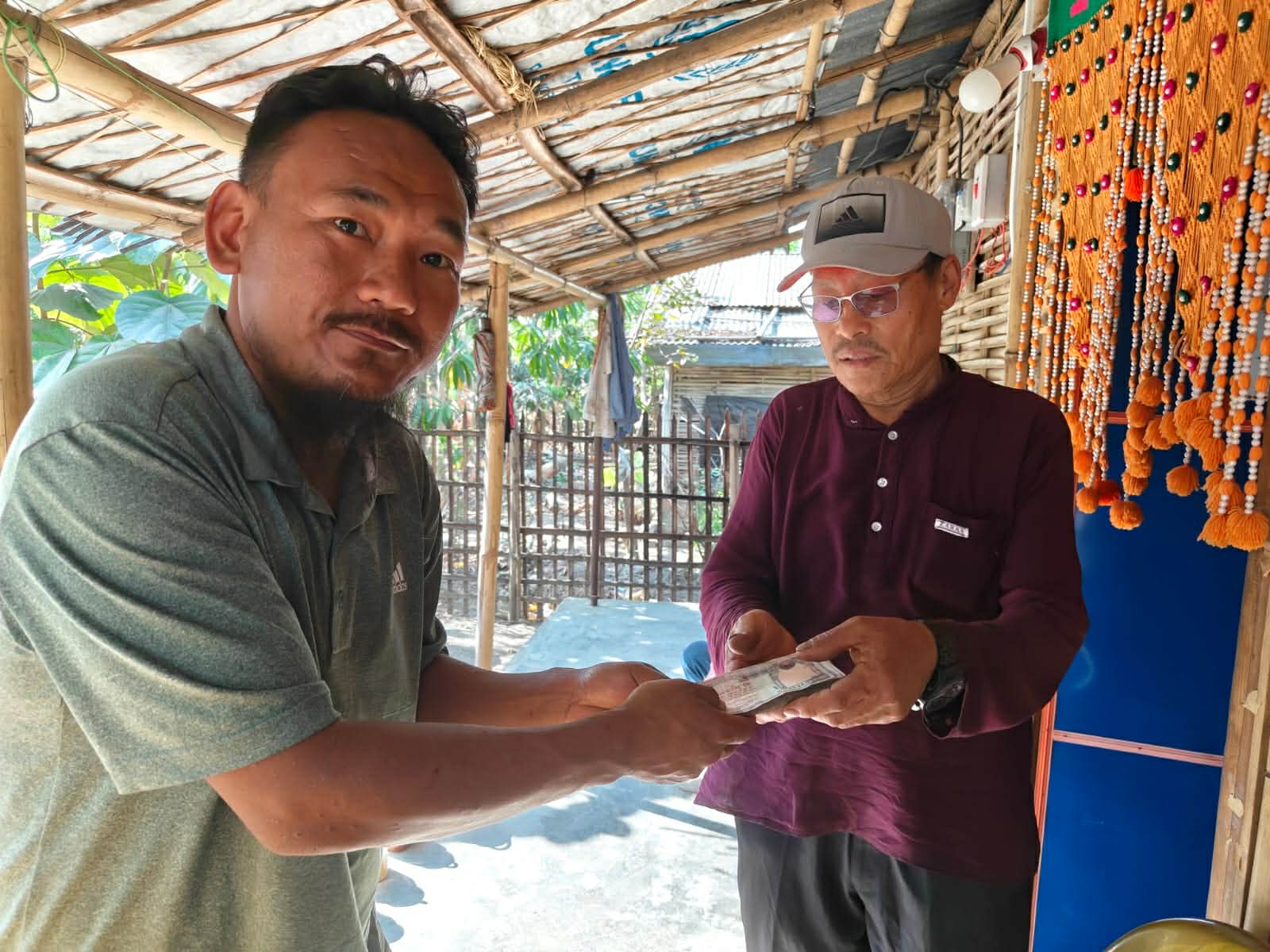
The Global Campaign for the Release of Political Prisoners in Bhutan (GCRPPB) is a diaspora-led human rights advocacy organisation that campaigns for the release of long-serving political prisoners held in Bhutanese jails since the early 1990s. It was founded in 2019 by Ram Karki, a former Lhotshampa refugee who obtained political asylum in the Netherlands in 2002, and operates from The Hague in collaboration with families of detained prisoners and other Bhutanese exile groups.[1]
GCRPPB is one of the few organisations actively documenting and lobbying on the cases of prisoners associated with the suppressed pro-democracy movements of 1990 and 1991 in southern Bhutan. Its work is conducted almost entirely from outside Bhutan, where the subject is not covered by domestic media, and it has been credited by international rights groups as a primary source of information on individual prisoners.
At a glance
Founded: 2019
Founder: Ram Karki
Headquarters: The Hague, Netherlands
Focus: Release of approximately 30 long-detained prisoners in Bhutan
Methods: UN submissions, parliamentary advocacy, public campaigns
Website: gcrppb.org
Background
The campaign exists in response to a category of prisoners arrested in the wake of the political upheaval of 1990–1991, when southern Bhutanese demonstrators protested against the implementation of the 1985 Citizenship Act and the One Nation, One People policy. Many of those convicted were tried under the National Security Act of 1992 and sentenced to life imprisonment for offences described in court documents as treason or anti-national activity. According to GCRPPB, the families of those still imprisoned have had limited contact with their relatives for more than three decades, and several detainees have died in custody.[2]
For a detailed roster of cases, see List of Bhutanese political prisoners and the historical overview at Bhutanese political prisoners.
Founding and history
GCRPPB was established in 2019 as a unified platform bringing together prisoner families, exiled activists and resettled diaspora members who had previously campaigned individually or through smaller groups. Karki, who had earlier served as president of the Bhutanese Community in the Netherlands and was associated with the exile think tank Bhutan Watch, has described the founding rationale as the need for a single, sustained international voice on a caseload that older diaspora organisations had been unable to keep visible.[3]
From its founding the campaign focused on building a public dossier of named prisoners, lobbying United Nations human rights mechanisms, and engaging European institutions. Its work intensified after the April 2022 royal amnesty in which six long-serving prisoners were released, an event GCRPPB welcomed but said left the broader caseload unresolved.
Leadership
Ram Karki serves as founder and global coordinator and is the campaign's principal public spokesperson. Born in Samtse (then Samchi) in southern Bhutan, he left the country in August 1990 at the age of 19 and was involved in establishing one of the early refugee camps at Maidhar in Jhapa, Nepal, in 1991. He later studied political science at St Joseph's College in Darjeeling on a UNHCR DAFI scholarship and completed a Master's degree in sociology at Erasmus University Rotterdam. He has addressed the European Parliament, the Dutch Parliament and the UN Human Rights Council in Geneva on Bhutanese human rights issues.[3]
The campaign's wider leadership includes country coordinators and youth volunteers drawn from the resettled Bhutanese-Nepali diaspora in the United States, Australia, Canada, the Netherlands and the United Kingdom. Beyond the founder, the campaign does not publish a full board roster on its website; family representatives of named prisoners participate in its advocacy activities.
Structure and funding
GCRPPB describes itself as a volunteer-driven advocacy network rather than a service-delivery NGO. It operates in association with Bhutan Watch and other diaspora platforms, and according to its own materials it has limited paid staff and relies on individual donations and in-kind support from volunteers. The campaign has not published an audited financial statement; its website provides a contact email and donation channel but does not disclose annual revenue. As with many small diaspora advocacy bodies, the absence of detailed public accounts has been noted by observers as an area where transparency could be improved.
Advocacy work
United Nations submissions
GCRPPB has compiled and submitted case files on individual prisoners to the United Nations Working Group on Arbitrary Detention (WGAD) and to UN Special Procedures mandate-holders. In March 2025 the WGAD adopted Opinion 60/2024, finding the detention of three named Bhutanese prisoners — Birkha Bahadur Chhetri, Kumar Gautam and Sunman Gurung — to be arbitrary and calling for their release. GCRPPB and partner groups had provided the underlying documentation for the cases.[4]
In April 2025 nine UN Special Procedures mandate-holders issued a joint communication, AL BTN 1/2024, raising concerns about 19 named Bhutanese prisoners. The communication marked the first time a coordinated group of senior UN human rights experts had publicly addressed the Bhutanese government on the issue. GCRPPB welcomed the communication as a milestone in the campaign.[5]
European Parliament engagement
In April 2025 five Members of the European Parliament — Saskia Bricmont, Barry Andrews, Mounir Satouri, Majdouline Sbai and Dimitrie Sturdza — wrote jointly to Bhutanese Prime Minister Tshering Tobgay, urging the release of the long-detained prisoners and linking the issue to the future of EU–Bhutan relations on the 40th anniversary of diplomatic ties. GCRPPB had lobbied for the letter through earlier briefings to the Parliament's South Asia delegation and human rights subcommittee.[5]
Cooperation with international NGOs
The campaign has supplied case material to Human Rights Watch, Amnesty International, the World Organisation Against Torture (OMCT) and Forum-Asia. Human Rights Watch's January 2026 report on conditions in Chamgang and Rabuna prisons drew on GCRPPB documentation, and its 18 January 2026 statement noted that 30 prisoners remained in custody following the death of Sha Bahadur Gurung the previous month.[2]
Published documentation
The campaign maintains profiles of named prisoners on its website, including dates of arrest, charges, sentences and current place of detention. The 32-name roster reproduced in international reporting and in BhutanWiki's list article is drawn from GCRPPB records and has been the working list cited by HRW, Amnesty and the UN Special Procedures. Where possible, the campaign also publishes family testimonies and prison-visit accounts, although access to detainees is restricted by Bhutanese authorities.
Response from Bhutanese authorities
The Bhutanese government has not engaged publicly with GCRPPB and the country's main domestic media outlets, including Kuensel and the Bhutan Broadcasting Service, have not reported on the campaign. Government officials have historically described those still detained as having been convicted under due process for serious offences against the state, and have not commented on the specific findings of WGAD Opinion 60/2024 or the April 2025 UN joint communication. International rights groups have characterised the government's posture as one of silence rather than rebuttal.
Recent activity
On 15 December 2025 Sha Bahadur Gurung, a former Royal Bhutan Army member from Chirang who had been detained since 1990, died at Chamgang Central Jail. GCRPPB issued statements calling his death a preventable tragedy and renewed its demand for the release of the remaining prisoners. On 10 December 2025, Human Rights Day, the campaign reiterated that 31 prisoners were then still serving long sentences and called on the Bhutanese government to use the country's democratic transition as an opportunity for reconciliation.[6]
In January 2026, when Prime Minister Tshering Tobgay travelled to Brussels to seek European investment, GCRPPB joined Human Rights Watch and Amnesty International in calling on EU institutions to raise the prisoner cases in any bilateral discussions.[7]
Reception and criticism
GCRPPB's work has been welcomed by international human rights organisations and by sections of the resettled Bhutanese-Nepali diaspora, who credit the campaign with returning long-forgotten cases to international attention. As with other diaspora-led initiatives addressing Bhutan, the campaign operates in a community where political opinion is divided: some former refugees prefer engagement with the Bhutanese government over public confrontation, and GCRPPB's high-profile lobbying style has at times been the subject of internal diaspora debate. The campaign's framing of the prisoner cases as primarily ethnic Lhotshampa cases has also been discussed within the diaspora, since the broader caseload includes individuals from other communities.
From the Bhutanese government side, the campaign is treated with public silence rather than direct criticism. There is no publicly available official statement that names GCRPPB.
Contact and resources
- Website: gcrppb.org
- Founder and global coordinator: Ram Karki
- Headquarters: The Hague, Netherlands
- Founded: 2019
- Email: info@gcrppb.org
- Social media: Facebook, Instagram and LinkedIn (handle: gcrppb)
Related organisations
- Bhutan Watch
- AHURA Bhutan
- Peace Initiative Bhutan
- Bhutan News Network
- Bhutanese Refugee Support Group
See also
- List of Bhutanese political prisoners
- Bhutanese political prisoners
- Political prisoners in Bhutan
- Bhutanese refugee crisis
References
- Global Campaign for the Release of Political Prisoners in Bhutan — official website
- Bhutan's Political Prisoners Suffer Illness and Death in Dire Conditions — Human Rights Watch, 18 January 2026
- Ram Karki — biographical profile, GCRPPB
- Bhutan: UN Experts Find Decades-Long Detentions Arbitrary — Human Rights Watch, 18 March 2025
- EU, HRW and Amnesty International Call on Bhutan to Free Political Prisoners — Bhutan News Network, April 2025
- Human Rights Day: GCRPPB Urges Bhutan to Immediately Release its Political Prisoners — Bhutan News Network, December 2025
- Bhutan Leader Seeks European Investment — Human Rights Watch, 26 January 2026
Related articles
Know something about this topic? Edit this article or . Anonymous contributions welcome — no account required.