Political Prisoners in Bhutan
From BhutanWiki, the people's encyclopedia of Bhutan · politics · Verified
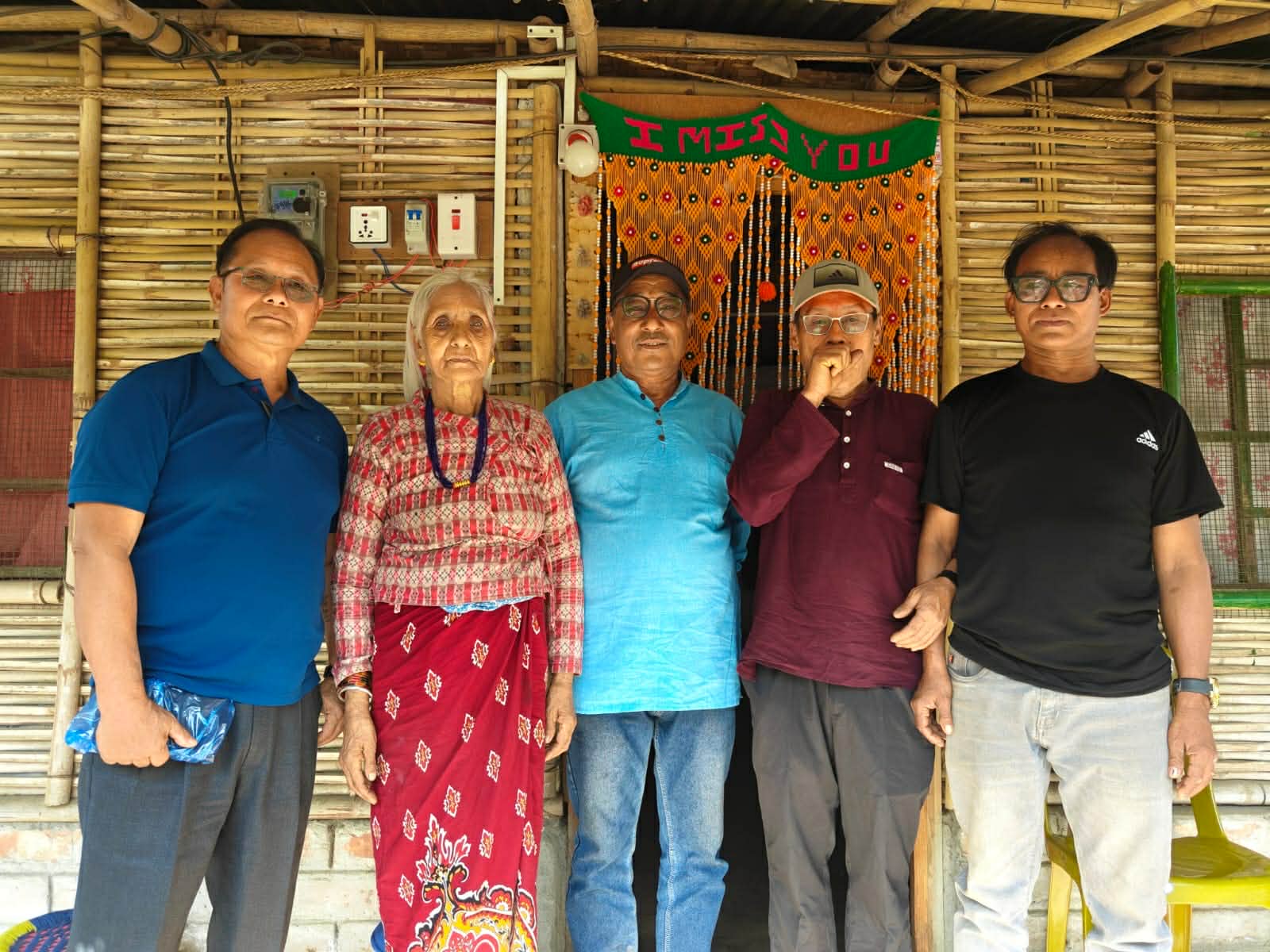
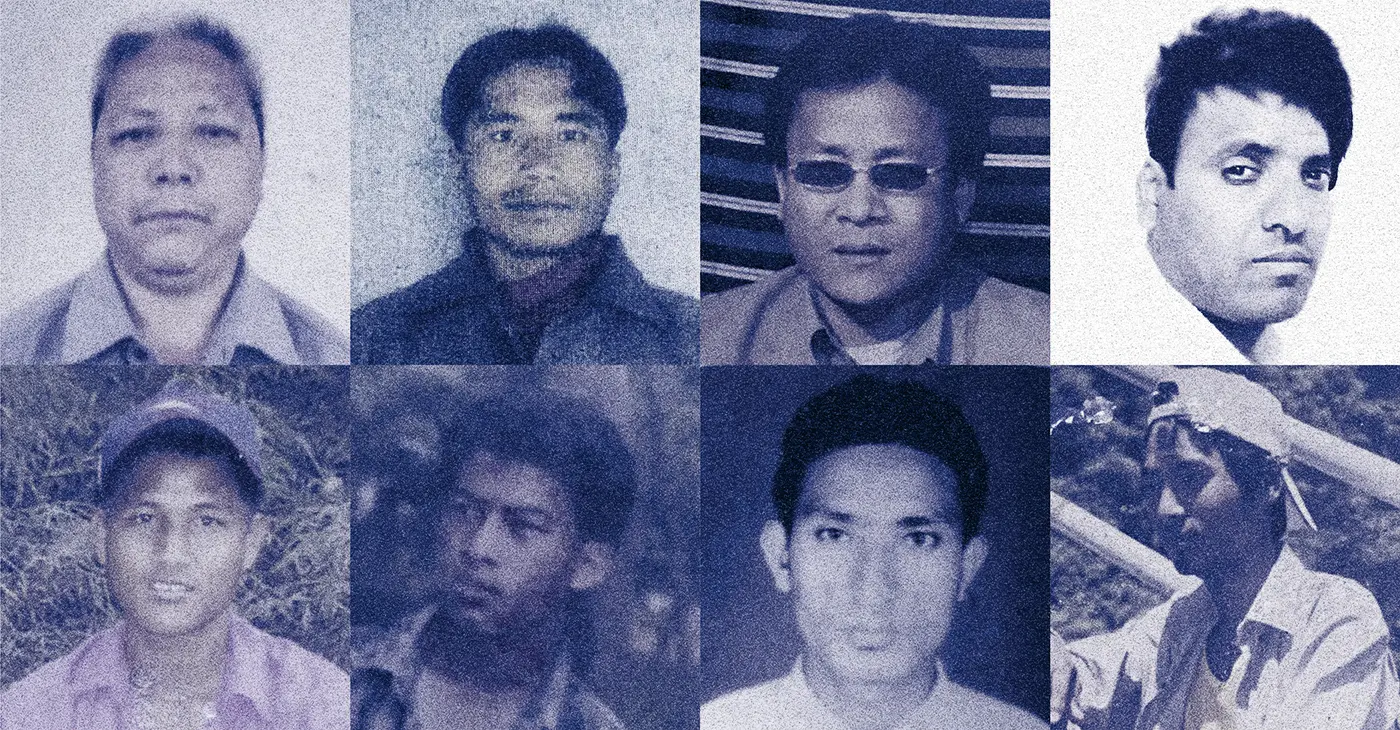
Political imprisonment in Bhutan has been a significant human rights concern since the late 1980s, when the Royal Government began arresting Lhotshampa activists, community leaders, and ordinary citizens who opposed the government's denationalization policies, the Driglam Namzha cultural code, and the broader campaign of ethnic cleansing in southern Bhutan. The most internationally recognised political prisoner was Tek Nath Rizal, a former member of the Royal Advisory Council who was arrested in 1989 and sentenced to life imprisonment for his advocacy on behalf of the Lhotshampa. Over the following two decades, hundreds of Lhotshampa and other dissidents were detained, many subjected to torture and prolonged imprisonment without trial. While royal amnesties — most notably in 1999 — led to the release of most known political prisoners, the issue remains relevant to understanding Bhutan's human rights record and the constraints on political dissent in the country.[1]
Context: The Political Crisis of the Late 1980s and 1990s
The wave of political imprisonments in Bhutan must be understood in the context of the broader political crisis that accompanied the ethnic cleansing of the Lhotshampa. Beginning in 1988, the government implemented the 1985 Citizenship Act through a discriminatory census in southern Bhutan that stripped tens of thousands of Lhotshampa of their citizenship. When Lhotshampa leaders petitioned the government for the restoration of rights and cultural recognition, the petitioners were arrested and charged with sedition and anti-national activities. The 1990 protests led to a massive escalation: the government branded all participants as ngolops (anti-nationals) and launched a campaign of mass arrests across the southern districts.[2]
The Bhutanese legal system at the time provided no meaningful protection for detainees. There was no constitution (the Constitution was not adopted until 2008), no independent judiciary, no habeas corpus, and no right to legal counsel. The National Security Act granted security forces sweeping powers to arrest and detain anyone deemed a threat to national security, with no judicial oversight. In this environment, political imprisonment functioned as a tool of state repression aimed at silencing dissent and intimidating the broader Lhotshampa population into compliance or flight.[3]
Tek Nath Rizal
Tek Nath Rizal is the most prominent political prisoner in Bhutanese history. A Lhotshampa from Chirang district and a former member of the Royal Advisory Council (the highest consultative body under the monarchy), Rizal submitted a petition to King Jigme Singye Wangchuck in 1988 requesting the reconsideration of policies affecting the Lhotshampa. He was subsequently stripped of his position and placed under surveillance.[4]
In November 1989, Rizal was arrested in Nepal by Nepalese police and handed over to Bhutanese authorities — an extrajudicial transfer that violated international law, as no extradition treaty existed between the two countries. He was taken to Thimphu, where he was held incommunicado for years. In 1993, he was tried by the High Court of Bhutan on charges including "leading anti-national activities," "creating hatred and disaffection against the king and government," and plotting to overthrow the government. He was sentenced to life imprisonment.[4]
Amnesty International designated Rizal a prisoner of conscience and campaigned for his release throughout the 1990s. The organisation documented that his trial failed to meet international fair trial standards: he was denied legal representation, the evidence against him consisted largely of confessions obtained under duress from other detainees, and the proceedings were conducted in Dzongkha, which Rizal did not fully understand. International pressure, including interventions by the European Parliament and several national governments, eventually contributed to his partial release.[4]
In 1999, Rizal was among a group of political prisoners released under a royal amnesty issued by the Fourth King. He was released after serving approximately ten years. Following his release, Rizal remained in Bhutan and later entered politics, standing as a candidate in the 2008 National Council elections — though his ability to engage in political activity has been subject to ongoing constraints.[1]
Other Prominent Cases
Southern Bhutanese Activists
Numerous other Lhotshampa leaders were imprisoned during the 1990s. Among them:
Rongthong Kuenley Dorji: A Sharchop (eastern Bhutanese) activist who founded the Druk National Congress (DNC) and the United Front for Democracy (UFD). He was arrested in India in 1997 on charges of possessing explosives, prompting Amnesty International to warn against his potential extradition to Bhutan and the risk of torture. The case highlighted the extraterritorial reach of Bhutanese suppression of dissent and cooperation with Indian authorities in apprehending exiles.
D.P. Kafley, Bhim Subba, and other petition signatories: Multiple individuals who signed the 1988-1989 petitions to the government were arrested, tortured, and imprisoned for periods ranging from months to years. Some were released only after signing undertakings to leave the country.
Teachers and civil servants: The government specifically targeted educated Lhotshampa — teachers, health workers, and civil servants — whom it viewed as potential organisers. Hundreds were dismissed from their positions, arrested, and in many cases forced to sign "voluntary migration forms" upon release from detention.
Sharchop Political Prisoners
While the majority of political prisoners are Lhotshampa, a smaller number belong to the Sharchop community of eastern Bhutan. In 1997, dozens of Sharchop individuals were arrested on suspicion of involvement with the DNC, charged under the National Security Act, and sentenced to terms of up to fifteen years. Among them was Thinley Oezer, a senior Nyingmapa monk, who was sentenced to eight years' imprisonment. As of 2025, five of the political prisoners still recorded by international monitors are Sharchop.[6]
Torture and Conditions of Detention
Amnesty International and Human Rights Watch documented extensive use of torture against political detainees in Bhutan during the late 1980s and 1990s. Methods included severe beatings, suspension from the ceiling by the arms, burning with cigarettes, deprivation of food and sleep, and forced standing for extended periods. Detainees were held in overcrowded cells in army camps and police stations. Several detainees died in custody or shortly after release due to injuries sustained during interrogation. Medical attention was routinely denied.[3][2]
Royal Amnesties
The most significant release of political prisoners came in 1999, when King Jigme Singye Wangchuck issued a royal amnesty. The amnesty, which coincided with the king's silver jubilee celebrations, resulted in the release of approximately 200 prisoners, including Tek Nath Rizal and other high-profile detainees. A further amnesty in 2005 released additional prisoners. The government framed these releases as acts of royal compassion rather than acknowledgments of wrongful imprisonment.[1]
The royal amnesty mechanism itself illustrated the nature of the political system: prisoners were released not through judicial review or legal process, but through the personal discretion of the monarch. The releases were not accompanied by any investigation into the circumstances of imprisonment, acknowledgment of torture, or provision of compensation to those who had been wrongfully detained.
Continuing Detentions and 2023-2025 Developments
Despite the 1999 and 2005 amnesties, a significant number of political prisoners from the 1990s crackdown remained in custody for decades afterwards. As of 2025, Human Rights Watch and the Global Campaign for the Release of Political Prisoners in Bhutan (GCRPPB) documented at least 32 political prisoners still incarcerated, many for more than thirty years. Twenty-four of the 32 are reported to be serving life sentences without the possibility of parole, leaving royal amnesty as their only realistic prospect of release. Of the 32, twenty-seven are Lhotshampa and five are Sharchop.[7] The number has fallen since: Human Rights Watch put it at around 30 in January 2026 following a death in custody, and at least 28 as of June 2026, after Chatur Man Tamang and Hasta Bahadur Rai — both arrested in 2008 and serving life sentences for treason — were released on 1 June 2026. Of those still held, 18 are in the "anti-national" block at Chemgang prison near Thimphu and seven at the military prison at Rabuna.[10]
In March 2025, United Nations experts issued a communication examining the cases of 19 named individuals among the political prisoners, expressing "serious concern" that their fair trial rights had been violated, that they had been "severely tortured, both to extract confessions and to punish them," that they had been convicted under "vague" laws, and that they were held in inhumane conditions. The UN Working Group on Arbitrary Detention found their detention to be arbitrary under international law in Opinion No. 60/2024.[8]
In September 2023, a recently freed political prisoner described conditions in Bhutanese jails to Human Rights Watch, citing inadequate food, limited medical care, and prolonged isolation. Human Rights Watch and Amnesty International have jointly urged the European Union, India, and other international partners to press Bhutan on the issue, particularly in the context of Bhutan's graduation from Least Developed Country status and its engagement with international financial institutions. The Bhutanese government has generally rejected the characterisation of these inmates as political prisoners, maintaining that they were convicted of criminal offences against national security, but has not permitted independent access by international monitors.[9]
Post-2008 Situation
The adoption of the Constitution of Bhutan in 2008 introduced formal protections against arbitrary detention, including the right to liberty, the right to legal counsel, and the prohibition of torture. The establishment of an independent judiciary and the transition to democratic governance represented a structural improvement in the protection of political rights.[5]
However, concerns about political imprisonment have not entirely disappeared. Freedom House and other monitoring organisations have noted that:
The legal framework still includes broad national security provisions that could be used to detain political dissenters.
Self-censorship remains pervasive, with citizens reluctant to criticise the monarchy, military, or government policy on ethnic issues.
There is no independent national human rights institution with the mandate and capacity to investigate allegations of political detention.
The Lhotshampa who remain in Bhutan live under conditions where open advocacy for their community's rights carries implicit risks.
International Advocacy
International organisations, particularly Amnesty International, Human Rights Watch, and the UN Human Rights mechanisms, played a significant role in documenting and publicizing political imprisonment in Bhutan. Amnesty International adopted multiple Bhutanese political prisoners as prisoners of conscience and conducted sustained advocacy campaigns through the 1990s. The UN Working Group on Arbitrary Detention addressed cases from Bhutan on multiple occasions. The Universal Periodic Review (UPR) process at the UN Human Rights Council has included recommendations to Bhutan on political prisoners and accountability for past abuses.[4]
Accountability
No Bhutanese government official, military officer, or security force member has ever been held legally accountable for the imprisonment, torture, or mistreatment of political prisoners. The royal amnesties released prisoners without any accompanying process of truth-telling, investigation, or reparation. There has been no truth and reconciliation process, no official inquiry into the events of the 1990s, and no public acknowledgment by the state that political imprisonment and torture occurred. For former political prisoners and their families, this absence of accountability represents an ongoing injustice that the democratic transition has not addressed.[2]
See also
For a name-by-name list of individuals currently reported to be detained in Bhutan in connection with peaceful political activity, including the cases examined by the UN Working Group on Arbitrary Detention in Opinion No. 60/2024 and the death in custody of Sha Bahadur Gurung in December 2025, see List of Bhutanese Political Prisoners. See also Global Campaign for the Release of Political Prisoners in Bhutan for the diaspora-led advocacy organisation working on the issue.
References
Amnesty International. "Bhutan." https://www.amnesty.org/en/location/asia-and-the-pacific/south-asia/bhutan/
Human Rights Watch. "Trapped by Inequality: Bhutanese Refugee Women in Nepal." 2003. https://www.hrw.org/reports/2003/nepal0903/
Amnesty International. "Bhutan: Forced Exile." 1994. https://www.amnesty.org/en/documents/asa14/004/1992/en/
Amnesty International. "Bhutan: Amnesty International calls for the release of prisoner of conscience Tek Nath Rizal." 1997. https://www.amnesty.org/en/documents/asa14/001/1997/en/
Freedom House. "Freedom in the World 2024: Bhutan." https://freedomhouse.org/country/bhutan/freedom-world/2024
Amnesty International. "Annual Report 1998: Bhutan." https://www.refworld.org/reference/annualreport/amnesty/1998/en/91268
Human Rights Watch. "The EU Should Press Bhutan to Free Political Prisoners." April 2025. https://www.hrw.org/news/2025/04/15/eu-should-press-bhutan-free-political-prisoners
Human Rights Watch. "UN Experts Find Bhutan Illegally Holding Political Prisoners." March 2025. https://www.hrw.org/news/2025/03/18/un-experts-find-bhutan-illegally-holding-political-prisoners
Human Rights Watch. "Bhutan: Freed Political Prisoner Describes Dire Conditions." September 2023. https://www.hrw.org/news/2023/09/13/bhutan-freed-political-prisoner-describes-dire-conditions-0
Human Rights Watch. "Bhutan: 2 Political Prisoners Freed, but 28 Remain." 10 June 2026. https://www.hrw.org/news/2026/06/10/bhutan-2-political-prisoners-freed-but-28-remain
Related articles
Know something about this topic? Edit this article or . Anonymous contributions welcome — no account required.