AHURA Bhutan
From BhutanWiki, the people's encyclopedia of Bhutan · diaspora · Verified
This article is about a living or recently deceased person. Edits must be supported by reliable, verifiable sources. Unsupported or potentially defamatory content will be removed.
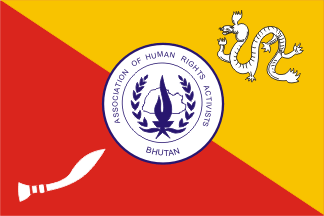

AHURA Bhutan (Association of Human Rights Activists Bhutan) is a human rights organization established in the Bhutanese refugee camps in Nepal to document human rights abuses committed against the Lhotshampa population and to advocate for justice and accountability at national and international levels. Founded by refugees who had experienced or witnessed the systematic violence and denationalization carried out by the Bhutanese state, AHURA Bhutan became one of the most prominent advocacy organizations operating from within the camp system.
The organization's work has encompassed fact-finding and documentation, public reporting, engagement with United Nations human rights mechanisms, and collaboration with international human rights organizations. AHURA Bhutan has operated on the premise that the Bhutanese refugee crisis is fundamentally a human rights issue requiring accountability, not merely a humanitarian situation requiring relief and resettlement.
As the third-country resettlement program dispersed the camp population across multiple countries between 2007 and 2020, AHURA Bhutan — like many camp-based organizations — faced the challenge of maintaining organizational coherence and advocacy capacity across a globally scattered membership.
Founding and Origins
AHURA Bhutan was established in the refugee camps in southeastern Nepal that housed the Lhotshampa population expelled from Bhutan during the ethnic cleansing campaigns of the late 1980s and early 1990s. The organization emerged from the recognition that the international community was largely unaware of the scale and severity of the abuses committed during the expulsion — the arbitrary arrests, torture, sexual violence, extrajudicial killings, and the systematic stripping of citizenship and confiscation of property that accompanied the forced departure of over 100,000 people.
The founders of AHURA Bhutan were themselves refugees who had experienced displacement firsthand. Many had been politically active before their expulsion, participating in the peaceful protests of 1990 that demanded democratic reforms and the protection of minority rights in Bhutan. Their arrest, imprisonment, and torture at the hands of Bhutanese security forces, followed by forced exile, motivated them to create a formal organization dedicated to documenting these abuses and seeking redress.
Human Rights Documentation
AHURA Bhutan's most significant contribution has been its systematic documentation of human rights violations committed against the Lhotshampa population. The organization collected testimony from refugees in the camps, recording accounts of torture in Bhutanese prisons and detention centers, sexual violence against women by security forces, extrajudicial killings, arbitrary detention, forced labor, and the destruction of homes and property.
This documentation work was carried out under difficult conditions. The camps themselves, while providing basic shelter and services through UNHCR and partner organizations, were not designed to support human rights investigations. Resources were extremely limited, and the organization relied on volunteer labor and minimal external support. Despite these constraints, AHURA Bhutan compiled detailed records of individual cases that have been referenced in reports by international organizations including Human Rights Watch and Amnesty International.
The organization also monitored and reported on the conditions of Lhotshampa who remained in Bhutan, drawing on information from contacts within the country and from individuals who crossed the border. These reports documented ongoing discrimination in employment, education, and political participation, as well as restrictions on movement, expression, and cultural practice imposed on the remaining Nepali-speaking population.
Advocacy at the United Nations
AHURA Bhutan engaged actively with United Nations human rights mechanisms, recognizing that bilateral negotiations between the governments of Bhutan and Nepal had failed to produce results and that international pressure was essential. The organization submitted written statements and oral testimony to the UN Human Rights Council, the UN Committee on the Elimination of Racial Discrimination (CERD), and other relevant bodies.
During Bhutan's Universal Periodic Review (UPR) — the process by which the Human Rights Council examines the human rights records of all UN member states — AHURA Bhutan and allied organizations submitted shadow reports detailing the Bhutanese government's violations. These submissions provided the Human Rights Council with information and perspectives that the Bhutanese government's own reports omitted, including detailed accounts of the expulsion, the denial of the right to return, and the continuing discrimination against minorities within Bhutan.
The organization also participated in side events at UN sessions in Geneva, bringing refugee voices directly to the diplomatic community. While these advocacy efforts did not produce the concrete actions that AHURA Bhutan sought — Bhutan has faced minimal diplomatic consequences for the expulsion — they ensured that the refugee crisis was formally recorded in UN proceedings and that the Bhutanese government's narrative did not go unchallenged in international forums.
Reports and Publications
AHURA Bhutan produced periodic reports on the human rights situation affecting the Lhotshampa population, both in Bhutan and in exile. These reports covered topics including the status of political prisoners in Bhutan, the conditions of Lhotshampa remaining in the country, the progress (or lack thereof) of bilateral negotiations on repatriation, and the challenges facing the refugee population in the camps.
The organization's publications, while produced with limited resources and without the institutional support available to major international NGOs, provided valuable primary documentation that complemented the work of larger organizations. Reports by Human Rights Watch, Amnesty International, and the International Crisis Group on the Bhutanese refugee situation drew in part on information gathered and provided by AHURA Bhutan and similar camp-based organizations.
Key Members and Activities
AHURA Bhutan's membership and leadership drew from the politically active segment of the refugee population — individuals who had participated in the democracy movement within Bhutan, had been imprisoned and tortured by the Bhutanese state, and who maintained a commitment to seeking justice rather than accepting permanent exile. The organization's leadership included former political prisoners whose personal experiences lent moral authority to the organization's advocacy.
In addition to formal advocacy and documentation, AHURA Bhutan organized observances of significant dates in the history of the refugee crisis, including the anniversaries of the 1990 protests and the beginning of the mass expulsion. These events served both commemorative and political functions, keeping the history alive within the camp community and demonstrating continued solidarity and determination.
Post-Resettlement Challenges
The UNHCR-facilitated resettlement program that began in 2007 presented existential challenges for AHURA Bhutan and similar organizations. As the camp population was dispersed to the United States, Canada, Australia, New Zealand, and European countries, the organizational infrastructure that had been built within the camps was fundamentally disrupted. Members resettled to different countries, communication became more difficult, and the immediate demands of building new lives in unfamiliar environments competed with continued advocacy work.
Despite these challenges, AHURA Bhutan and its members have sought to continue advocacy from the diaspora, using digital platforms to maintain connections and to disseminate information. The organization's legacy is visible in the broader landscape of Bhutanese diaspora advocacy, where many of the individuals and approaches that emerged from camp-based organizations continue to shape the community's engagement with questions of justice and rights.
References
- Human Rights Watch. "Last Hope: The Need for Durable Solutions for Bhutanese Refugees in Nepal and India." May 2007. https://www.hrw.org/report/2007/05/16/last-hope/need-durable-solutions-bhutanese-refugees-nepal-and-india/need-durable-solutions-bhutanese-refugees-nepal-and-india
- Amnesty International. "Bhutan: Forcible Exile." 1994. ASA 14/04/1994.
- Hutt, Michael. Unbecoming Citizens: Culture, Nationhood, and the Flight of Refugees from Bhutan. Oxford University Press, 2003.
- UN Human Rights Council. Universal Periodic Review — Bhutan. Stakeholder submissions, various cycles.
- Minority Rights Group International. "Lhotshampas in Bhutan." https://minorityrights.org/communities/lhotshampas/
Contributed by Anonymous Contributor, Burlington, Vermont
Related articles
Know something about this topic? Edit this article or . Anonymous contributions welcome — no account required.