Dasho Paljor J. Dorji
From BhutanWiki, the people's encyclopedia of Bhutan · people · Verified
This article is about a living or recently deceased person. Edits must be supported by reliable, verifiable sources. Unsupported or potentially defamatory content will be removed.
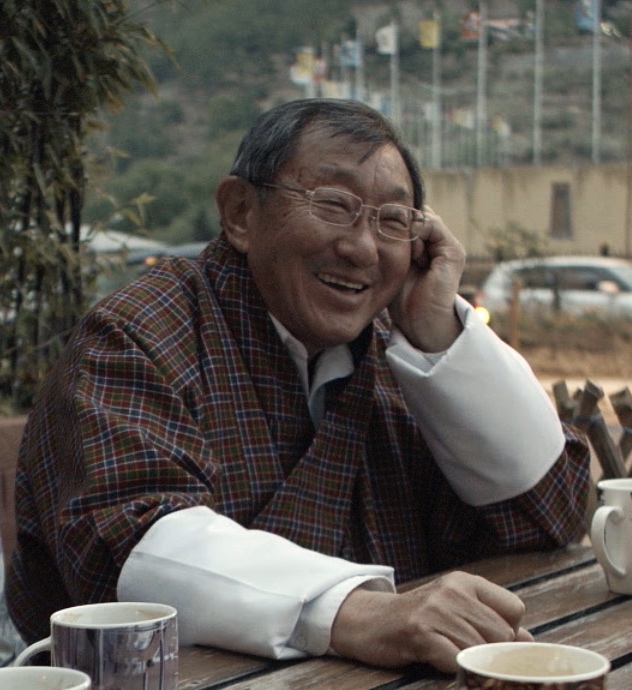
Dasho Paljor Jigme Dorji (born 24 August 1943), commonly known as Dasho Benji, is a Bhutanese environmentalist, jurist, and diplomat who has played a foundational role in shaping Bhutan's internationally acclaimed conservation policies. Active in public service since 1966, he founded the Royal Society for the Protection of Nature (RSPN) in 1987—Bhutan's first non-governmental organisation—and spearheaded the creation of the Bhutan Trust Fund for Environmental Conservation (BTFEC) in 1992, recognised as the world's first dedicated environmental trust fund. He is widely described as the "godfather of conservation" in Bhutan.[1]
Dorji's contributions extend well beyond environmentalism. He served as the first Chief Justice of Bhutan's High Court from 1974 to 1987 and later represented the kingdom as Ambassador to the United Nations and European capitals from 1991 to 1994. His career illustrates the intertwining of judicial, diplomatic, and environmental leadership that has characterised Bhutan's approach to governance under the Wangchuck dynasty.[2]
Early Career and Judicial Service
Dorji entered the Royal Government of Bhutan in 1966 and held a series of increasingly senior positions in the judiciary. He served as Magistrate of Paro District from 1969 to 1972, before being elevated to the High Court as a judge in 1972. In 1974, he was appointed the first Chief Justice of the High Court of Bhutan, a position he held for thirteen years until 1987. During this period, he played a central role in the development of Bhutan's modern judicial institutions at a time when the country was undergoing significant administrative modernisation under the Third King, Jigme Dorji Wangchuck, and subsequently the Fourth King.[3]
Conservation Legacy
Dorji's environmental work began alongside his judicial career and accelerated after he left the bench. In 1987, under a directive from His Majesty the Fourth King, he founded the Royal Society for the Protection of Nature, establishing Bhutan's inaugural environmental non-governmental organisation. RSPN was created to complement governmental conservation initiatives and has since grown into the country's leading environmental body, working in fields including endangered species research, habitat conservation, environmental education, and community-based natural resource management. RSPN operates under the royal patronage of His Majesty King Jigme Khesar Namgyel Wangchuck.[4]
In 1992, Dorji spearheaded the establishment of the Bhutan Trust Fund for Environmental Conservation, a pioneering financial mechanism that provides sustainable funding for conservation activities in perpetuity. The BTFEC was capitalised with contributions from the World Wildlife Fund, the Global Environment Facility, and several bilateral donors, and it became a model for environmental trust funds worldwide. Through the BTFEC and RSPN, Dorji's work contributed significantly to Bhutan's constitutional commitment to maintaining a minimum of 60 per cent forest cover, a provision enshrined in the 2008 Constitution.[5]
Diplomatic Career
From 1991 to 1994, Dorji served as Bhutan's Ambassador to the United Nations and to European capitals. In this capacity, he represented the kingdom's interests in multilateral forums at a period of significant change in international environmental governance, including the years surrounding the 1992 Earth Summit in Rio de Janeiro. His dual expertise in environmental policy and international diplomacy allowed him to advocate effectively for the interests of small, biodiversity-rich developing nations on the global stage.[6]
Awards and Recognition
Dorji has received numerous honours recognising his lifetime of service to conservation. In 2010, he was awarded the inaugural Jigme Singye Wangchuck Outstanding Environmental Stewardship Award for Policy Leadership, presented by RSPN in recognition of his foundational contributions. In 2014, the Balipara Foundation conferred upon him its Lifetime Service Award for environmental protection in the Eastern Himalayas. In 2018, RSPN honoured him with the Nature's Heroes Award for exemplary contributions to the conservation of Bhutan's natural heritage.[7][8]
RSPN itself received the prestigious MacArthur Award for Creative and Effective Institutions in 2010, a testament to the organisational foundations laid by its founder. Dorji continues to be involved in conservation advocacy and remains a respected elder statesman in Bhutanese environmental circles.[9]
References
- "Paljor Dorji." Wikipedia.
- "Dasho Paljor J. Dorji." Bhutan Ecological Society.
- "Paljor Dorji." Wikipedia.
- "RSPN's founder wins first Jigme Singye Wangchuck Outstanding Environmental Stewardship Award." RSPN.
- "Dasho Paljor J. Dorji." Bhutan Ecological Society.
- "Paljor Dorji." Wikipedia.
- "Dasho Paljor J. Dorji awarded the Nature's Heroes Award." RSPN.
- "RSPN's founder wins first Jigme Singye Wangchuck Outstanding Environmental Stewardship Award." RSPN.
- "RSPN receives MacArthur Award for Creative and Effective Institutions." RSPN.
Related articles
Know something about this topic? Edit this article or . Anonymous contributions welcome — no account required.