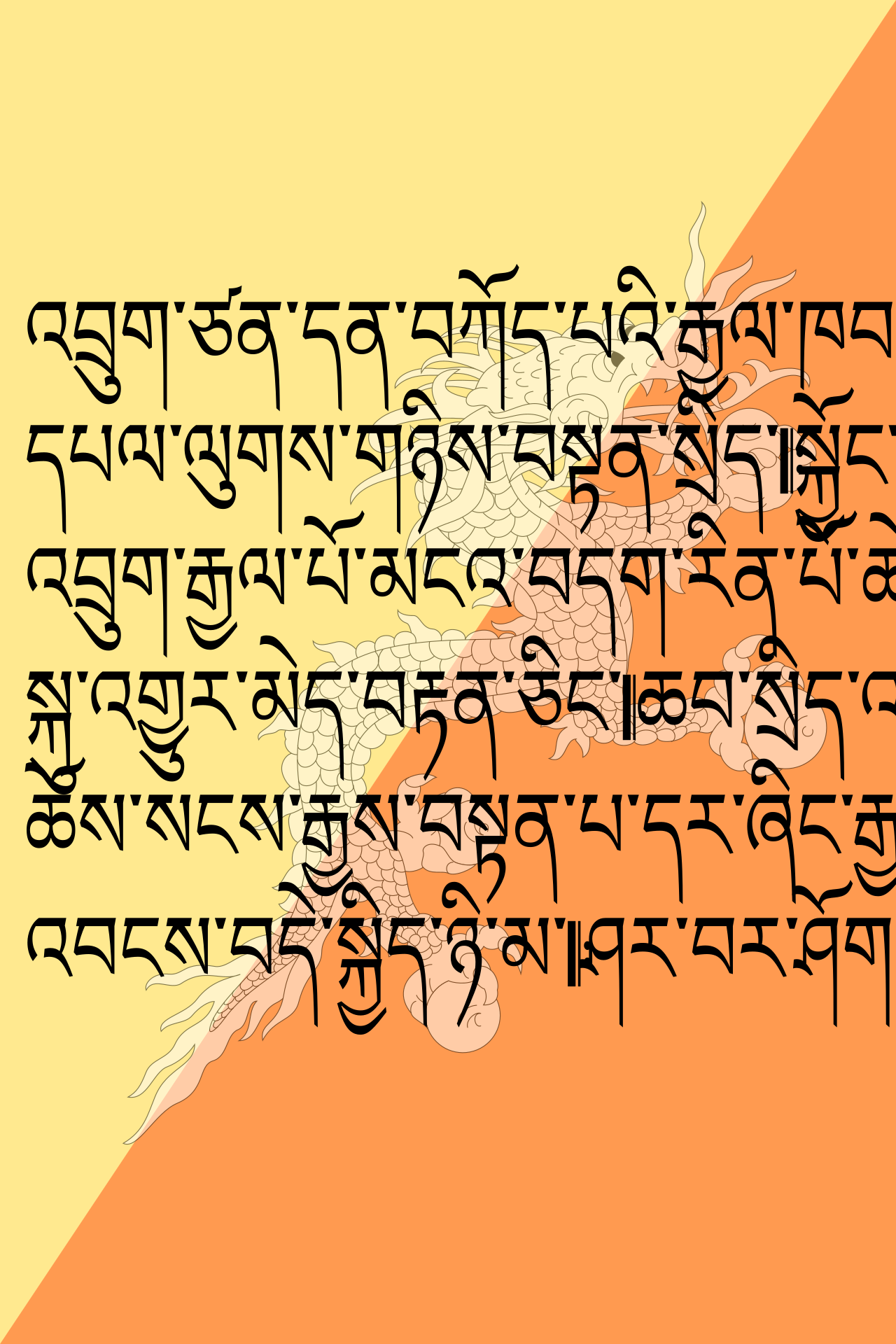

The Druk Tsendhen (Dzongkha: འབྲུག་ཙན་དན, meaning "The Thunder Dragon Kingdom") is the national anthem of Bhutan. Adopted in 1953 during the reign of the Third King, Jigme Dorji Wangchuck, it is one of the few national anthems in the world to have an accompanying choreography and one of the still fewer to be inscribed in a country's constitution. The anthem draws on a centuries-old Bhutanese folk song and encapsulates the dual pillars of Bhutanese statehood — Buddhist spiritual authority and the Wangchuck monarchy.
Composition and History
The anthem was commissioned in 1953 when Bhutan needed a formal musical piece for a state visit by Indian Prime Minister Jawaharlal Nehru. The Third King assigned the task to Aku Tongmi, a musician who had received formal training in Shillong, India, and had recently been appointed leader of the royal military brass band. Tongmi based his composition on an existing Bhutanese folk tune titled Thri nyampa med pa pemai thri ("The Unchanging Lotus Throne"), which already had an associated choreography. Because the source melody was tied to a dance tradition, the resulting anthem inherited that association, making Druk Tsendhen possibly the only national anthem in the world derived from a choreographic work.
The original lyrics were written by Gyaldun Dasho Thinley Dorji (also identified in some sources as Dolop Droep Namgay of Talo, Punakha) and comprised twelve lines. In 1964, a secretary to the king reduced the text to the current six-line version. The anthem was formally inscribed in the Constitution of Bhutan adopted in 2008, giving it constitutional status unique among national anthems.
Text and Translation
The anthem opens with the line Druk tsendhen koipi gyelkhap na — a direct reference to Bhutan's poetic name Tsenden Köpéjong, meaning "the country bestrewn with cypress." This phrase links the anthem to the national tree, the Himalayan cypress (Cupressus torulosa), and to a centuries-old literary tradition of describing Bhutan through the image of cypress-covered mountains. The six lines cover the country's identity, its religious foundations, its reverence for the king, and a prayer for peace and happiness.
An authorised English translation reads: "In the Thunder Dragon Kingdom, where cypresses grow, / Refuge of the glorious monastic and civil traditions, / The glorious King of Druk, precious sovereign, / His being is eternal, his reign prosperous. / May the teachings of the Blessed One thrive and flourish! / May the people of the sun of peace and happiness shine!"
The Dzongkha text preserves archaic court vocabulary rarely encountered in everyday speech. Scholars of Bhutanese literature note that phrases such as gyelkhap (kingdom) and tsendhen köpé (bestrewn with cypress) derive from a register of classical Dzongkha associated with royal proclamations and monastic texts. The anthem thus functions simultaneously as a patriotic song and as a demonstration of the classical literary tradition it celebrates.
Ceremonial Use and Choreography
The Druk Tsendhen is performed at state functions, national holidays, school assemblies, and sporting events in which Bhutan participates internationally. Its choreography, originally directed by Aku Tongmi himself, is performed at certain official occasions and taught in schools as part of cultural education. The anthem lasts approximately one minute in its standard performance. Protocol requires those present to stand during its playing, and it is played at the conclusion of significant state ceremonies before the formal departure of dignitaries.
The anthem is also sung at the annual Tshechu festivals held at major dzongs throughout the country, reinforcing the connection between the state, the monarchy, and Buddhist religious life that the lyrics articulate. Its melody, rooted in a folk song tradition rather than composed from whole cloth in a Western march style, gives it a distinctive Himalayan musical character that sets it apart from many postcolonial national anthems.
References
Related articles
Know something about this topic? Edit this article or . Anonymous contributions welcome — no account required.