National Institute of Zorig Chusum
From BhutanWiki, the people's encyclopedia of Bhutan · culture · Verified
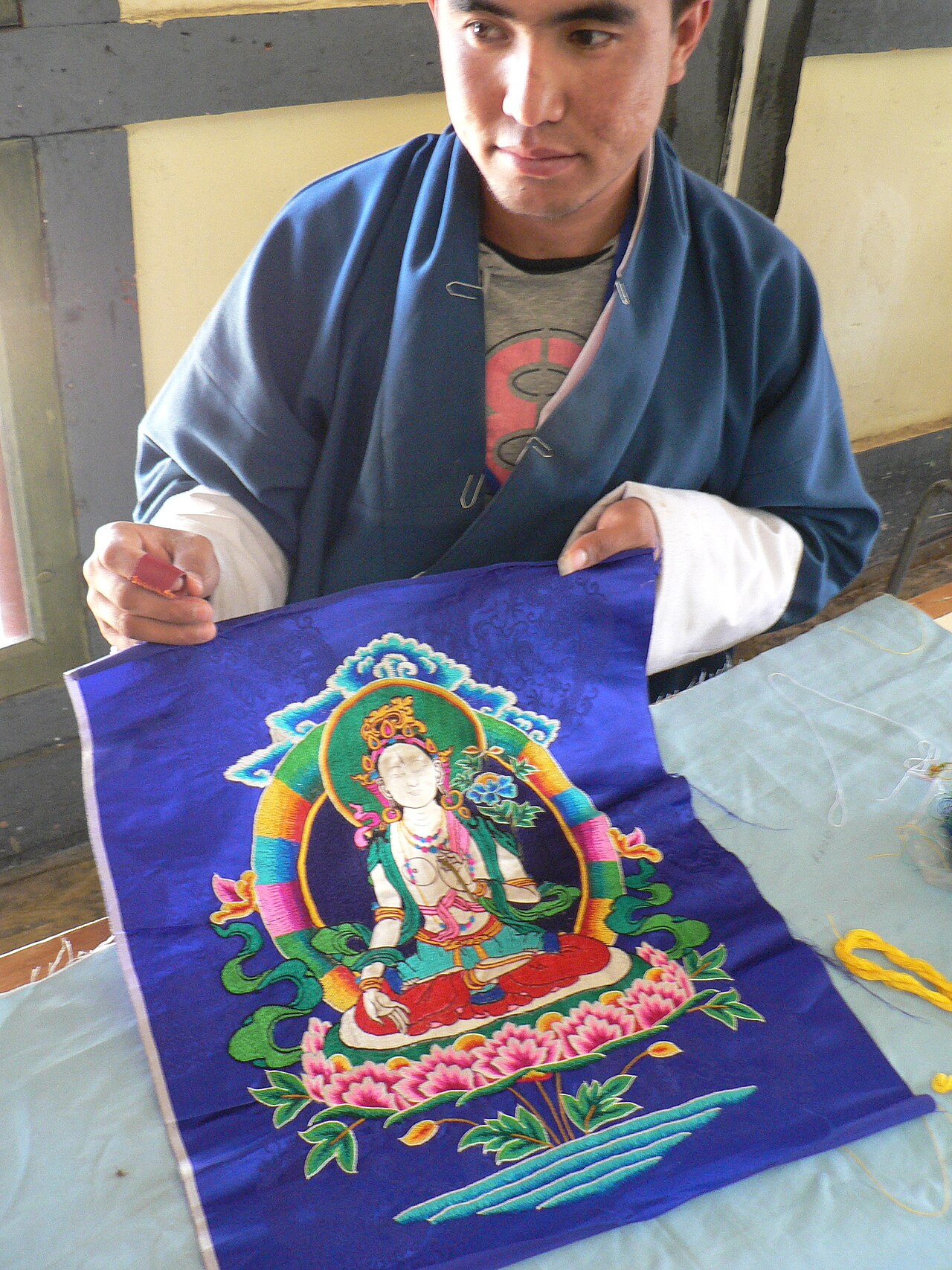

The National Institute of Zorig Chusum (NIZC), commonly referred to as the "painting school" or "arts and crafts school," is a government-funded institution in Thimphu, the capital of Bhutan, dedicated to the preservation and transmission of the thirteen traditional arts and crafts known as Zorig Chusum. Established in 1971 under the patronage of the Royal Government of Bhutan, the institute is the country's principal centre for formal instruction in the traditional arts and plays a critical role in ensuring that centuries-old artistic knowledge continues to be passed to new generations.
The NIZC is situated on the hillside above central Thimphu, overlooking the Thimphu valley. It operates under the authority of the Ministry of Education (formerly supervised by the Department of Culture) and admits students from across the country. The institute has trained thousands of artists since its founding, producing graduates who go on to work as painters, sculptors, carvers, weavers, and metalworkers in monasteries, dzong restoration projects, private workshops, and government cultural programmes.
History and Founding
The establishment of the NIZC was motivated by concern that Bhutan's traditional arts were at risk of decline in the face of modernisation. By the mid-twentieth century, the traditional master-apprentice system that had sustained the arts for centuries was weakening as young Bhutanese increasingly pursued modern education and employment opportunities outside the craft sector. The Third King, Jigme Dorji Wangchuck, and subsequently the Fourth King, Jigme Singye Wangchuck, recognised that institutional intervention was necessary to preserve the artistic heritage that formed a cornerstone of Bhutanese national identity.
The institute was formally established in 1971, initially as a small school offering instruction in a limited number of disciplines. Over the following decades, it expanded its facilities, curriculum, and enrolment to cover the full range of the thirteen traditional arts. The founding of the NIZC was part of a broader programme of cultural preservation that also included the codification of national dress requirements, the establishment of the national language policy, and the conservation of historic dzongs and monasteries.
Programmes and Curriculum
The NIZC offers programmes of study lasting four to six years, depending on the discipline and the student's progress. The curriculum is structured to provide both practical training in specific arts and a broader understanding of Bhutanese cultural heritage, Buddhist iconography, and the philosophical foundations of the Zorig Chusum system.
The major disciplines taught at the institute include:
- Lhazo (Painting): Thangka painting, mural painting, and decorative painting. Students learn pigment preparation, canvas making, the proportional systems governing sacred imagery, and the application of gold leaf. Painting is one of the most popular and demanding programmes.
- Jinzo (Clay Sculpture): The modelling of sacred images, relief sculpture, and tsa-tsa votive tablets. Students study the proportional canons for different categories of Buddhist figures and learn to work with clay, armatures, and polychrome finishing.
- Parzo (Wood Carving): Architectural carving, mask making, and the production of religious sculptures and printing blocks. Students progress from basic motifs to complex compositions over several years of training.
- Tshemzo (Embroidery and Applique): Needlework techniques for creating thangka banners, ceremonial costumes, and decorative textiles. This programme includes both fine embroidery and large-scale applique work.
- Thagzo (Weaving): Traditional textile weaving on backstrap and frame looms, including instruction in natural dyeing, pattern design, and the regional textile traditions of Bhutan.
- Shagzo (Woodturning): The production of turned wooden bowls, cups, and containers on traditional lathes.
Not all thirteen arts are taught as separate programmes at the institute at any given time; some, such as papermaking and bamboo work, may be offered as shorter courses or workshops rather than full multi-year programmes. The emphasis is on the disciplines most closely linked to Buddhist religious art and traditional architecture, reflecting the primary cultural preservation mission of the institution.
Admission and Student Life
The NIZC admits students who have typically completed a basic level of formal schooling, though the entrance requirements have varied over the years. Students are often in their mid-teens when they enter the institute. Admission is competitive, and students are selected on the basis of aptitude tests, interviews, and demonstrated interest in the traditional arts. The government provides scholarships covering tuition, materials, and in some cases accommodation, reflecting the national priority attached to arts education.
Student life at the NIZC is structured around intensive practical training. Students spend the majority of their time in workshops, working under the guidance of master instructors (lopon) who are themselves accomplished practitioners of their respective disciplines. The pedagogical approach blends elements of the traditional master-apprentice relationship with the structure of a modern educational institution, including graded assessments, exhibitions of student work, and formal graduation.
In the early years of training, students focus on foundational skills: learning to prepare materials, mastering basic techniques, and studying the iconographic and proportional systems that govern sacred art. As they advance, they undertake increasingly complex projects, culminating in the production of portfolio-quality works that demonstrate mastery of their discipline.
Faculty and Instruction
The institute's faculty consists of master artists who have typically trained through a combination of traditional apprenticeship and institutional education. Some instructors are graduates of the NIZC itself who returned to teach after establishing careers as practitioners. The master instructors carry the title lopon and are respected as custodians of specialised knowledge that might otherwise be lost.
Instruction is primarily practical and demonstration-based, in keeping with the tradition of learning by doing that characterises artisan education worldwide. Theoretical instruction in Buddhist iconography, Bhutanese cultural history, and the philosophical foundations of the arts supplements the hands-on training.
Graduates and Impact
Graduates of the NIZC are employed across a wide range of settings. Many work on government-sponsored restoration and construction projects, including the ongoing conservation of historic dzongs and the decoration of new temples and public buildings. Others establish private workshops producing commissioned works for monasteries, private patrons, and the tourist market. Some graduates have achieved recognition as individual artists, exhibiting work both within Bhutan and internationally.
The institute's impact extends beyond the production of trained artisans. By maintaining a visible, prestigious centre for the traditional arts in the national capital, the NIZC helps to sustain public awareness of and respect for Bhutanese artistic heritage. The institute serves as a living demonstration that the traditional arts are not relics of the past but active, evolving practices with contemporary relevance.
Challenges and Future Directions
The NIZC faces several ongoing challenges. Competition from modern educational and career pathways means that recruitment of talented students can be difficult; young Bhutanese may prefer to pursue university education or employment in the growing service sector rather than committing to a multi-year arts programme. The availability and cost of traditional materials, particularly natural pigments and high-quality timber, present practical concerns. Balancing fidelity to tradition with the need to adapt to contemporary contexts — including the commercial art market and digital technologies — requires ongoing institutional reflection.
Despite these challenges, the National Institute of Zorig Chusum remains the single most important institution for the preservation of Bhutan's traditional visual arts. Its continued operation, supported by government funding and royal patronage, reflects Bhutan's commitment to maintaining the cultural heritage that distinguishes it as a nation.
References
Related articles
Know something about this topic? Edit this article or . Anonymous contributions welcome — no account required.