politics
UNDP Human Development Reports: Bhutan
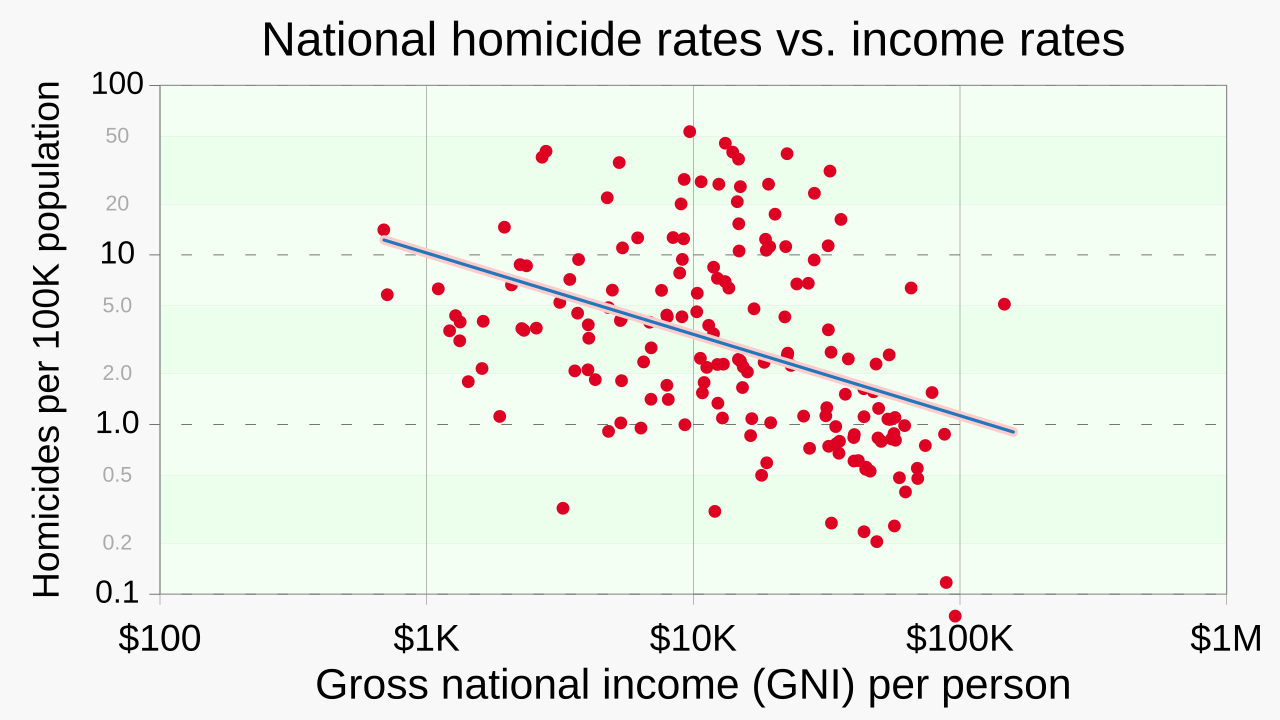
The United Nations Development Programme's Human Development Reports have tracked Bhutan's progress on the Human Development Index (HDI) since the early 1990s, documenting improvements in life expectancy, educational attainment, and per capita income. Bhutan's HDI ranking, Gender Development Index, and Inequality-adjusted HDI reveal both significant progress and persistent gaps relative to regional neighbours, offering a quantitative counterpart to the country's qualitative Gross National Happiness framework.

The UNDP Human Development Reports (HDRs) have tracked Bhutan's development progress since the early 1990s, providing a standardised, internationally comparable assessment of the country's achievements in health, education, and living standards. The Human Development Index (HDI) — a composite measure of life expectancy at birth, mean and expected years of schooling, and gross national income per capita — has become one of the most widely cited metrics for evaluating Bhutan's development trajectory. Bhutan's HDI has risen steadily over the past three decades, reflecting genuine improvements in the wellbeing of its population, though the country continues to lag behind several of its South Asian neighbours on key indicators.[1]
The Human Development Reports are particularly relevant to Bhutan because they provide a framework that resonates with the country's own Gross National Happiness philosophy. While GNH and HDI differ significantly in methodology and scope — GNH encompasses psychological wellbeing, cultural vitality, ecological diversity, and good governance alongside material living standards — both frameworks reject purely economic measures of progress. The UNDP has explicitly acknowledged GNH as an innovative alternative to GDP-centric development models, and several HDRs have featured Bhutan as a case study in development beyond income.
Bhutan's engagement with the HDR framework has also exposed important tensions. The HDI captures national averages but can mask significant internal disparities — between urban and rural areas, between men and women, between the western and eastern regions, and between the Ngalop, Sharchop, and Lhotshampa communities. Disaggregated indicators and supplementary indices such as the Inequality-adjusted HDI (IHDI) and the Gender Development Index (GDI) reveal a more complex picture of Bhutanese development than the headline HDI figure alone suggests.[2]
HDI Trends and Rankings
Bhutan's HDI has risen from approximately 0.347 in 1990 — placing it among the world's least developed countries — to approximately 0.666 by the early 2020s, crossing the threshold into the "medium human development" category. This improvement reflects dramatic gains in all three HDI dimensions: life expectancy at birth has risen from around 52 years in 1990 to over 72 years, mean years of schooling have increased from fewer than one year to approximately five years, and gross national income per capita (PPP) has more than quadrupled.
Despite these gains, Bhutan's HDI ranking has remained in the range of 125th to 135th out of approximately 190 countries, placing it below neighbours such as Sri Lanka (which consistently ranks in the "high human development" category), India, and the Maldives. Among the least developed countries, however, Bhutan has been one of the strongest performers, and its rate of HDI improvement has exceeded the South Asian average over most of the period since 1990. Bangladesh, once well behind Bhutan, has narrowed the gap significantly in recent years, while Nepal — a country with deep historical and demographic ties to Bhutan's Lhotshampa community — has tracked slightly below Bhutan on the HDI throughout the period.[3]
The HDR data also show that Bhutan's progress has not been linear. The early 2000s saw rapid improvements as the government expanded education and health infrastructure under successive Five-Year Plans. Progress slowed somewhat in the 2010s as Bhutan confronted the harder challenges of improving quality (as opposed to expanding access) in education and health, and as per capita income growth moderated between hydropower project commissioning cycles.
Health Indicators
The health dimension of Bhutan's HDI has shown the most dramatic improvement. Life expectancy at birth, the principal health indicator used in the HDI, has increased by approximately twenty years since 1990 — one of the largest gains recorded anywhere in the world over this period. This improvement reflects the expansion of primary healthcare coverage, the construction of Basic Health Units (BHUs) throughout the country, successful immunisation campaigns, and declining infant and maternal mortality rates.
The government's policy of providing free healthcare to all citizens, enshrined in practice since the 1960s and affirmed in the 2008 Constitution, has been a key driver of these gains. The HDRs have credited Bhutan's health system for achieving near-universal access to basic services despite the country's extremely challenging mountainous terrain, which makes service delivery logistically difficult and expensive.
Remaining health challenges highlighted in the HDR data include the rise of non-communicable diseases (cardiovascular disease, diabetes, and cancer) as Bhutan undergoes an epidemiological transition, persistent mental health service gaps, and the need for skilled health workers in remote districts. The COVID-19 pandemic, while managed effectively in Bhutan through early border closure and a successful vaccination campaign, also exposed vulnerabilities in the health system.
Education Indicators
Education has been perhaps the most transformative dimension of Bhutan's human development progress. In 1960, Bhutan had virtually no modern education system; by 2020, primary school enrolment was near-universal and secondary enrolment had expanded dramatically. Mean years of schooling for the adult population, however, remain relatively low (approximately five years) because the large cohort of adults who grew up before the expansion of education pulls down the national average. Expected years of schooling for children entering school today is substantially higher, at approximately thirteen years, suggesting that the next generation will show markedly higher educational attainment.
The HDRs have noted that Bhutan's educational improvements have been particularly strong for girls, with gender parity achieved at the primary level and significant progress at the secondary level. However, quality concerns persist: learning assessments suggest that many students complete primary school without achieving age-appropriate literacy and numeracy levels. The reports have recommended investments in teacher training, curriculum reform, and learning assessment systems to translate enrolment gains into genuine learning outcomes.
Gender Development and Inequality
The UNDP's Gender Development Index (GDI) compares HDI values for men and women, revealing gender gaps in life expectancy, education, and income. Bhutan's GDI has generally been close to parity in health (women live longer than men) and education (near-parity at primary and secondary levels), but a significant gap persists in economic participation and income. Women's labour force participation, while higher than in some South Asian countries, is concentrated in unpaid agricultural work and the informal sector, resulting in substantially lower estimated gross national income per capita for women compared to men.
The Inequality-adjusted HDI (IHDI) penalises the standard HDI for inequality in the distribution of health, education, and income across the population. Bhutan typically loses fifteen to twenty percent of its HDI value when adjusted for inequality, indicating that the benefits of development have not been evenly shared. The largest losses come from income inequality, followed by education inequality, while health inequality is relatively modest. This pattern is consistent with other South Asian countries but underscores the challenge of ensuring that economic growth reaches rural and marginalised populations.
The Gender Inequality Index (GII), which measures gender-based disadvantages in reproductive health, empowerment, and economic participation, places Bhutan in the middle ranks globally. Women's representation in the National Assembly and National Council remains low by international standards, and the HDRs have flagged this as an area requiring sustained policy attention. The intersection of gender with ethnicity — particularly the experiences of Lhotshampa women, many of whom experienced displacement and statelessness — is generally not captured in the national HDR data.[4]
Regional Comparisons and Significance
Comparing Bhutan's HDI trajectory with its South Asian neighbours reveals both accomplishments and remaining challenges. Sri Lanka leads the region with an HDI consistently above 0.78, reflecting its early investments in universal education and healthcare. India, with an HDI around 0.63, lies below Bhutan despite its much larger and more diversified economy. Nepal, culturally and demographically linked to Bhutan's Lhotshampa population, has an HDI of approximately 0.60, reflecting the devastating impacts of civil conflict and political instability on development progress.
The HDR framework, while valuable, has clear limitations in the Bhutanese context. It cannot capture the cultural and spiritual dimensions of wellbeing that GNH attempts to measure. It does not account for environmental sustainability — a domain where Bhutan performs exceptionally well, as one of the world's few carbon-negative countries. And it struggles to address the development impacts of forced displacement, as the HDI measures outcomes for the resident population but not for the estimated 108,000 Bhutanese refugees who were expelled in the 1990s and whose human development outcomes — tracked through UNHCR rather than UNDP mechanisms — have followed a very different trajectory. The UNDP Human Development Reports remain, nonetheless, an indispensable tool for tracking Bhutan's development progress and identifying the gaps that demand continued policy attention.[5]
See also
- United States Department of State Human Rights Reports on Bhutan
- Human Rights Watch Reports on Bhutan
- Human Rights in Bhutan
- US State Department Reports on Bhutan
- CEDAW Reports: Bhutan
References
- UNDP, "Human Development Reports: Country Insights — Bhutan," hdr.undp.org.
- UNDP, Human Development Report 2021/2022, New York: UNDP, 2022.
- UNDP, "Human Development Index trends, 1990–present," hdr.undp.org.
- UNDP, "Gender Development Index," hdr.undp.org.
- UNDP, Human Development Report 2023/2024, New York: UNDP, 2024.
Contributed by Anonymous Contributor, Atlanta, Georgia
View online: https://bhutanwiki.org/articles/undp-human-development-reports-bhutan · Content licensed CC BY-SA 4.0