diaspora
AHURA Bhutan
AHURA Bhutan (Association of Human Rights Activists, Bhutan) is a refugee human rights group formed in exile in Nepal in 1992, known for its 1999–2000 project documenting the nationality and property evidence of camp residents.
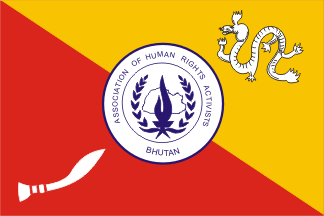

AHURA Bhutan (Association of Human Rights Activists, Bhutan) is a human rights group formed in 1992 by Bhutanese refugees in exile in Nepal. It describes itself as non-partisan and non-governmental.[1] It is best known for its Documentation of Bhutanese Refugees project of 1999–2000, which set out to record the nationality and property evidence of every camp household. Its chief coordinator has been the former political prisoner Ratan Gazmere.[1]
Documentation of Bhutanese Refugees
The project aimed to prove false the Bhutanese government's claim that the camp population was not Bhutanese, by showing that refugees held documentary evidence of their origin, nationality and property rights in Bhutan.[1] Work began in January 1999 with eighteen full-time staff: three in organisation and management, three in computing, five in research and seven general volunteers. Volunteers collected information in the camps, which former village headmen and elders then verified. Refugees were interviewed at the project office in Damak, and records were organised by family, block and district, together with documents such as citizenship identity cards and land-tax receipts.[1]
The project officially ended in February 2000. AHURA had hoped to cover the whole camp population of more than 96,000 people, but completed the documentation of only about 51 per cent of it. It attributed the shortfall to unwillingness or apathy among some refugees, misinformation from political factions, and its own technical and planning problems.[1] The first part of the resulting Digitalised Database of Bhutanese Refugees was released on CD-ROM and distributed to governments and international human rights bodies, with a sample database and summary report published online.[1]
The project came while Nepal and Bhutan were negotiating over which refugees Bhutan would accept back. AHURA argued that an impartial and independent verification commission was the best route to early return.[1] The bilateral process later produced the 2003 joint verification of Khudunabari camp.
Publications
AHURA's reports include Victims of Forced Eviction: A Report on the Problem and Resistance Efforts: Bhutanese Refugees (August 1999, 37 pages), held in the library of the Asia-Pacific Human Rights Information Center (HURIGHTS OSAKA).[2] Gazmere and Dilip Bishwo, AHURA's secretary for the international campaign, described the documentation project and the case for return and property restitution in Forced Migration Review.[1]
See also
References
- Gazmere, Ratan, and Dilip Bishwo. "Bhutanese refugees: rights to nationality, return and property." Forced Migration Review.
- "Victims of forced eviction: a report on the problem and resistance efforts: Bhutanese refugees." Association of Human Rights Activists, Bhutan, 1999. HURIGHTS OSAKA library catalogue.
View online: https://bhutanwiki.org/articles/ahura-bhutan · Content licensed CC BY-SA 4.0