Pawo Choyning Dorji
From BhutanWiki, the people's encyclopedia of Bhutan · people · Verified
This article is about a living or recently deceased person. Edits must be supported by reliable, verifiable sources. Unsupported or potentially defamatory content will be removed.
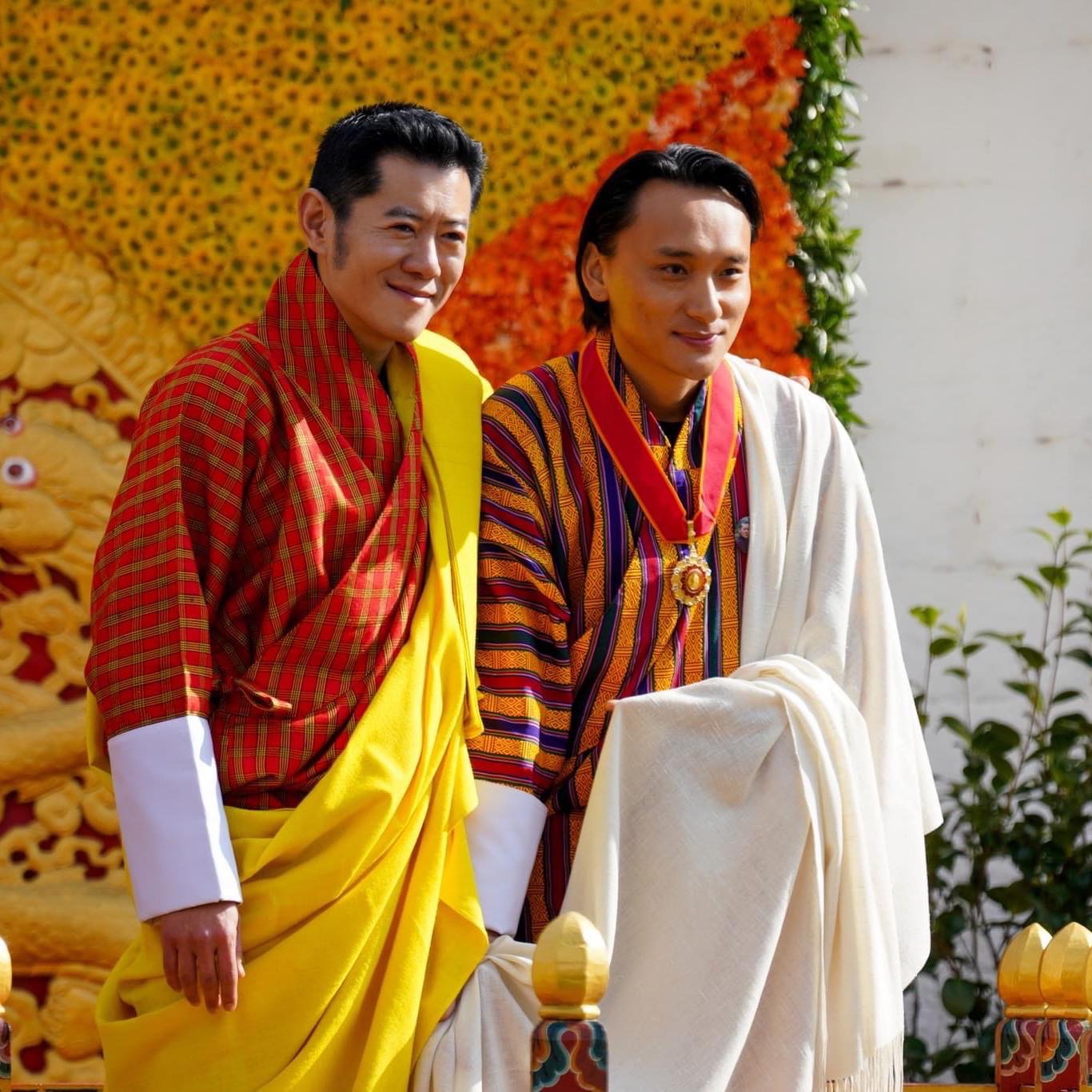
Pawo Choyning Dorji (born 23 June 1983) is a Bhutanese filmmaker, photographer and writer. He is the most internationally recognised figure in the small Bhutanese film industry, and his two feature films to date have together carried Bhutan onto the world stage in a way no earlier Bhutanese work had managed.
His directorial debut, Lunana: A Yak in the Classroom (2019), was nominated for Best International Feature Film at the 94th Academy Awards in 2022 — the first and, as of 2026, only Bhutanese film to receive an Academy Award nomination. His second feature, The Monk and the Gun (2023), was shortlisted in the top fifteen at the 96th Academy Awards in 2024 but was not among the five final nominees. The distinction between "nominated" and "shortlisted" matters: the earlier film advanced to the final ballot, while the later one did not.[1][2]
Dorji is a longtime student and collaborator of Dzongsar Jamyang Khyentse Rinpoche, the Tibetan Buddhist teacher and filmmaker, and his films are marked by a contemplative pacing, a preference for non-professional casts, and an interest in the collision between traditional Bhutanese society and modernity. On 17 December 2022, King Jigme Khesar Namgyel Wangchuck awarded him the Druk Thuksey, the highest civilian decoration in Bhutan; Dorji was the youngest recipient in the history of the honour and the first filmmaker to receive it.[3]
Early life and education
Dorji was born on 23 June 1983, the son of a Bhutanese diplomat. Accounts of his birthplace differ: his Lawrence University alumni profile gives Darjeeling, India, while other sources list Thimphu. Because of his father's postings he spent parts of his childhood in India, the Middle East and elsewhere, and did much of his schooling outside Bhutan. He attended Kodaikanal International School in Tamil Nadu, India, and Yangchenphug Higher Secondary School in Thimphu.[4]
He completed a Bachelor of Arts in government and international relations at Lawrence University, a small liberal arts college in Appleton, Wisconsin, graduating in 2006. He later undertook studies in Buddhist philosophy at the Sarah Buddhist Institute in Kathmandu. In June 2024 Lawrence University conferred an honorary doctorate on Dorji and invited him to deliver the commencement address, citing his contribution to world cinema.[4]
Before turning to directing Dorji worked extensively as a photographer. His photographic work has been published in outlets including VICE, Esquire and Life, and has often focused on Himalayan Buddhist communities and Bhutanese landscapes.[5]
Apprenticeship with Khyentse Norbu
Dorji's entry into filmmaking came through his long association with Dzongsar Jamyang Khyentse Rinpoche, who directs under the name Khyentse Norbu and whose earlier films include The Cup (1999) and Travellers and Magicians (2003). Dorji worked as director's assistant on Khyentse Norbu's Indian-shot feature Vara: A Blessing (2013) and served as producer on Hema Hema: Sing Me a Song While I Wait (2016), which premiered at the Locarno Film Festival. The apprenticeship gave Dorji on-set experience across pre-production, scheduling and the logistics of shooting in remote locations — all of which would prove central to his own debut.[5]
Lunana: A Yak in the Classroom (2019)
Lunana: A Yak in the Classroom follows Ugyen, a disaffected young teacher in Thimphu who dreams of emigrating to Australia to pursue a music career and is instead posted to Lunana gewog, a glacial valley in Gasa district reached only by an eight-day trek. Over a year in the village he is changed by the children he teaches and by an elderly singer, and by the yak, Norbu, that the villagers bring into the classroom for warmth.[6]
The production was shot on location in Lunana at an elevation above 4,800 metres, which made it one of the highest-altitude feature shoots ever attempted. The crew and equipment were carried in on foot and by mule over an eight-day approach; the village had no mains electricity or mobile coverage, and camera batteries were charged from portable solar panels. Most of the cast were residents of Lunana playing versions of themselves; the young girl Pem Zam, who plays the class monitor, was a village child with no acting background. Dorji has said in interviews that the shoot was a deliberate attempt to preserve something of the valley on film before roads and grid electricity reached it.[7]
The film had its world premiere at the 63rd BFI London Film Festival on 5 October 2019, followed by a screening at the 24th Busan International Film Festival. It was selected as Bhutan's entry for the Best International Feature Film category at the 94th Academy Awards — not the country's first submission, but the first to advance. On 8 February 2022 the Academy announced the five nominees, and Lunana was among them, alongside entries from Japan (Drive My Car, which won), Denmark (Flee), Italy (The Hand of God) and Norway (The Worst Person in the World). The nomination was covered widely in the international press, including profile pieces in Variety, The Hollywood Reporter and The New York Times.[1]
The Monk and the Gun (2023)
Dorji's second feature is set in Bhutan in 2007–08, during the mock elections and the country's transition from absolute monarchy to constitutional democracy. Two storylines run in parallel: an American collector and his local fixer search the countryside for a rare antique American rifle, while a young monk, under instructions from his lama to "make things right", walks across the same landscape carrying two guns of his own. The film treats the democratic transition with deadpan humour rather than satire, and closes on a scene that reframes the guns' purpose.[8]
The Monk and the Gun had its world premiere at the 50th Telluride Film Festival on 1 September 2023 and its international premiere at the 48th Toronto International Film Festival days later. It won the Special Jury Prize at the 18th Rome Film Festival in October 2023. Roadside Attractions released the film theatrically in the United States in February 2024.[9]
Bhutan submitted the film for Best International Feature Film at the 96th Academy Awards. On 21 December 2023 the Academy published its fifteen-title shortlist, and The Monk and the Gun was included. On 23 January 2024, when the final five nominees were announced, the film was not among them. The distinction is often elided in secondary coverage but is material: advancing to the shortlist is not the same as receiving a nomination. Dorji's earlier Lunana remains the only Bhutanese film to have received a formal Academy Award nomination as of 2026.[2]
Style and themes
Both of Dorji's features are shot in long, observational takes with natural light and largely non-professional casts, and both are spoken mainly in Dzongkha with passages of English and regional dialects. Critics have connected his visual approach to that of his mentor Khyentse Norbu and, more broadly, to a slow-cinema tradition in Asian art film. His recurring concern is the point of contact between a monastic, agrarian Bhutan and the material expectations of the outside world — in Lunana as the pull of Australian wages against a remote classroom, in The Monk and the Gun as the bewildering arrival of elections and imported consumer goods. The films do not romanticise either side: Ugyen's longing for Australia is treated with sympathy, and the elections in The Monk and the Gun are shown as earnest rather than absurd.[10]
Production company and collaborators
Dorji's features have been produced under the banner of Dangphu Dingphu, a production company he co-founded whose name refers to the traditional Bhutanese phrase used to open a folk tale — roughly the Dzongkha equivalent of "once upon a time". Lunana was produced with financing arranged partly through Khyentse Norbu's 84000 initiative and international co-production partners; The Monk and the Gun was co-produced with Closer Media, Jungo Studios and others, with Roadside Attractions handling US distribution. He signed with the United Talent Agency in Los Angeles in 2022 following the Academy Award nomination for Lunana.[8]
Reception and significance
Dorji's international visibility is disproportionate to the size of the Bhutanese film industry, which produces only a handful of features each year and has limited access to international distribution. Before Lunana, Bhutan had submitted films to the Academy Awards several times — including Khyentse Norbu's Travellers and Magicians in 2003 — without advancing past the submission stage. The 2022 nomination was treated in Bhutan as a national event and was the basis for the Druk Thuksey decoration later that year.[11]
How much of that visibility will translate into a sustained domestic industry is an open question. Bhutan lacks a permanent national film fund, a film school, or stable distribution channels at home, and several younger directors — including Dechen Roder — have described the difficulty of financing feature work. Dorji has spoken in interviews about wanting to make more films in Bhutan and to mentor Bhutanese crew, though as of 2026 no third feature has been publicly announced.
Other work
Alongside his film work Dorji has continued to publish photography and occasional essays. He has written on Bhutanese Buddhist culture for general-interest publications and has appeared at film festivals and cultural conferences discussing Bhutanese cinema, Gross National Happiness and the role of cinema in small cultures. He remains closely associated with Khyentse Norbu's Buddhist and cultural projects.
Honours
- Druk Thuksey (Heart Son of the Thunder Dragon) — Bhutan's highest civilian honour, conferred by King Jigme Khesar Namgyel Wangchuck on 17 December 2022; youngest recipient and first filmmaker to receive it
- Academy Award nomination — Best International Feature Film, 94th Academy Awards (2022), for Lunana: A Yak in the Classroom
- Special Jury Prize — 18th Rome Film Festival (2023), for The Monk and the Gun
- Academy Award shortlist — Best International Feature Film, 96th Academy Awards (2024), for The Monk and the Gun (shortlisted, not nominated)
- Honorary Doctorate in Fine Arts — Lawrence University, June 2024
See also
- Cinema of Bhutan
- Lunana: A Yak in the Classroom
- The Monk and the Gun
- Khyentse Norbu (Dzongsar Jamyang Khyentse Rinpoche)
- Travellers and Magicians
- Lunana gewog
- Dechen Roder
References
- "Pawo Choyning Dorji on Breaking Boundaries for Bhutan Through the Oscars." Variety, February 2022.
- "96th Academy Awards — International Feature Film shortlist and nominees." Academy of Motion Picture Arts and Sciences.
- "Oscar-nominated Pawo Choyning Dorji on a journey of discovery." Lawrence University.
- "Lawrence alumnus's debut film earns Oscar nomination." Lawrence University News.
- "Pawo Choyning Dorji." Wikipedia.
- "A yak, a ticked-off teacher, an Oscar nomination for Bhutan." NPR, March 2022.
- "Oscars: Lunana: A Yak in the Classroom director talks film." The Hollywood Reporter.
- "The Monk and the Gun." Wikipedia.
- "The Monk and the Gun review and interview — Telluride Film Festival." Deadline, September 2023.
- "The Monk and the Gun." RogerEbert.com, February 2024.
- "Lunana: A Yak in the Classroom makes history as the first Bhutanese movie to receive an Oscar nomination." Daily Bhutan.
Related articles
Know something about this topic? Edit this article or . Anonymous contributions welcome — no account required.