Forced Eviction of Lhotshampa (1990-1993)
From BhutanWiki, the people's encyclopedia of Bhutan · history · Verified
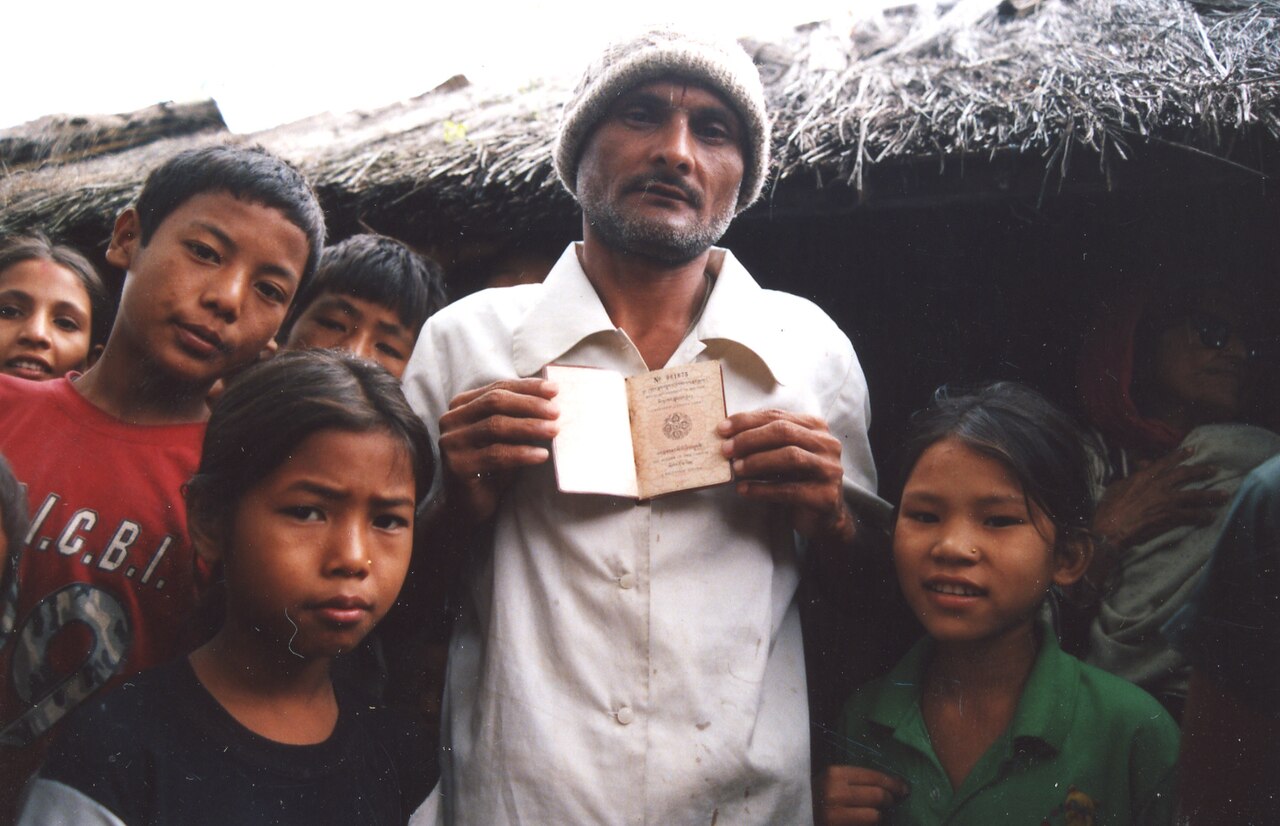

The forced eviction of the Lhotshampa from southern Bhutan between 1990 and 1993 was a systematic campaign of expulsion that displaced over 100,000 ethnic Nepali-speaking Bhutanese citizens from their homes. The events were the culmination of a decade of increasingly restrictive policies directed at the Lhotshampa minority, including the Citizenship Act of 1985, the imposition of the Driglam Namzha cultural code, and a discriminatory census operation that stripped many Lhotshampa of their citizenship. The mass displacement that followed involved military operations, arbitrary detention, torture, and the coercion of individuals and families into signing documents purporting to record their "voluntary migration" from the country. International human rights organisations, including Human Rights Watch and Amnesty International, have documented these events extensively and characterised them as ethnic cleansing.[1]
The Royal Government of Bhutan has contested this characterisation, maintaining that many of those who departed were illegal immigrants rather than legitimate citizens, and that departures were largely voluntary. This article presents the documented evidence from both the Bhutanese government's position and from international observers, human rights organisations, and the displaced Lhotshampa themselves, in accordance with the principles of neutral point of view and the factual treatment of documented events.[2]
Background: The Census and Citizenship Policies
The roots of the mass expulsion lie in the political and demographic anxieties that gripped the Bhutanese establishment during the 1980s. Concerns about the growing numerical weight of the Nepali-speaking population in the south — fuelled in part by the memory of Sikkim's annexation by India in 1975 after its Nepali-origin majority voted for merger — led to a series of policies aimed at consolidating Bhutanese national identity around the language, dress, and customs of the Ngalop (Drukpa) majority of the north and west.
The Citizenship Act of 1985 tightened nationality requirements significantly, demanding documentary proof of residence in Bhutan from 1958 — a standard that many Lhotshampa could not meet, particularly those from rural areas where written records were scarce. In 1988, the government launched a census operation in the southern districts that divided the population into categories of officially recognised citizens and non-citizens. This census, applied strictly only in the south of the country, recategorised many people of Nepali heritage as illegal immigrants, irrespective of how long their families had lived in Bhutan. The categorisation created the bureaucratic foundation for the subsequent expulsions.[3]
The 1990 Protests and Government Crackdown
In September and October 1990, large-scale protests erupted across southern Bhutan, with demonstrators demanding democratic reforms, recognition of minority rights, and the repeal of discriminatory policies. The demonstrations were unprecedented in Bhutan's modern history, involving tens of thousands of participants. The government characterised the protests as an anti-national movement orchestrated by Nepali immigrants and responded with a harsh military crackdown. Thousands of Lhotshampa were arrested, many without formal charges or legal process. Amnesty International documented the arbitrary detention and torture of over 2,000 individuals, including beatings, electric shocks, and other forms of cruel, inhuman, and degrading treatment.[4]
Mass Expulsions: 1991-1993
The mass expulsion of Lhotshampa began in earnest in mid-1991, when a campaign of forced evictions was launched across the southern districts. Security forces — including the Royal Bhutan Army and Royal Bhutan Police — conducted operations in villages throughout Samtse, Chukha, Sarpang, Tsirang, Dagana, and Samdrup Jongkhar districts. Families were forced to leave their homes, often at short notice and under threat of violence. Homes and property were confiscated by the state, and departing Lhotshampa were compelled to sign documents known as "Voluntary Migration Forms" (VMFs) — papers that stated the bearer was leaving Bhutan of their own free will. Human Rights Watch and other organisations have documented that these forms were signed under duress, coercion, and in many cases direct physical threats.[5]
The pace and scale of the expulsions accelerated dramatically in early 1992. The flow of refugees leaped to approximately 10,000 per month in February 1992, and by March 1992 the refugee population in Nepal had swelled to 48,000. By the end of 1992, more than 80,000 Lhotshampa were living in camps administered by the United Nations High Commissioner for Refugees (UNHCR) in southeastern Nepal. The number eventually surpassed 100,000.[6]
Human Rights Documentation
The forced eviction of the Lhotshampa has been extensively documented by international human rights organisations. Human Rights Watch published detailed reports in the 1990s and 2000s documenting forced expulsions, property confiscation, arbitrary detention, torture, and the denial of citizenship rights. Amnesty International reported on the torture and ill-treatment of detainees, including cases of rape and sexual violence. The Minority Rights Group International has maintained detailed profiles of the Lhotshampa as one of the most significant cases of minority persecution in Asia. Bill Frelick of Human Rights Watch reported that state security forces forcibly removed ethnic Lhotshampa from their homes and coerced them into renouncing their citizenship.[7]
The Bhutanese Government's Position
The Royal Government of Bhutan has maintained a fundamentally different account of these events. Government officials have argued that the departures from southern Bhutan were largely voluntary, that many of those who left were recent illegal immigrants from Nepal and India rather than bona fide Bhutanese citizens, and that the census and citizenship verification exercises were legitimate administrative processes necessary to determine the true composition of the population. The government has pointed to the 1988 census as evidence that a significant proportion of the southern population could not demonstrate valid claims to Bhutanese nationality. This position has been challenged by human rights organisations, academic researchers, and the displaced Lhotshampa themselves, who have produced extensive documentation of forced evictions, coercion, and state violence.
Refugee Camps and Third-Country Resettlement
The displaced Lhotshampa were housed in seven refugee camps in the Jhapa and Morang districts of southeastern Nepal, administered by UNHCR with assistance from international NGOs. Conditions in the camps, while adequate for basic survival, confined families to cramped quarters with limited economic opportunities for years and, in many cases, decades. Bilateral negotiations between Bhutan and Nepal over the status and possible repatriation of the refugees dragged on inconclusively from 1993 to the mid-2000s without result. Beginning in 2007, the United States, Canada, Australia, the United Kingdom, Denmark, Norway, the Netherlands, and New Zealand agreed to accept Lhotshampa refugees for permanent resettlement under the third-country resettlement programme. By 2023, over 113,000 Bhutanese refugees had been resettled, with the vast majority — approximately 96,000 — settling in the United States.[8]
Legacy and Continuing Significance
The forced eviction of the Lhotshampa remains one of the most significant and contested events in modern Bhutanese history. For the displaced community and its descendants, it represents an act of ethnic cleansing that destroyed their connection to their homeland and scattered their community across the globe. For the Bhutanese government, the events are framed as a necessary response to illegal immigration and threats to national sovereignty. The international community has largely recognised the forced nature of the displacement, as evidenced by the UNHCR-coordinated resettlement programme. The legacy of the 1990s expulsions continues to shape Bhutanese politics, diaspora identity, and the country's international reputation.[9]
See also
- Role of the Royal Bhutan Army in the Forced Evictions
- Forced Cultural Assimilation in Bhutan (Driglam Namzha)
- Lhotshampa: Origins and Settlement in Bhutan
- Gelephu and the Lhotshampa Connection
- Lhotshampa Name Reclamation in the Diaspora
References
- "Ethnic Cleansing of Lhotshampa in Bhutan." Wikipedia.
- "Bhutan's Dark Secret: The Lhotshampa Expulsion." The Diplomat, September 2016.
- "Lhotshampas in Bhutan." Minority Rights Group International.
- "Bhutanese Refugees in Nepal." Association of Human Rights Activists (AHURA) Bhutan.
- "Bhutan's Dark Secret: The Lhotshampa Expulsion." The Diplomat, 2016.
- "Chronology for Lhotshampas in Bhutan." Refworld (UNHCR).
- "Lhotshampas in Bhutan." Minority Rights Group International.
- "Bhutan's Shame: Why the World Must Continue to Remember the Expulsion of Ethnic Nepalis." The Record Nepal.
- "The Dirty Secret of Bhutan's Stateless Refugees." Eastern Angle.
Related articles
Know something about this topic? Edit this article or . Anonymous contributions welcome — no account required.