Khara Timsina
From BhutanWiki, the people's encyclopedia of Bhutan · diaspora · Verified
This article is about a living or recently deceased person. Edits must be supported by reliable, verifiable sources. Unsupported or potentially defamatory content will be removed.
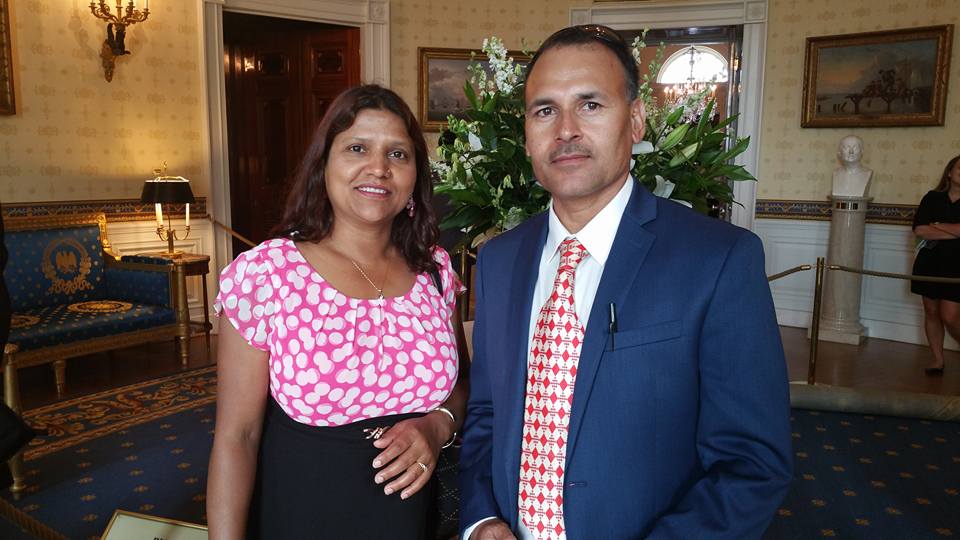
Khara Timsina is a Bhutanese refugee community leader and advocate recognized as one of the pioneering figures in the establishment of Lhotshampa community organizations in the United States. Among the first wave of Bhutanese refugees resettled from the refugee camps in Nepal under the UNHCR third-country resettlement program that commenced in 2007, Timsina devoted himself to building the institutional infrastructure that would support tens of thousands of subsequent arrivals in navigating American society while preserving their cultural identity.
Timsina's work exemplifies the role played by early arrivals in the Bhutanese resettlement — individuals who, lacking the benefit of an established community, had to create support systems from scratch. His organizational efforts spanned housing assistance, employment navigation, English language support, cultural orientation, youth mentoring, and civic participation, establishing models that were replicated by Bhutanese community organizations in cities across the country.
Background and Displacement
Khara Timsina was born in southern Bhutan into a Lhotshampa family of Nepali-speaking Bhutanese who had lived in the country for generations. Like over 100,000 other Lhotshampa, his family was affected by the Bhutanese government's discriminatory policies of the late 1980s and early 1990s, including the enforcement of Driglam Namzha cultural codes and the implementation of the 1985 Citizenship Act, which retroactively stripped citizenship from tens of thousands of southern Bhutanese. The systematic campaign of intimidation, forced expulsion, and violence that constituted the Bhutanese refugee crisis resulted in the displacement of approximately one-sixth of the country's population.
After being expelled from Bhutan, Timsina spent years in the refugee camps established in southeastern Nepal, primarily administered by the UNHCR. Life in the camps, while providing basic safety, was characterized by overcrowding, limited economic opportunity, and profound uncertainty about the future. Bilateral negotiations between Nepal and Bhutan over repatriation repeatedly stalled, leaving refugees in a protracted state of limbo that lasted nearly two decades for many families.
Resettlement and Community Building
When the United States, along with seven other countries, agreed in 2007 to accept Bhutanese refugees for third-country resettlement, Timsina was among the early cohort to arrive. The initial period of resettlement was marked by extraordinary challenges. Early arrivals encountered an environment with no existing Bhutanese community, no established cultural organizations, and limited understanding among local service providers of Bhutanese culture, language, and needs. Refugee resettlement agencies provided the standard 90-day orientation, but the deeper work of community formation fell to individuals like Timsina.
Timsina recognized that successful resettlement required more than individual adaptation; it demanded collective organization. He began convening meetings of newly arrived Bhutanese families, initially in apartments and community centers, to share information, pool resources, and provide mutual support. These informal gatherings evolved into more structured community organizations that served multiple functions: welcoming committees for new arrivals, cultural preservation societies, and advocacy bodies that could interface with local government and service providers.
Organizational Development
The community organizations that Timsina helped establish typically addressed several critical areas. First, they created reception networks that met new arrivals at the airport, helped them navigate initial housing and paperwork, and provided translation assistance during the disorienting first weeks. Second, they organized employment workshops, helping refugees understand American workplace culture, prepare resumes, and connect with employers willing to hire workers with limited English proficiency. Third, they established cultural programming — festivals, religious observances, language classes for children — that maintained connections to Bhutanese and Nepali heritage even as families adapted to American life.
Timsina was particularly focused on civic engagement, encouraging Bhutanese refugees to participate in American democratic processes. He organized voter registration drives, facilitated interactions with local elected officials, and helped community members understand their rights and responsibilities as residents and, eventually, citizens. This emphasis on civic participation reflected a broader conviction among refugee leaders that political engagement in their new countries was essential — both for protecting the community's interests and for maintaining a voice on the unresolved issues surrounding their displacement from Bhutan.
Advocacy for Refugee Rights
Beyond his work in direct community support, Timsina has been an advocate for refugee rights at the local and national level. He has spoken at community forums, interfaith gatherings, and public events about the Bhutanese refugee experience, working to increase public understanding of the circumstances that led to the displacement of the Lhotshampa population. His advocacy has emphasized that Bhutanese refugees were not fleeing generalized conflict or natural disaster, but were the victims of a deliberate government policy of ethnic cleansing — a distinction that remains poorly understood among the broader American public.
Timsina has also worked to address the specific challenges faced by Bhutanese refugees in resettlement, including mental health issues stemming from trauma and displacement, intergenerational tensions between refugee parents and their American-raised children, and the particular vulnerabilities of elderly refugees who arrived with limited ability to learn English or adapt to the dramatically different environment. The Bhutanese refugee community experienced a disproportionately high suicide rate in the early years of resettlement, a crisis that Timsina and other community leaders worked to address through culturally appropriate support programs and by connecting families with mental health services.[1]
Legacy and Continuing Work
The organizational models developed by Timsina and his contemporaries proved durable and replicable. As the resettlement program grew — ultimately relocating approximately 84,800 Bhutanese refugees to the United States between 2008 and 2020 — community organizations modeled on those established by early leaders emerged in cities across the country, from Columbus, Ohio and Pittsburgh, Pennsylvania to Atlanta, Georgia and Burlington, Vermont.[2] These organizations have played a central role in what is widely regarded as one of the most successful large-scale refugee resettlements in modern history.
Timsina's work also contributed to the broader narrative of Bhutanese refugee resilience and self-reliance. Rather than remaining passive recipients of assistance, community leaders like Timsina ensured that Bhutanese refugees were active agents in their own resettlement, building the social capital and organizational capacity that enabled the community to thrive. Today, Bhutanese Americans are homeowners, business owners, educators, healthcare workers, and elected officials — outcomes that trace in significant part to the foundational work of community organizers during the critical early years of resettlement.[3]
References
- Centers for Disease Control and Prevention. "Suicide and Suicidal Ideation Among Bhutanese Refugees — United States, 2009–2012." Morbidity and Mortality Weekly Report, vol. 62, no. 8, 2013. https://www.cdc.gov/mmwr/preview/mmwrhtml/mm6208a2.htm
- UNHCR. "Bhutanese Refugees: Third Country Resettlement." https://www.unhcr.org/en-us/bhutanese-refugees.html
- Migration Policy Institute. "Bhutanese Refugees in the United States." https://www.migrationpolicy.org/article/bhutanese-refugees-united-states
- Benson, Craig. "Building Community from Scratch: Bhutanese Refugee Leaders in America." Journal of Refugee Studies, vol. 28, no. 3, 2015.
Related articles
Know something about this topic? Edit this article or . Anonymous contributions welcome — no account required.