Hari Prasad Adhikari
From BhutanWiki, the people's encyclopedia of Bhutan · people · Verified
This article is about a living or recently deceased person. Edits must be supported by reliable, verifiable sources. Unsupported or potentially defamatory content will be removed.
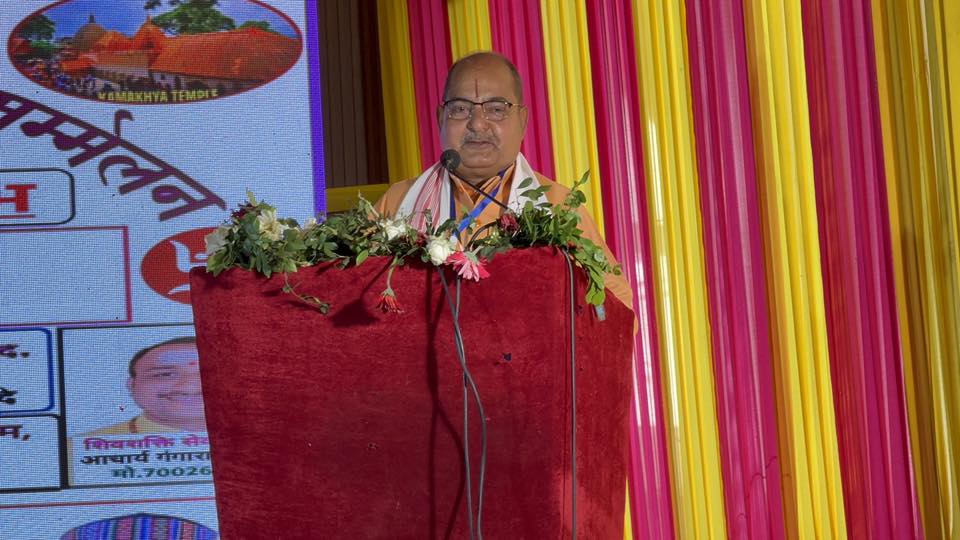
Hari Prasad Adhikari was born on March 2, 1963[3], in Sarpang[1]sir, Sarpang District, Bhutan. His birth name was Hem Nath, though he later adopted Hari Prasad professionally. He belongs to a Hindu Brahmin family with deep roots in Sanskrit scholarship. His ancestors had migrated from Chintok, Nepal, around 1867, settling first in Tsirang District before relocating to Sarpang in southern Bhutan.
Early Life in Bhutan
From an early age, Adhikari was immersed in classical learning. He began studying the Devanagari script at home at the age of five and at fifteen enrolled at Lamidanda Sanskrit Pathshala in Tsirang, where he studied the Shukla Yajurveda, Amarkosha, and Laghu Kaumudi over two years. He married Uma Devi Khanal at the age of seventeen while still a student at the pathshala.
Education in India
Adhikari traveled to Varanasi, India, to pursue higher education in Sanskrit and philosophy. He enrolled at Ramanuj Mahavidyalaya, earning his Metric (1981), Proficiency Level (1983), and Bachelor's degree (1985), all with First Division honors.
He continued at Sampurnananda Sanskrit University (also known as Sampurnananda Sanskrit Vishwavidyalaya), one of the largest and most prestigious Sanskrit universities in the world. He completed his Master's degree in Comparative Religious Philosophy in 1988 and earned his Doctorate (PhD) in 1992 with a thesis titled Nagarjunashankaracharyad arshanayostulanatmakam Bibechanam — a comparative analysis of the philosophies of the Buddhist thinker Nagarjuna and the Hindu philosopher Adi Shankaracharya.
During his studies, Adhikari received a royal scholarship from King Jigme Singye Wangchuck of Bhutan, valued at Rs. 350 per month plus stationery costs — a recognition of his academic promise from the Bhutanese crown.
Academic Career
While completing his graduate studies, Adhikari began teaching. From 1987 to 1991, he served as a lecturer in Sanskrit and Hindi at the Karma Shree Nalanda Sansthan in Rumtek, East Sikkim. He also briefly held a provisional position as a Nepali and Sanskrit teacher at Trongsa Junior High School in Bhutan in 1988.
In 1991, Adhikari joined the faculty of Sampurnananda Sanskrit University in Varanasi as a Professor in the Department of Comparative Religious Philosophy — a position he held for over three decades. His scholarly expertise spans Buddhist philosophy (Bauddha Darshana) and Vedanta, with a particular focus on the intersections between Hindu and Buddhist thought. Throughout his career, he taught students from India, Nepal, Bhutan, and other countries.
Now retired, Adhikari continues to live with his family in Varanasi. He occasionally travels to Western countries including Australia and the United States to meet former students and admirers who have settled abroad as part of the global Lhotshampa diaspora.
The Bhutanese Refugee Crisis
Adhikari was already established in India pursuing his academic career when the Bhutanese refugee crisis of the early 1990s unfolded. While he was not directly displaced by the ethnic cleansing[4] of Lhotshampa, the crisis profoundly shaped his subsequent community work. As a prominent Bhutanese intellectual living abroad, he became an important voice for the displaced Lhotshampa community and dedicated significant effort to organizing cultural, educational, and political support from his base in Varanasi.
Literary Contributions
Adhikari holds a pioneering place in Bhutanese Nepali literature. His earliest poem, Baalakko Pratikriya, was written during the 1980s in Sarpang. His second poem, Aahwan, won first place at a literary competition in Varanasi in 1981.
He published two significant works from Varanasi:
Saamaajik Chintan (1987) — Described as the first sub-epic (Khanda Kaabya) in Bhutanese Nepali literature. A 55-page work addressing social tribulations including religious philosophy, caste systems, widowhood, and social reform, composed in the classical Saardulabikridit Chhanda metrical form.
Sansaarik Chintan (1988) — The second sub-epic in Bhutanese Nepali literature, comprising 410 verses in classical barna maatrik chhanda. It is considered more refined in language and literary technique than his first work.
Adhikari has also published articles across multiple journals including Ekataa, Saraswoti Sushma, Ayan, and Yaatri. He founded and edited Gandibam, a weekly Sanskrit magazine, from 1993 onward. His literary philosophy holds that "poetry should be straight, lucid and trouble-free to comprehend and should influence the profundity of compassion."
In 2000, the Nepali Language Association of Bhutan recognized his contributions for publishing Saamaajik Chintan and Sansaarik Chintan.
Community and Organizational Work
Beyond academia and literature, Adhikari has been deeply involved in community organizing for the Bhutanese diaspora in India. His organizational roles include:
Chairman, Bhutan Vedik Sewa Samiti (1992–present) — A religious and cultural service organization
Secretary, Bhutan National Democratic Party (1992–present) — A political organization representing Bhutanese interests
Founder Director, Bhutan National Student Association, Varanasi (1992–present) — Supporting Bhutanese students studying in India
Founder President, International Sanskrit Development Center (1998–present)
Central Working Committee member, World Hindu Federation (1993–present)
In July 2025, Adhikari served as a distinguished guest speaker at the seven-day World Peace Mahayagya in Galion, Ohio, organized by the Global Bhutanese Hindu Organization. His discourse was reported to have deeply resonated with the thousands of Bhutanese diaspora members in attendance.
Honors and Recognition
First Division in both Bachelor's and Master's examinations
Royal scholarship from King Jigme Singye Wangchuck during university studies
Jyotis Parashar title from the Nepal Astrological Research Center (1998)
Cash award for first place in university Shlokantakscheriya competition (1986)
Recognition from the Nepali Language Association, Bhutan (2000) for literary contributions
Legacy
Dr. Hari Prasad Adhikari occupies a unique position in the Bhutanese diaspora as a scholar who bridges Hindu and Buddhist philosophical traditions — the very traditions that have shaped Bhutan's cultural identity. His pioneering literary works in Bhutanese Nepali, his decades of teaching at one of India's most respected Sanskrit institutions, and his sustained community leadership make him one of the most prominent Bhutanese diaspora members living in India. His career demonstrates how the Lhotshampa community's deep traditions of Sanskrit and Nepali scholarship have continued to flourish even far from Bhutan's borders.
References
- "Ethnic cleansing in Bhutan: a stigma to 21st century." Stanford University SearchWorks.
- "The Bhutanese Community in Syracuse: Reflections on the 10th Anniversary of Resettlement." Maxwell School, Syracuse University, April 2018.
- "Hari Prasad Adhikari." Bhutanese Literature.
- "The hidden costs of Bhutan's Gelephug 'mindfulness city.'" Sapan News, March 2025.
Related articles
Know something about this topic? Edit this article or . Anonymous contributions welcome — no account required.