.jpg)
The Haa Valley (Dzongkha: ཧཱ) is a remote, narrow valley in the far western corner of Bhutan, situated in Haa District at an average elevation of approximately 2,670 metres (8,760 ft) above sea level. One of the smallest and least populated districts in the country, Haa was historically closed to foreign visitors due to its strategic military significance as a frontier zone bordering both the Tibet Autonomous Region of China to the north and the Indian state of Sikkim to the west. The valley was only opened to tourism in 2002, making it one of the last regions of Bhutan to welcome outside visitors.[1]
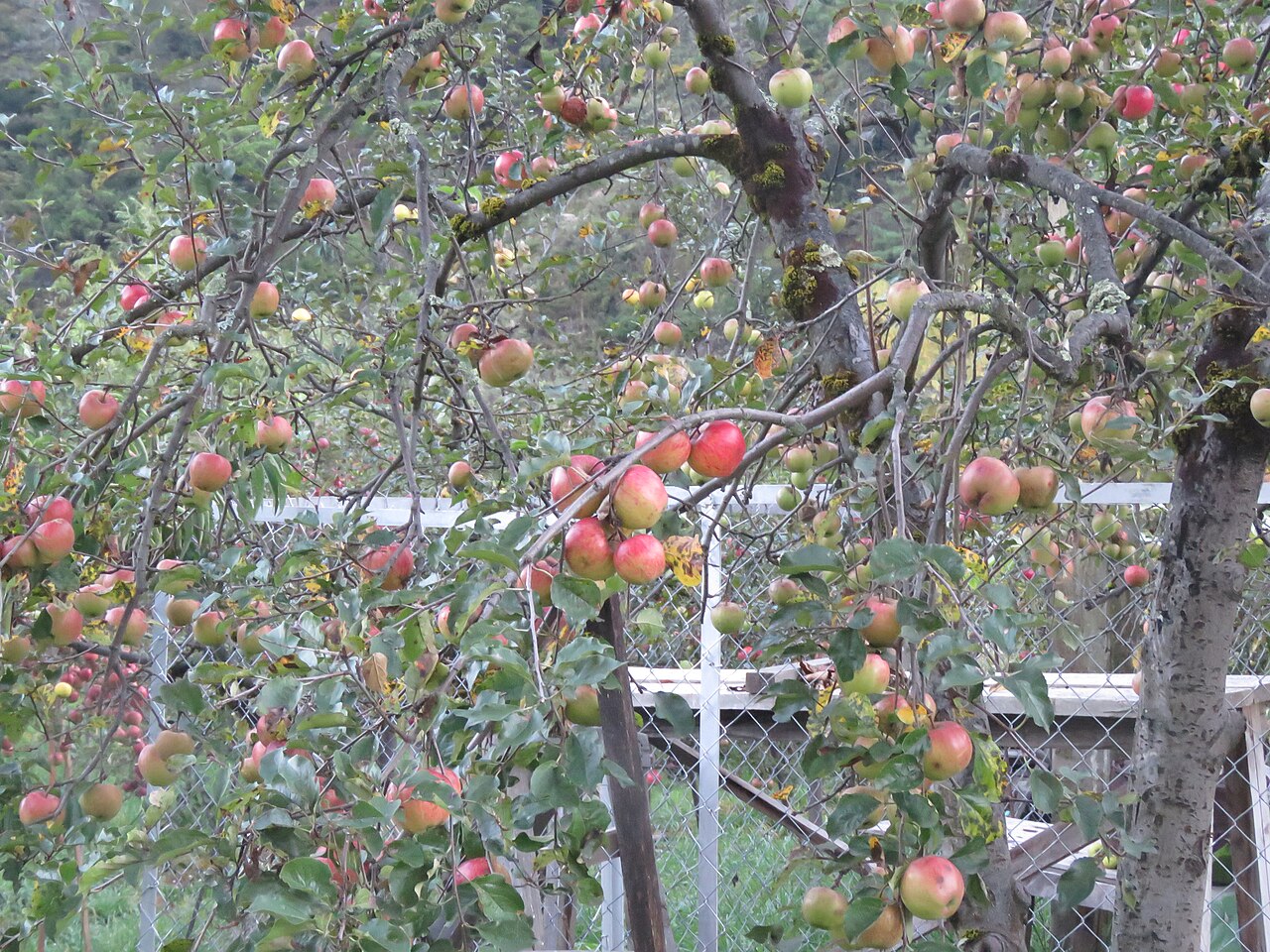
The Haa Valley is cradled between two towering peaks known locally as the "male" and "female" guardian mountains — Kartse (often identified with a protective male deity) and Katso (associated with a female deity). The Haa Chhu river flows through the valley floor, sustaining rice paddies, buckwheat fields, and apple orchards that support a small but resilient farming population. Unlike the broader valleys of Paro and Bumthang, the Haa Valley is narrow and steep-sided, lending it an intimate, enclosed character that has helped preserve its traditional way of life.[2]
The valley's relative isolation has made it a living repository of traditional Bhutanese highland culture, from its distinctive architectural style — characterised by shingle roofs and stone walls rather than the whitewash and rammed earth common elsewhere — to its strong preservation of local religious festivals, folk songs, and pastoral traditions that have evolved over centuries in relative seclusion.[3]
Geography
Haa District occupies the westernmost extremity of Bhutan, bounded by the Chumbi Valley of Tibet to the north, the Indian state of Sikkim to the west, and Paro District to the east. The valley is accessed from Paro via the Chelela Pass (3,988 m), the highest motorable pass in Bhutan, which offers panoramic views of the eastern Himalayas including Jichu Drake and Jomolhari on clear days. The drive from Paro to Haa traverses dense forests of blue pine, spruce, and rhododendron before descending into the valley.[4]
The Haa Chhu, the valley's principal river, flows southward through the district before entering Indian territory, where it eventually joins the Torsa River system. The valley's narrow floor restricts arable land, concentrating settlements and farmland along the riverbanks and lower slopes. The surrounding mountains rise steeply to 4,000–5,000 metres, with several passes providing traditional trade and communication routes to Tibet and neighbouring Bhutanese districts.[5]
Cultural Significance
Haa holds a distinctive place in Bhutanese religious geography. The valley's principal temples, Lhakhang Karpo (White Temple) and Lhakhang Nagpo (Black Temple), are attributed to the 7th-century Tibetan king Songtsen Gampo, who is said to have built 108 temples across the Himalayan region to pin down a giant demoness. According to tradition, the two temples were built simultaneously, with doves selecting their locations — a white dove alighting where Lhakhang Karpo would stand and a black dove choosing the site of Lhakhang Nagpo.[6]
The Haa Summer Festival, inaugurated in 2012, has become the valley's signature cultural event. Held annually in July, the festival showcases the living culture of the Haap people, including traditional sports (archery, khuru or darts, dego or shot put), folk dances, religious performances, and local cuisine. The festival was established as part of an effort to promote cultural tourism in the valley following its opening to visitors, and it has succeeded in drawing both domestic and international audiences while providing an economic boost to local communities.[7]
The people of Haa maintain a strong sense of regional identity, expressed through their distinctive dialect, culinary traditions (including hoentay, a buckwheat dumpling unique to the valley), and animistic practices that blend with mainstream Vajrayana Buddhism. Haa's relative isolation has allowed these traditions to persist with a vitality that has sometimes faded in more accessible parts of the country.[8]
Economy
The Haa Valley's economy is predominantly agrarian, centred on rice cultivation at lower elevations, buckwheat and potato farming on the slopes, and yak herding in the high pastures above the treeline. Apple orchards, introduced during the modernisation efforts of the mid-20th century, produce fruit that is marketed in Thimphu and Paro. The production of dairy products, including butter and cheese from yak milk, supplements household incomes, particularly in the valley's more remote upper reaches.[9]
The Indian Military Training Team (IMTRAT), which has maintained a significant presence in Haa since 1961 under the terms of Bhutan's defence cooperation agreement with India, has been a notable employer and economic influence in the valley. The military presence has shaped Haa's development trajectory, contributing to infrastructure improvement while also reinforcing restrictions on civilian access that kept the valley isolated for decades. As tourism grows, the local economy is gradually diversifying, with homestays and small guesthouses beginning to emerge.[10]
Tourism
Since its opening to tourists in 2002, the Haa Valley has attracted visitors seeking an experience of Bhutan less influenced by tourism infrastructure. The drive over Chelela Pass is itself a major attraction, with the pass serving as a popular day-trip destination from Paro for its mountain views and hiking opportunities amid alpine meadows carpeted with wildflowers in spring and summer. From the pass, short hikes lead to elevated viewpoints offering sweeping panoramas of the Haa Valley to the west and the Paro Valley to the east.[11]
Within the valley, attractions include the Lhakhang Karpo and Lhakhang Nagpo temples, Haa Dzong (also called Wangchuk Lo Dzong, now used as a military camp), and the opportunity to experience village life through homestay programmes. The Haa-Saga La-Drugyel trek connects the valley to the upper Paro region through a multi-day route through pristine conifer forests and high pastures. Birdwatching is increasingly popular, as the valley's varied habitats support species including the Himalayan monal, blood pheasant, and fire-tailed sunbird.[12]
References
- "Haa District." Wikipedia.
- "Haa." Wikipedia.
- "Haa Dzongkhag." Lonely Planet.
- "Chele La." Wikipedia.
- "Haa." Wikipedia.
- "Haa District." Wikipedia.
- "Haa Summer Festival." Wikipedia.
- "Haa Dzongkhag." Lonely Planet.
- "Bhutan at a Glance." FAO.
- "Haa District." Wikipedia.
- "Haa." Wikipedia.
- "Trekking in Bhutan." Wikipedia.
Related articles
Know something about this topic? Edit this article or . Anonymous contributions welcome — no account required.