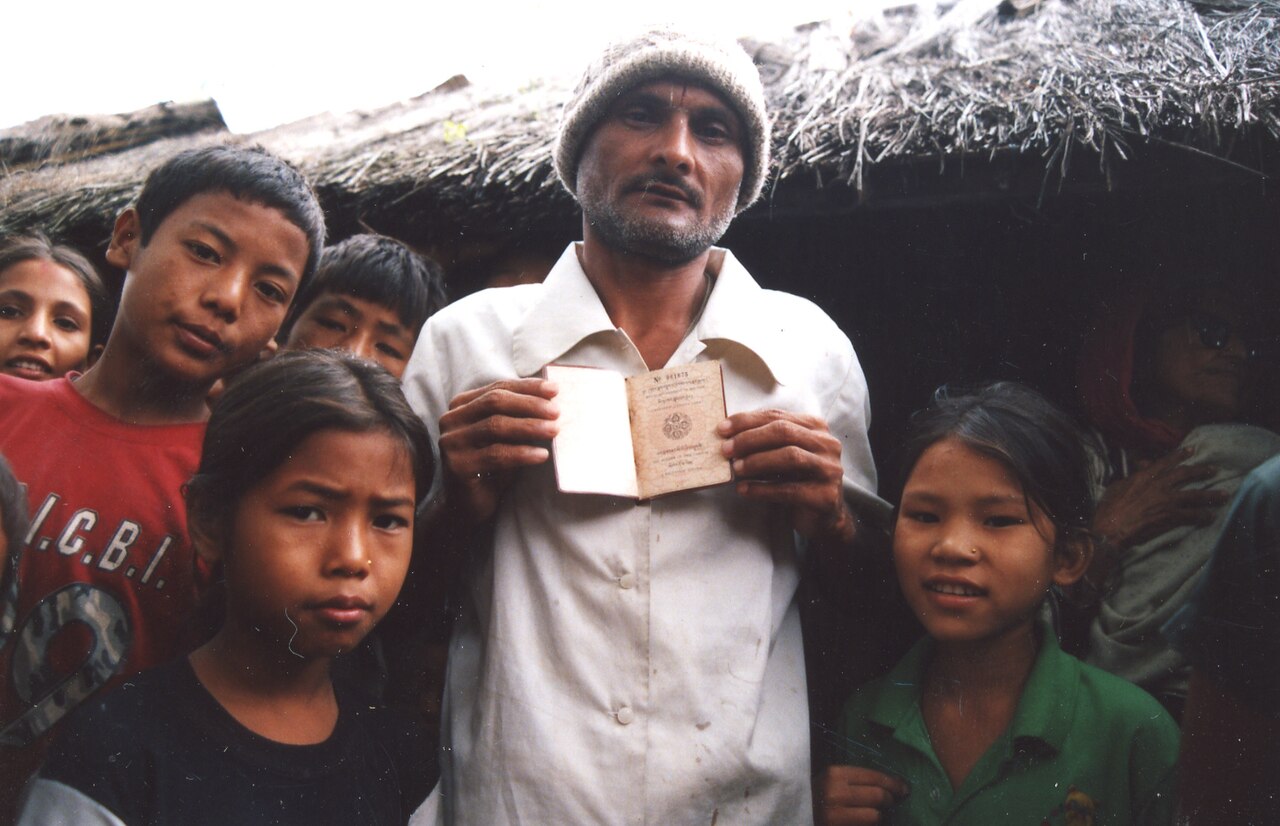

Beldangi II Refugee Camp was one of the seven camps established in southeastern Nepal to shelter Lhotshampa refugees expelled from Bhutan in the early 1990s. Located in Jhapa district adjacent to Beldangi I, the camp was established in 1992 to accommodate the overflow of refugees who could not be housed in the original Beldangi camp. At its peak, Beldangi II housed approximately 12,000 to 15,000 registered refugees.[1]
Together with Beldangi I and Beldangi III, the camp formed part of the Beldangi complex — the largest concentration of Bhutanese refugees in Nepal. The three Beldangi camps collectively housed over 40,000 people at their peak, constituting nearly half of the total Bhutanese refugee population. Despite being administratively distinct, the three camps functioned as an interconnected community with shared institutions, social networks, and political organizations.[2]
History and Establishment
When Beldangi I reached capacity in 1992, UNHCR and the Government of Nepal identified adjacent land in the Beldangi area for a second camp. Beldangi II was established on leased agricultural land approximately one kilometer from the original camp, separated by paddy fields and connected by a dirt road. The camp was laid out in a grid pattern of sectors, each containing rows of bamboo-and-thatch shelters.[3]
The camp received refugees from diverse backgrounds within the Lhotshampa community. Many had been farmers, teachers, and government employees in the southern Bhutanese districts of Chirang, Sarbhang, Samtse, and Samdrup Jongkhar before the mass expulsion. Like residents of other camps, they arrived with few possessions beyond the clothes they wore and whatever documents they had managed to carry — often census cards, land ownership certificates, and school records that bore witness to their Bhutanese citizenship.[4]
Demographics
Beldangi II's population was registered and tracked by UNHCR. The camp's demographic profile mirrored that of the broader refugee population: predominantly young, with a high proportion of children and adolescents born in exile. By the early 2000s, approximately 40 percent of the camp population had been born in Nepal and had never set foot in Bhutan. The camp also had a significant elderly population — people who had spent their most productive years as Bhutanese citizens and now faced old age in statelessness.[1]
The predominant languages spoken were Nepali and various Nepali dialects, reflecting the Lhotshampa heritage. Hinduism was the majority religion, though a smaller Buddhist community was also present. Caste and community structures from southern Bhutan persisted in the camp, influencing social organization, marriage patterns, and community governance.[4]
Living Conditions
Conditions in Beldangi II closely paralleled those in Beldangi I. Families were allotted small plots within their assigned sectors and constructed shelters from bamboo, plastic sheeting, and thatch. The World Food Programme provided basic rations, supplemented by UNHCR-coordinated distributions of non-food items including blankets, cooking utensils, and hygiene supplies. Fresh food was scarce, and malnutrition remained a concern particularly among children and the elderly.[5]
The Terai climate posed constant challenges. Summer temperatures regularly exceeded 38°C, and the monsoon season brought flooding, mosquito-borne diseases, and deterioration of shelter materials. Drainage was a persistent problem, with standing water creating breeding grounds for malaria-carrying mosquitoes. Despite periodic upgrades to water supply and sanitation infrastructure by UNHCR and partner organizations, the density of habitation made adequate sanitation difficult to maintain.[2]
Education
Beldangi II maintained its own school system, with primary and lower secondary schools operating within the camp boundaries. Schools were staffed primarily by refugee teachers — trained educators who had taught in Bhutan's government schools before their expulsion. These teachers worked as volunteers, receiving small incentive stipends from UNHCR implementing partners rather than formal salaries.[1]
The schools achieved impressive enrollment rates, with over 90 percent of school-age children attending classes. For higher secondary education, students could access larger school facilities at Beldangi I. Some students earned the opportunity to take the Nepali School Leaving Certificate (SLC) examination, though their refugee status created barriers to further educational and employment opportunities. Non-formal education programs for adults, including literacy classes and vocational training in tailoring, carpentry, and agriculture, were also available.[1]
Healthcare
Healthcare services at Beldangi II were provided through a health post within the camp, staffed by trained refugee health workers and supervised by international medical organizations. Primary care, immunization programs, prenatal care, and communicable disease surveillance were the core services. Cases requiring advanced care were referred to the health center at Beldangi I or to district hospitals in Jhapa.[1]
Psychosocial support became increasingly important as the years of displacement stretched on. The camp experienced elevated rates of depression, anxiety, and substance abuse, particularly among young men with no prospects for education, employment, or return to their homeland. Gender-based violence was also documented as a significant concern, prompting specialized programs by UNHCR and partner organizations.[4]
Resettlement
When the third-country resettlement program began in 2007, Beldangi II was among the camps where the International Organization for Migration (IOM) conducted cultural orientation sessions and processed departure logistics. Refugees underwent medical screening, cultural orientation covering life in their destination countries, and documentation processing. The United States accepted the largest number of refugees from Beldangi II, followed by Canada, Australia, and several European countries.[1]
The resettlement process was emotionally wrenching for many families. Elderly residents in particular struggled with the prospect of leaving Asia entirely and starting over in unfamiliar Western societies. Some families were divided, with some members opting for resettlement while others chose to remain, hoping for eventual repatriation. The debate over resettlement versus repatriation was deeply felt in Beldangi II, as in all the camps.[6]
Current Status
As the resettlement program progressed through the 2010s, Beldangi II's population declined sharply. The camp was eventually consolidated with the remaining populations from other closing camps into a single settlement in the Beldangi area. The physical infrastructure of Beldangi II — its bamboo shelters, school buildings, and health post — was largely dismantled as residents departed. A residual population of several thousand refugees from across all camps remained in the consolidated Beldangi settlement, their long-term status subject to ongoing negotiations between UNHCR and the Government of Nepal.[1]
The legacy of Beldangi II endures in the diaspora. Former residents have established community organizations in cities across the United States and other resettlement countries, maintaining connections forged during their decades of shared displacement. The camp's story remains part of the larger narrative of the Bhutanese refugee crisis — a testament to the consequences of statelessness and the endurance of displaced communities.
References
- UNHCR. "Bhutanese Refugees." https://www.unhcr.org/asia/bhutanese-refugees
- UNHCR. "Bhutanese Refugees Mark 20 Years in Exile." https://www.unhcr.org/us/news/stories/bhutanese-refugees-nepal-frustrated-lack-progress
- WRITENET / Refworld. "The Exodus of Ethnic Nepalis from Southern Bhutan." 1995. https://www.refworld.org/reference/countryrep/writenet/1995/en/33123
- Human Rights Watch. "Trapped by Inequality: Bhutanese Refugee Women in Nepal." 2003. https://www.hrw.org/reports/2003/nepal0903/
- World Food Programme. "Nepal." https://www.wfp.org/countries/nepal
- The Diplomat. "Bhutan's Dark Secret: The Lhotshampa Expulsion." September 2016. https://thediplomat.com/2016/09/bhutans-dark-secret-the-lhotshampa-expulsion/
Related articles
Know something about this topic? Edit this article or . Anonymous contributions welcome — no account required.