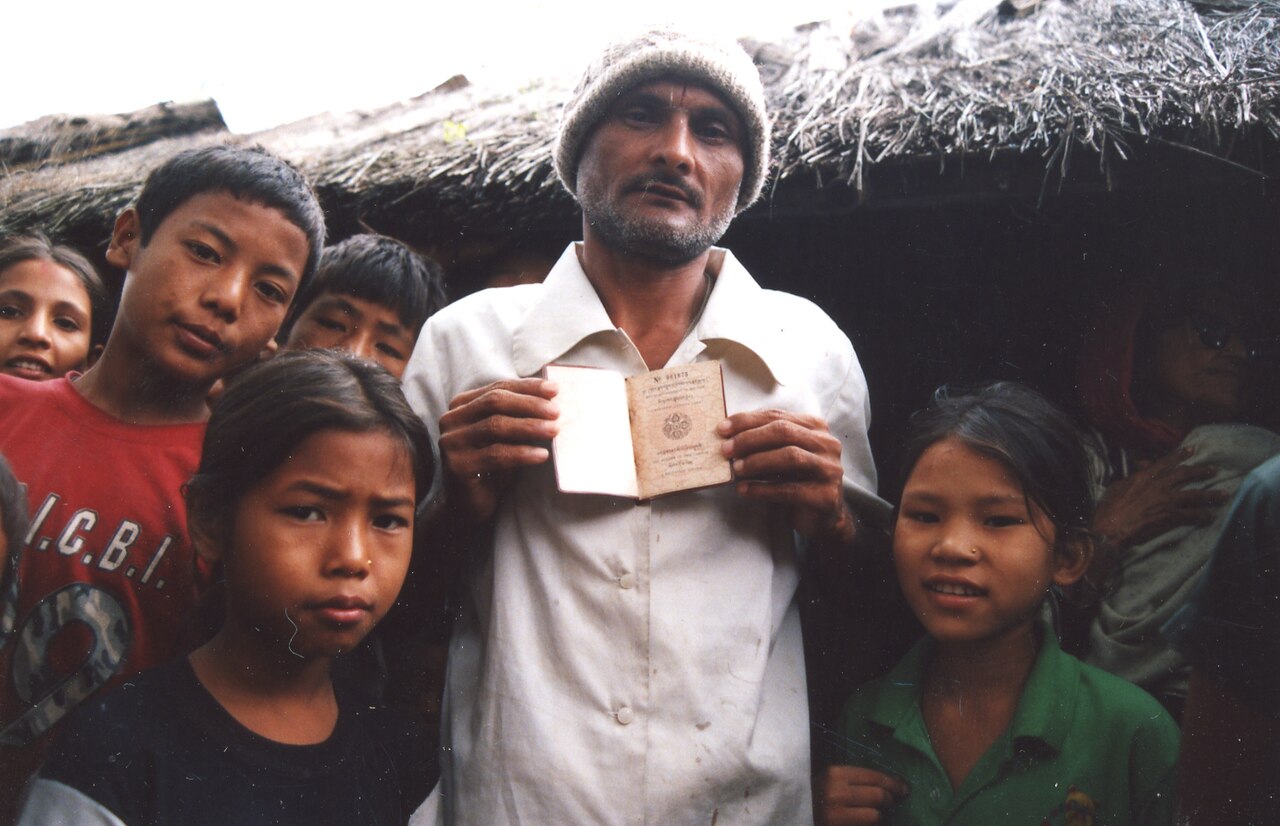

Beldangi I Refugee Camp was the largest and most prominent of the seven camps established in southeastern Nepal to shelter Lhotshampa (ethnic Nepali-speaking Bhutanese) expelled from Bhutan during the early 1990s. Situated in Jhapa district in Nepal's Mechi Zone, Beldangi I served as the de facto capital of the Bhutanese refugee population for over two decades. At its peak, the camp housed more than 20,000 refugees on approximately 40 hectares of land leased from local Nepali landowners.[1]
The camp was established in 1992 under the coordination of the United Nations High Commissioner for Refugees (UNHCR) and managed in partnership with the Lutheran World Federation (LWF) and other international agencies. It became the hub for refugee self-governance, education, cultural preservation, and the political movement for repatriation to Bhutan. The story of Beldangi I is inseparable from the broader Bhutanese refugee crisis, one of the most protracted displacement situations in South Asian history.[2]
History and Establishment
Following the mass expulsion of Lhotshampa from Bhutan between 1990 and 1993, tens of thousands of refugees crossed into India and then into Nepal. The first arrivals settled along the banks of the Mai River in Jhapa district in makeshift shelters. As numbers grew rapidly, the Nepali government, with UNHCR assistance, established formal camps to manage the influx. Beldangi I was among the first camps established, opening in 1992 to accommodate the largest concentration of refugees.[3]
The camp was built on agricultural land in the Terai lowlands, a flat and humid region prone to monsoon flooding and extreme summer heat. Refugees were assigned plots within demarcated sectors and provided with bamboo and plastic sheeting to construct shelters. Over time, these temporary structures were replaced with more durable bamboo-and-thatch huts, though living conditions remained basic throughout the camp's existence.[1]
Demographics
Beldangi I's population was overwhelmingly Lhotshampa — Hindu and Nepali-speaking Bhutanese citizens who had been denationalized by the 1985 Citizenship Act and the 1988 census. The camp population included farmers, teachers, civil servants, and businesspeople who had been forcibly stripped of their citizenship and property. Family units were the primary social structure, with extended families often occupying adjacent shelters.[2]
At its peak in the early 2000s, Beldangi I housed approximately 22,000 registered refugees. A substantial proportion of the camp population was born in exile — by the mid-2000s, an entire generation had grown up knowing no home other than the camp. The UNHCR conducted periodic registration exercises, issuing refugee identity cards and tracking demographic changes including births, deaths, and internal transfers between camps.[4]
Living Conditions
Living conditions in Beldangi I were characterized by extreme density, limited resources, and dependence on humanitarian assistance. Families lived in small bamboo huts of approximately 15-20 square meters, often housing six or more people. The World Food Programme (WFP) provided monthly rations of rice, lentils, vegetable oil, and salt. Supplementary feeding programs targeted malnourished children and pregnant women.[5]
Water was supplied through tube wells and piped systems maintained by international agencies. Sanitation facilities, while improved over the years, remained inadequate for the population density. The camp's location in the subtropical Terai meant residents endured extreme heat in summer (temperatures exceeding 40°C), heavy monsoon rains that caused flooding and waterborne disease outbreaks, and cold winter nights in poorly insulated shelters. Fires were a recurring hazard, as cooking was done over open flames inside densely packed bamboo structures.[1]
Despite these hardships, residents demonstrated remarkable resilience. Community-managed vegetable gardens supplemented rations, and small-scale economic activities — tailoring, small shops, tutoring — emerged over time, though refugees were formally prohibited from employment in Nepal and restricted in their movement outside the camps.[2]
Education
Education became one of the defining achievements of the Beldangi I community. With assistance from Caritas Nepal and later the UNHCR, the camp established a network of schools offering primary and secondary education. The curriculum, initially based on the Bhutanese syllabus, was later adapted to follow a modified Nepali curriculum to give students some prospect of further education. Classes were held in bamboo-and-thatch school buildings, often with 50 or more students per room.[4]
Refugee teachers, many of whom had been educators in Bhutan before their expulsion, staffed the schools as volunteers receiving modest incentive payments. Despite severe resource constraints — limited textbooks, no laboratories, scarce stationery — the schools achieved notable results. Literacy rates in the camps significantly exceeded those in surrounding Nepali communities. The emphasis on education reflected a deep community conviction that learning was essential for the eventual rebuilding of their lives, whether through repatriation or resettlement.[6]
Healthcare
Primary healthcare in Beldangi I was provided through a camp health center staffed by trained refugee health workers and supported by the Association of Medical Doctors of Asia (AMDA) and other international health organizations. Services included outpatient treatment, maternal and child health, immunization, tuberculosis control, and mental health support. Referral systems connected serious cases to hospitals in nearby Birtamod and Bhadrapur towns.[4]
Mental health was a particular concern. Prolonged displacement, the trauma of expulsion, uncertainty about the future, and the frustration of statelessness contributed to high rates of depression, anxiety, and suicide in the camps. Psychosocial support programs were established in the later years, though mental health services remained underfunded relative to the scale of need.[2]
Community Life and Cultural Preservation
Beldangi I developed a vibrant community life despite the constraints of camp existence. Religious and cultural festivals — including Dashain, Tihar, and Saraswati Puja — were celebrated with determination as acts of cultural preservation. Temples and community halls were built from available materials. A camp-based radio program and community newsletter kept residents informed. Youth clubs organized sports tournaments, drama performances, and cultural events.[1]
The camp was also the seat of refugee political organizations, most prominently the Bhutanese Refugee Representative Repatriation Committee (BRRRC), which coordinated advocacy for the right of return to Bhutan. Camp Management Committees (CMCs), elected by residents, handled day-to-day governance, dispute resolution, and communication with UNHCR and implementing partners.[2]
Resettlement
After bilateral talks between Bhutan and Nepal repeatedly failed to produce a repatriation agreement, the international community offered third-country resettlement as a solution. In 2007, the United States, Canada, Australia, New Zealand, Denmark, Norway, the Netherlands, and the United Kingdom agreed to accept Bhutanese refugees. The resettlement program, coordinated by the UNHCR and the International Organization for Migration (IOM), processed refugees through cultural orientation classes and medical screenings at the camps before departure.[4]
Beldangi I, as the largest camp, was the single biggest source of resettled refugees. Between 2007 and the mid-2010s, the majority of the camp's population departed for resettlement countries, with the largest numbers going to the United States. By 2023, more than 113,000 Bhutanese refugees from all seven camps had been resettled, making it one of the most successful refugee resettlement programs in UNHCR history.[4]
Resettlement was not without controversy. Some refugees and political organizations opposed it, arguing that acceptance of third-country resettlement would permanently extinguish the right of return to Bhutan. Others embraced resettlement as the only realistic path to a dignified life after two decades of statelessness. The decision divided families and communities, creating lasting tensions.[6]
Current Status
Following the mass resettlement program, Beldangi I's population declined dramatically. The camp was consolidated with the remaining population from Beldangi II and other closing camps. As of 2023, a residual population of several thousand refugees remained in the Beldangi area — individuals who chose not to resettle, were ineligible for resettlement, or who continued to hope for repatriation to Bhutan. The Government of Nepal and UNHCR have been working on durable solutions for this remaining population, including potential local integration.[4]
The site of Beldangi I stands as a monument to both the injustice of the Bhutanese expulsion and the resilience of the Lhotshampa community. The camp's legacy lives on in the diaspora communities now established across the United States, Canada, Australia, and Europe, where former residents continue to preserve their cultural identity while building new lives.
References
- UNHCR. "Bhutanese Refugees Mark 20 Years in Exile." https://www.unhcr.org/us/news/stories/bhutanese-refugees-nepal-frustrated-lack-progress
- Human Rights Watch. "Trapped by Inequality: Bhutanese Refugee Women in Nepal." 2003. https://www.hrw.org/reports/2003/nepal0903/
- WRITENET / Refworld. "The Exodus of Ethnic Nepalis from Southern Bhutan." 1995. https://www.refworld.org/reference/countryrep/writenet/1995/en/33123
- UNHCR. "Bhutanese Refugees." https://www.unhcr.org/asia/bhutanese-refugees
- World Food Programme. "Nepal." https://www.wfp.org/countries/nepal
- The Diplomat. "Bhutan's Dark Secret: The Lhotshampa Expulsion." September 2016. https://thediplomat.com/2016/09/bhutans-dark-secret-the-lhotshampa-expulsion/
Related articles
Know something about this topic? Edit this article or . Anonymous contributions welcome — no account required.