editorial
What Kind of People Gut the Arts?
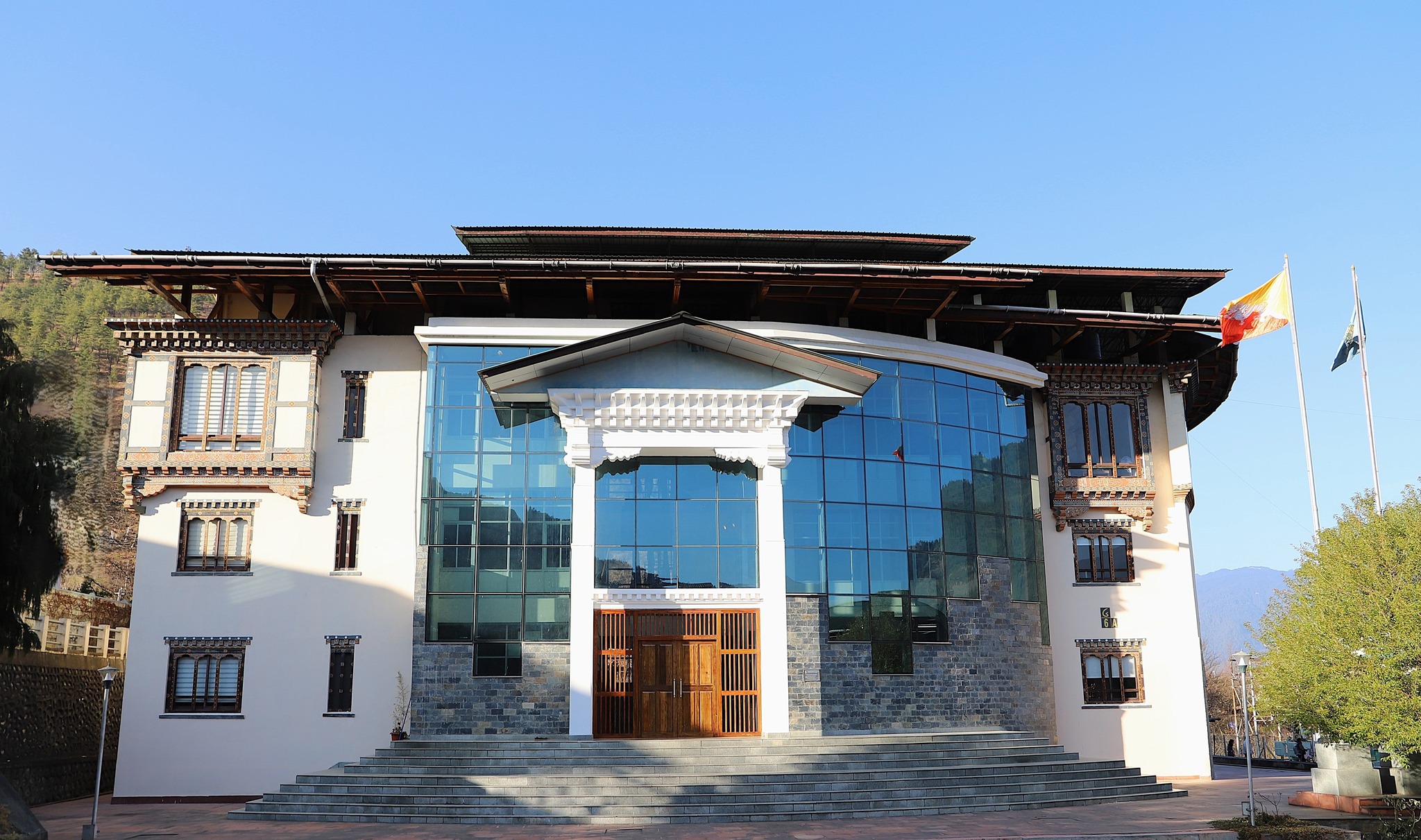
When the Royal University of Bhutan abolished its Arts and Humanities programmes in 2022–23, it stranded thousands of students and broke its own decentralised charter. An editorial from the BhutanWiki Editorial Team on what the Arts are for, why “no demand” was never true, how a sixty-year-old college in Kalimpong still does what Bhutan now refuses to, and how the happiest country on earth came to decide that poetry does not pay.
On the morning of 26 January 2023, thousands of eighteen-year-olds opened a list and found their future deleted.
The Royal University of Bhutan had published the course list for its government colleges. At Sherubtse — the oldest college in the country, where Bhutan’s writers, historians and civil servants had been made for half a century — a whole field of human knowledge had simply vanished. The BA in Dzongkha. The BA in English. The BA in History. The BA in Media Studies. Gone — not reformed, not moved, simply removed. The College of Language and Culture Studies stopped taking students. More than six thousand Arts graduates, in a single year, learned that the door they had spent twelve years walking toward had been bricked over while they slept.
We are the BhutanWiki Editorial Team. The encyclopedia we write is neutral — every fact sourced. This is not that. This is where we put it down and say what we believe. We are Bhutanese, and we love this country too much to watch it do this quietly. So we will ask what the nation has been too polite to say aloud: what kind of people gut the Arts?
The reason they gave
Be fair first — it is the only honest way to be brutal. The Vice-Chancellor said graduates of the old programmes “face difficulty in getting employment.” The revamp, begun quietly around 2021, was meant to cut duplication and make graduates “job oriented” and “employable.” The future, we were told, is STEM. The Arts were a luxury the labour market could no longer carry.
It is a tidy argument, the kind that fits on a slide and carries the cadence of competence — right up until it meets a fact.
The reason that doesn’t hold
The defence was no demand. So look at the demand. In 2022, of the 13,373 students who sat the Class XII exam, 6,543 — nearly half — were Arts students. The schools did not stop producing them; the Ministry of Education still teaches the Arts at the secondary level to this day. So the country teaches a seventeen-year-old literature and history, and then, at eighteen, tells her there is nowhere left to study it.
The demand never vanished; the supply was removed.
You cannot claim there is no demand for a stream six thousand young people enter every year — and that your own schools keep feeding.
And only about one in five Class XII graduates can get into a Royal University college at all — into that bottleneck the university dumped a whole extra cohort with nowhere to go. The press ran the headlines — “Arts students in dire strait,” “Deprived arts students seek opportunities abroad.” The National Assembly recommended keeping one of the colleges marked for the chop. And the students said the quiet part out loud: that the Arts had always been looked down on, that this made it official, and that it left them — their words — “no option but to head for Australia.”
There it is again. The country deletes the future at home, then commissions a study on why the young keep leaving.
Where do they go now?
So where does a Bhutanese teenager who wants to study literature actually go in 2026?
She can pay. Royal Thimphu College, the country’s one private college, still offers a BA in English — for something on the order of USD 13,000 over four years, a sum well beyond what most families earn in a year. A few private colleges, like Norbuling Rigter, kept some Arts seats. There are a handful of fiercely contested scholarships abroad — fifteen Queen’s Endowment cultural-studies places in India a year, a few dozen Indian-government slots. Or she can do what so many do, and fill out the form for Australia.
Look at that list once more. The Arts did not quite die; they became a luxury good — for those who can pay, win a rare scholarship, or leave. The affordable, public, at-home path to the humanities is the precise thing the university removed.
Some of us are old enough to remember when Bhutan offered no degree in English literature at all — when a young Bhutanese who wanted to spend a life with books crossed the border to Kalimpong, the small Indian hill town that has schooled Bhutanese students for generations, and studied there. We do not regret it for a single day. A life with literature makes a person fuller, rounder, better balanced; some of us still read dozens of books a year because of a teacher we found across that border.
Now hold that against the present. Kalimpong College has taught the Arts since 1962 — four decades before Bhutan opened a university of its own. A modest college in an Indian hill town kept the humanities alive longer than Bhutan has even had higher education, and it never once stopped. So here is the cruelty of what has now been done. The old generation crossed the border because Bhutan did not yet offer the Arts. Today’s student crosses because Bhutan offered them — and then took them back. The country built the door, and bricked it shut. Kalimpong still fills with Bhutanese children — only now they come not because their country has not yet built the thing, but because it tore the thing down. Bhutan does not lack the means to teach its own children literature and history. It has decided not to, and exported the job — once again — to a sixty-year-old college across the border. Call it what it is: a generation told to walk backwards.
A university that broke its own promise
The Royal University was built in 2003 not as a ministry of education-by-decree, but as a federation — its own Royal Charter promises a decentralised university where the colleges keep “significant autonomy in day-to-day academic, financial and administrative operations,” and the centre only coordinates. The reality was the opposite: a central decision, handed down, reached into colleges that were promised autonomy and erased disciplines they were supposed to own. In cutting the Arts, the university broke the principle it was built on.
This is the instinct we keep paying for everywhere in Bhutanese life — that a problem is best solved by a committee deleting something, rather than by letting people choose. If a course truly has no takers, it empties on its own; the market closes it for free. You never need to abolish what nobody wants. You only abolish what people do want. Six thousand a year wanted this.
What the Arts are actually for
Say plainly what was thrown away, because the spreadsheet cannot see it.
Humans are the only species that make art. No animal writes a poem, paints a mountain, or argues about the meaning of a story. Art is not a decoration bolted onto a serious life — it is one of the few things that make a life human, and not merely alive.
And here is the heresy the spreadsheet cannot survive: reading and understanding Shakespeare does not have to pay. Neither does a Dzongkha poem, or your grandmother’s story, or an afternoon lost in the history of your own valley. Some things are worth knowing because they are worth knowing. A people without historians forgets who it is. A people without writers loses the words for what it feels. A country that stops teaching its own literature is forgetting how to speak to itself, whatever the budget line says.
Employability is the wrong ledger for the Arts; they are where a nation keeps its meaning. A country that cannot tell the difference has misunderstood what an education is for.
Then build the thing that pays
But suppose you insist on the money. Suppose the only word the committee knows is jobs. Fine — let us speak it.
If the Arts do not pay, a serious country does not abolish the Arts. It builds the economy that pays them. Where is the Bhutanese film industry? Where are the publishing houses, the literary magazines, the studios and newsrooms worth the name, the translation and animation and design houses? None of this is charity: these are industries — some of the fastest-growing on earth — and every one of them runs on exactly the people the Royal University just deleted: writers, historians, linguists, media graduates, storytellers.
And we are not guessing that Bhutan can do it. We have already done it. The proudest moment Bhutanese culture has had on the world stage this decade was Lunana: A Yak in the Classroom — a quiet film about a schoolteacher and a yak, not a power plant or a GDP figure — which in 2022 became the first Bhutanese film ever nominated for an Academy Award. For once the world looked at Bhutan and saw not a brand, but a story.
The country’s answer to that talent was to cut Media Studies.
You do not strengthen an economy by burning the one part of it the world actually wants. You build the studio — not the funeral.
The happiest country on earth
And now the contradiction only Bhutan could produce.
This is the country that gave the world Gross National Happiness — the radical, beautiful claim that a life is more than its output, that joy and meaning and culture outweigh the numbers on a ledger. We have sold that idea to every conference hall and guidebook on earth. And then we abolished the very disciplines that hold a people’s joy, memory and meaning, because a ledger said they did not pay.
Say it back to yourself. The happiest country on earth looked at literature, history, language and art — the things happiness is made of — and decided they were not worth the cost. The Arts are no threat to Gross National Happiness; in the only form that survives contact with a real human life, they are it. A country that believed its own brand would guard its humanities like a treasury. Instead it treated them like a rounding error — and set aside Nu 237.5 million (around USD 2.8 million) to apologise to the children it stranded.
You cannot sell a nation’s happiness to the world while deleting it from your own classrooms.
What we want
We want the Arts back — not as charity, but because a university that abolishes the humanities has forgotten what it is for. Decide what a country studies the way a free country does: by demand, not by decree. If a programme truly empties, let it close on its own — do not reach down from the centre to delete what six thousand young people are still reaching for.
And answer the money argument honestly. If the worry is jobs, build the industries — film, publishing, media, design — that turn this talent into a living. Our graduates are not unemployable because they read history; they are unemployable because the country has not built enough for anyone to do — the same failure that fills the flights to Perth.
The King is the Chancellor of this university; the officials who gutted the Arts in his name owe him, and the nation, a better idea of what an education is for. The happiest place on earth should be the last place to decide that poetry does not pay.
We are the BhutanWiki Editorial Team. We write the encyclopedia. The encyclopedia is neutral. This is not. This is what we believe.
A country is not its GDP. A people is not its employment rate. Reading Shakespeare does not have to pay — and a nation that only teaches what pays will end up with nothing left worth being paid for.
See also
View online: https://bhutanwiki.org/articles/what-kind-of-people-gut-the-arts · Content licensed CC BY-SA 4.0