culture
Chorten and Stupa Traditions
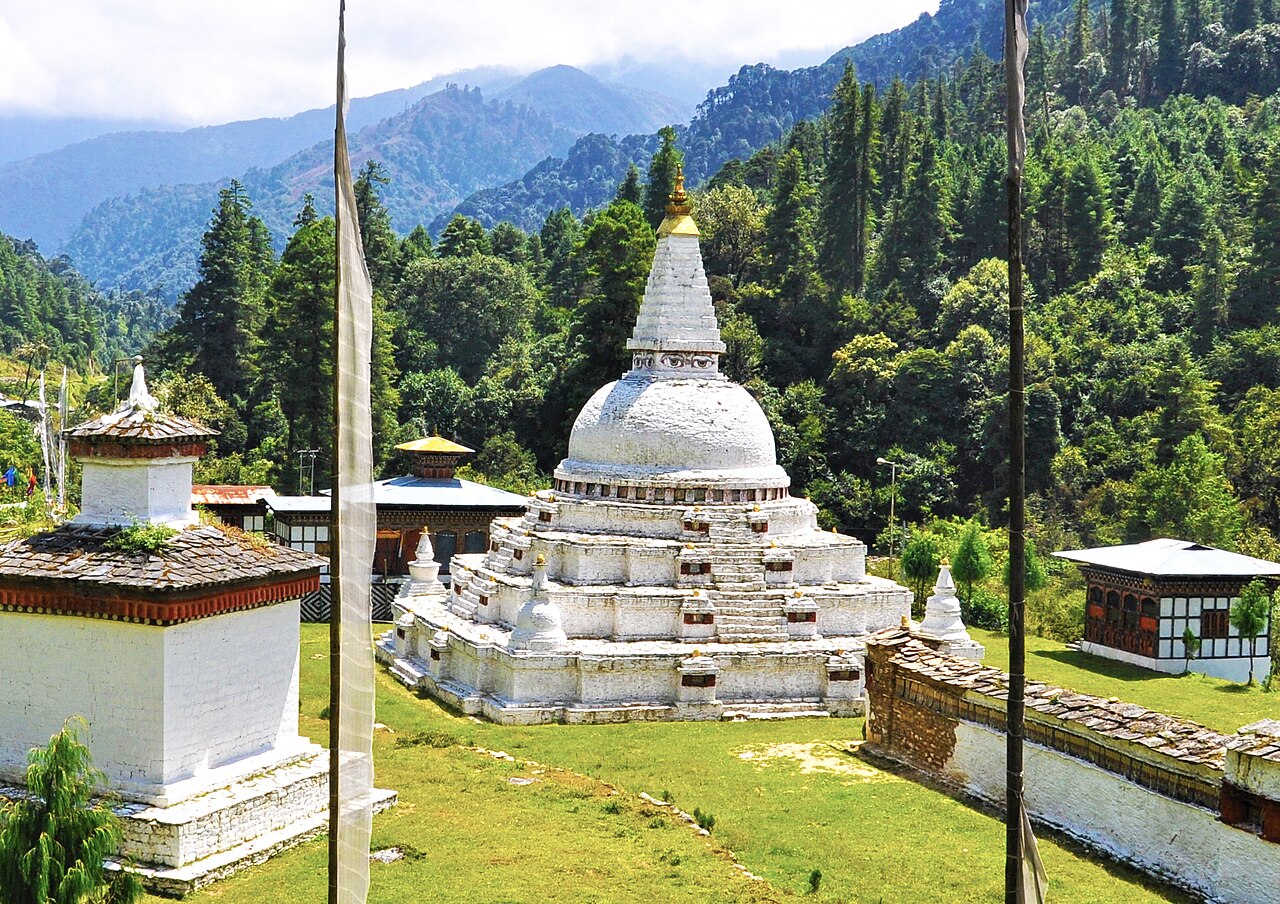
Chortens (Tibetan stupas) are among the most characteristic architectural features of the Bhutanese landscape, serving as reliquaries, memorials, gate markers, and objects of devotion. Ranging from small roadside structures to monumental edifices like the National Memorial Chorten in Thimphu, these sacred monuments embody Buddhist cosmology and serve as focal points of merit-making activity.

The chorten (Tibetan: མཆོད་རྟེན, "offering receptacle"), known in Sanskrit as stupa, is one of the oldest and most universal forms of Buddhist sacred architecture. In Bhutan, chortens are among the most ubiquitous features of the built environment — they stand at road junctions, on mountain passes, beside rivers, at the entrances to villages, within monastery compounds, and at cremation grounds. Ranging in scale from small structures barely a metre tall to monumental edifices such as the National Memorial Chorten in Thimphu, these monuments serve multiple functions: they house sacred relics, commemorate the deceased, mark territorial boundaries, subdue harmful forces, and provide focal points for circumambulation and the accumulation of spiritual merit.[1]
The stupa tradition originates in pre-Buddhist Indian funerary practices, in which earthen mounds were erected over the remains of important individuals. Following the death of the historical Buddha Shakyamuni, his cremated remains were divided among eight kingdoms, each of which erected a stupa to enshrine its portion. Over the following centuries, the stupa evolved from a simple burial mound into a highly symbolic architectural form encoding Buddhist cosmological principles, and as Buddhism spread across Asia, regional variations emerged. The Tibetan and Bhutanese chorten represents a distinct Himalayan development of this ancient form.[2]
Architecture and Symbolism
The Bhutanese chorten follows the standard Tibetan architectural form, consisting of five principal components that correspond to the five elements of Buddhist cosmology. The square base represents earth; the hemispherical dome (bumpa, "vase") represents water; the conical spire represents fire; the crescent moon at the top represents air; and the sun disc and jewel at the apex represent space. Together, these elements symbolise the entirety of the cosmos and, in tantric interpretation, the enlightened mind of the Buddha.[3]
The interior of a chorten typically contains consecrated objects: sacred texts (often printed on long rolls of paper), tsa-tsa (small clay votive tablets stamped with images of deities or stupas), relics of holy persons, medicinal and precious substances, and a central pole (sog shing, "life-tree") that runs vertically through the structure. The consecration ceremony for a chorten is an elaborate ritual that transforms the structure from an inert pile of building material into a living embodiment of enlightened presence.[4]
Types of Chortens in Bhutan
Several distinct types of chortens are found across Bhutan, each serving a specific function and bearing characteristic architectural features.
Relic Chortens (Dungten)
Relic chortens house the physical remains — cremated bones, ashes, or personal effects — of revered lamas, saints, or other significant religious figures. These are among the most sacred chortens and are objects of particular devotion. The chorten erected at the cremation site of a high lama becomes a pilgrimage destination, and devotees circumambulate it to accumulate merit and receive the blessings of the deceased master. Historical relic chortens in Bhutan include those associated with important lineage holders of the Drukpa Kagyu and Nyingma traditions.[5]
Gate Chortens (Kani)
Gate chortens, known as kani, are a distinctive feature of Bhutanese architecture. These are chorten structures built over a pathway or road, creating an archway through which travellers pass. The interior of the passage is typically decorated with elaborate murals depicting Buddhist deities, mandalas, the Wheel of Life, and scenes from the lives of Buddhist saints. Passing through a kani is considered an act of merit, and the murals serve a didactic function, exposing travellers to Buddhist teachings as they enter a village or monastery precinct. Kani are found at the approaches to most major monasteries and many villages throughout Bhutan.[6]
Memorial Chortens
Memorial chortens are erected in honour of deceased individuals, often but not exclusively religious figures. The most prominent example in Bhutan is the National Memorial Chorten in Thimphu, built in 1974 in memory of the third King, Jigme Dorji Wangchuck (1928–1972). This large whitewashed chorten, adorned with golden spires and surrounded by a prayer wheel-lined circumambulation path, serves as one of the most important religious sites in the capital. Elderly Bhutanese gather daily to circumambulate the chorten, spinning prayer wheels and reciting mantras — a scene that has become emblematic of Thimphu's blend of tradition and modernity.[7]
Chorten Lines and Chorten Groups
In some locations, chortens are built in groups or lines. A common arrangement is 108 chortens (108 being a sacred number in Buddhism), erected as an act of extraordinary merit. Dochula Pass, on the road between Thimphu and Punakha, features 108 chortens (the Druk Wangyal Chortens) built by Queen Mother Ashi Dorji Wangmo Wangchuck in 2005 in honour of Bhutanese soldiers who died in a military operation against insurgents. This dramatic cluster of chortens, set against a panorama of Himalayan peaks, has become one of Bhutan's most photographed sites.[8]
Circumambulation and Devotional Practice
The primary devotional activity associated with chortens is circumambulation (kora) — walking around the structure in a clockwise direction while reciting mantras, spinning handheld prayer wheels, or counting prayers on a mala (rosary). Circumambulation is understood as an act that generates merit, purifies negative karma, and brings the practitioner into contact with the sacred energy embodied in the chorten. Devout Bhutanese may circumambulate a chorten hundreds or thousands of times over the course of their lives, and the worn paths around major chortens testify to centuries of continuous devotional activity.[9]
Prostrations before chortens, offerings of butter lamps and incense, and the placement of tsa-tsa tablets at the base of chortens are additional devotional practices. The construction of a chorten is itself considered a highly meritorious act, and wealthy patrons may commission chortens as acts of religious generosity, while ordinary families may build small roadside chortens in memory of deceased relatives.
Conservation and Continuity
The maintenance and repair of chortens is considered a religious obligation in Bhutan. The annual whitewashing of chortens is a communal activity in many villages, and the restoration of damaged or deteriorating structures is regarded as an act of merit comparable to the original construction. In an era of road-building and modernisation, the Bhutanese government has made efforts to preserve historically significant chortens and to integrate traditional architectural forms into new development, ensuring that these ancient structures continue to define the sacred geography of the country.
References
View online: https://bhutanwiki.org/articles/chorten-and-stupa-traditions · Content licensed CC BY-SA 4.0