The Voluntary Abdication of the Fourth King (2006)
From BhutanWiki, the people's encyclopedia of Bhutan · history · Verified
On 14 December 2006, King Jigme Singye Wangchuck (born 11 November 1955) formally abdicated the throne of Bhutan in favour of his eldest son, Crown Prince Jigme Khesar Namgyel Wangchuck, ending a 34-year reign and initiating the final phase of the country's transition from absolute monarchy to constitutional democracy. The abdication was not forced by revolution, popular demand, or external pressure — it was the deliberate choice of a monarch who believed that the long-term well-being of his country required institutions stronger than any individual ruler.[1]
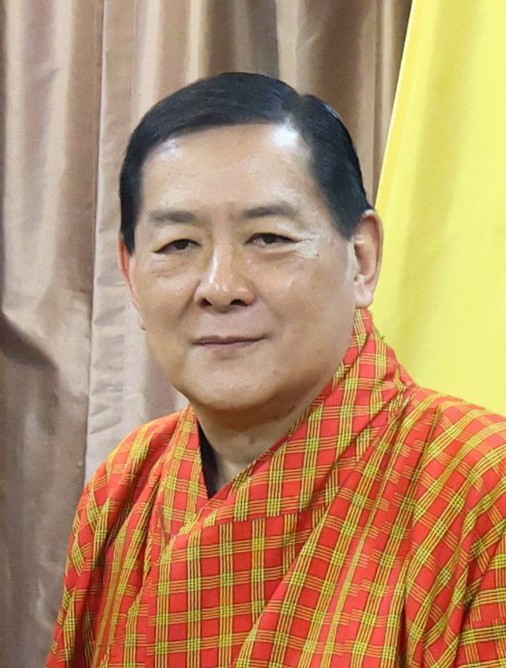
Bhutan's democratic transition stands as one of the most unusual in modern political history. Unlike the vast majority of democratic transitions, which are driven by popular uprisings, elite ruptures, or external intervention, Bhutan's was conceived, designed, and implemented from the top down — by the very monarch who stood to lose the most from it. When the Fourth King announced his intention to abdicate and hold elections, many Bhutanese citizens actively protested the decision, pleading with the king to retain his absolute authority.[2]
The transition culminated in the adoption of Bhutan's first written Constitution on 18 July 2008 and the country's first parliamentary elections in March 2008. The new Fifth King, Jigme Khesar Namgyel Wangchuck, was formally crowned on 6 November 2008 as the head of state under the new constitutional framework.
The Fourth King's Reign (1972–2006)
Jigme Singye Wangchuck became king on 24 July 1972 at the age of 16, following the death of his father, Jigme Dorji Wangchuck. He was the youngest monarch in the world at the time of his accession. Over his 34-year reign, he oversaw substantial economic development — particularly in hydropower, which became the backbone of the Bhutanese economy — while maintaining the country's cultural identity and environmental integrity.[1]
The Fourth King is perhaps best known internationally for articulating the philosophy of Gross National Happiness (GNH). In 1972, he declared that "Gross National Happiness is more important than Gross Domestic Product," establishing a development framework that prioritized collective well-being, cultural preservation, environmental conservation, and good governance alongside economic growth. GNH became the guiding principle of Bhutanese policy and attracted worldwide attention as an alternative model of development.[3]
Seeds of Democratic Reform
The Fourth King began laying the groundwork for democratic transition well before his abdication. Key milestones included:
1998: The king voluntarily relinquished his role as head of government, transferring executive authority to a Council of Ministers elected by the National Assembly. He also introduced a provision allowing the National Assembly to force the king's abdication through a two-thirds vote of no confidence — a remarkable self-imposed check on royal power.[1]
2001: The king commissioned the drafting of Bhutan's first written constitution, appointing a committee to study constitutional models from around the world and produce a document suited to Bhutan's particular circumstances.[2]
2005: The draft constitution was published and distributed to every household in the country. The king personally traveled to all twenty dzongkhags (districts) to explain the document and gather public feedback in a series of town hall meetings.[2]
The Decision to Abdicate
The Fourth King justified his decision with characteristic directness. He argued that Bhutan should not depend on the qualities of a single individual for good governance, noting that while a country might be fortunate to have a capable and benevolent king, there was no guarantee that future monarchs would be equally wise or public-spirited. Democracy, he argued, should be introduced during a time of peace and prosperity — not in response to crisis — so that the institutions could take root under favourable conditions.[1]
The announcement was met with widespread emotional resistance from the Bhutanese public. Many citizens expressed confusion and distress at the idea of losing their king's direct authority. Petitions were organized asking the king to reconsider. The Fourth King, however, remained firm, viewing the public's reluctance as evidence that the transition was best undertaken while the monarchy still commanded deep popular affection and trust, rather than waiting until that trust might erode.[2]
Mock Elections and Civic Education
Recognizing that most Bhutanese had no experience with democratic processes, the government organized a mock election on 21 April 2007 to familiarize citizens with voting procedures. Four fictitious parties — each represented by a different colour — contested the practice poll, with the government providing civic education materials and training for election officials. The exercise was widely considered a success, building confidence in the electoral system ahead of the real elections.[2]
The 2008 Elections and Constitution
Bhutan's first National Council (upper house) elections were held on 31 December 2007, followed by the National Assembly (lower house) elections on 24 March 2008. The Druk Phuensum Tshogpa (DPT), led by Jigme Thinley, won 45 of 47 seats in the National Assembly, forming the country's first democratically elected government. Voter turnout was approximately 79 percent.[2]
The Constitution of the Kingdom of Bhutan was formally adopted on 18 July 2008. It established a bicameral parliament, an independent judiciary, a constitutional monarchy, and a bill of fundamental rights. The constitution also enshrined Gross National Happiness as a guiding principle of governance and designated the Druk Gyalpo as the head of state and protector of all religions.[2]
The Coronation of the Fifth King
On 6 November 2008, Jigme Khesar Namgyel Wangchuck was formally crowned as the Fifth Druk Gyalpo in a ceremony at Tashichho Dzong in Thimphu. He was 28 years old. The coronation, attended by dignitaries from around the world, marked the completion of Bhutan's democratic transition — from the Fourth King's initial announcement through abdication, constitution-drafting, elections, and the installation of a new monarch operating within a constitutional framework.[1]
Significance
The voluntary abdication of the Fourth King is virtually without precedent in modern political history. While a handful of European monarchs have abdicated in recent decades (the Netherlands, Belgium, Spain), none did so to introduce democracy where none existed before. The Fourth King gave up absolute power not because he was compelled to, but because he believed — against the expressed wishes of his own people — that it was the right thing to do for the country's future.
Jigme Singye Wangchuck remains a deeply influential figure in Bhutanese life. Though he holds no formal political role, the former king is widely consulted and revered. His philosophy of Gross National Happiness continues to shape Bhutan's development trajectory, and the democratic institutions he created have survived multiple peaceful transfers of power through elections in 2008, 2013, 2018, and 2024.[1]
References
Related articles
Know something about this topic? Edit this article or . Anonymous contributions welcome — no account required.