King Jigme Dorji Wangchuck (1929–1972)
From BhutanWiki, the people's encyclopedia of Bhutan · history · Verified
This article is about a living or recently deceased person. Edits must be supported by reliable, verifiable sources. Unsupported or potentially defamatory content will be removed.
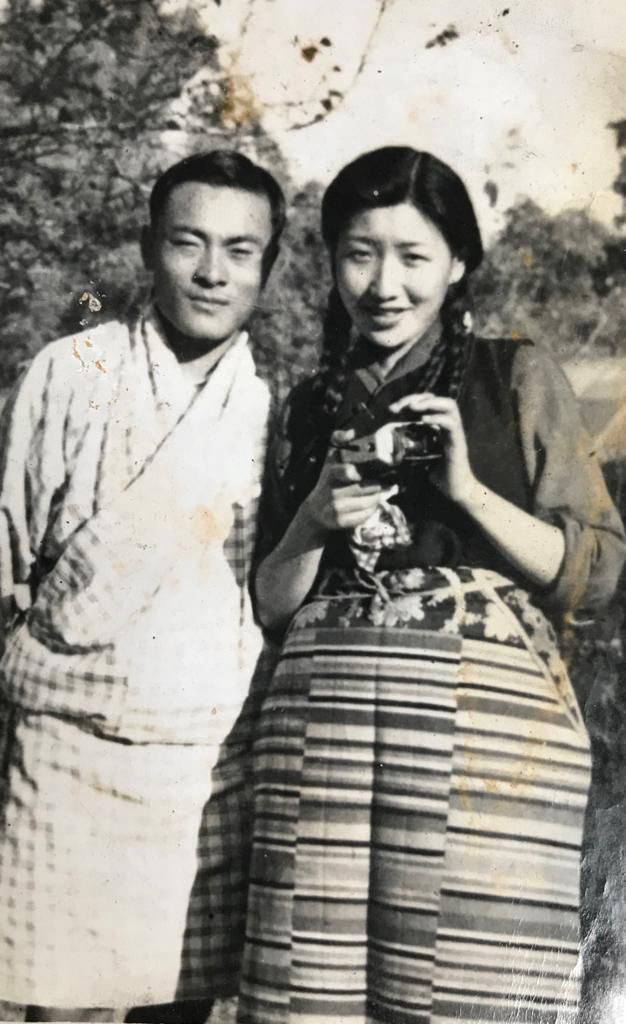

Jigme Dorji Wangchuck (2 May 1929 – 21 July 1972) was the third hereditary monarch of Bhutan, reigning from 1952 until his death at the age of 43. Known as the "Father of Modern Bhutan," he is credited with opening the country to the outside world and initiating a comprehensive programme of modernization that touched nearly every aspect of Bhutanese life — from infrastructure and education to governance and international relations.[1]
When Jigme Dorji Wangchuck ascended the throne in 1952, Bhutan had no roads, no hospitals, no modern schools, no currency, and no postal system. The country was almost entirely isolated from the rest of the world, governed by feudal structures that had changed little in centuries. By the time of his death twenty years later, Bhutan had a functioning parliament, a modern judiciary, the beginnings of a road network, an education system, and membership in the United Nations. This transformation, achieved without violent upheaval, remains one of the most remarkable modernization programmes in South Asian history.[2]
His reforms were not without cost. The assassination of his Prime Minister, Jigme Palden Dorji, in 1964, and a subsequent attempt on the king's own life in 1965, revealed the depth of conservative opposition to change. Jigme Dorji Wangchuck persevered nonetheless, and his vision laid the groundwork for the Bhutan that exists today.
Early Life and Accession
Jigme Dorji Wangchuck was born on 2 May 1929, the son of King Jigme Wangchuck (the Second King) and Queen Phuntsho Choden. He was educated in both Bhutanese and British Indian traditions, receiving private tutoring in English, Hindi, and modern subjects alongside traditional Buddhist education. He ascended the throne on 30 March 1952, following his father's death.[1]
Political Reforms
The National Assembly (Tshogdu)
In 1953, just one year after taking the throne, Jigme Dorji Wangchuck established the National Assembly (Tshogdu), Bhutan's first legislative body. The assembly comprised representatives from the people, the monastic body, and the government, and was empowered to pass laws, approve budgets, and debate policy. While the king retained ultimate authority, the creation of the Tshogdu marked the first step toward democratization, a process that would not reach its conclusion until the adoption of the Constitution in 2008.[1]
Abolition of Serfdom
One of the Third King's most consequential reforms was the abolition of serfdom and the end of the feudal labour system. In 1956, he issued a royal decree abolishing serfdom throughout Bhutan, freeing thousands of bonded labourers and redistributing land to the peasantry. He simultaneously enacted land reform measures that limited the size of individual landholdings, seeking to create a more equitable distribution of agricultural resources.[1]
Judicial Reform
The king reorganized the judiciary, establishing the High Court (Thrimkhang Gongma) as an independent institution with appellate jurisdiction. He introduced a codified legal system to replace the patchwork of customary law and monastic regulation that had previously governed disputes. These reforms established the principle that all citizens — including the king himself — were subject to the rule of law.[1]
Modernization and Development
First Five-Year Plan (1961)
In 1961, Bhutan launched its first Five-Year Plan, a systematic programme of infrastructure development supported by Indian aid. The plan envisaged the construction of 177 kilometres of road, 108 schools, three hospitals, and 45 clinics. Road construction had begun on a small scale in 1959, but the Five-Year Plan marked the beginning of organized national development planning. By the time of the Third King's death, more than 1,200 kilometres of road had been built, connecting previously isolated communities across the country.[1]
Education
The king established Bhutan's first modern secular schools, sending promising students abroad for higher education. English was introduced as the medium of instruction alongside Dzongkha. This dual-language approach sought to open Bhutan to global knowledge while preserving national identity.
International Relations
Jigme Dorji Wangchuck recognized that Bhutan's long-term survival required engagement with the international community. In 1962, Bhutan joined the Colombo Plan, gaining access to technical assistance and educational scholarships from the broader Asia-Pacific community. This was followed by membership in the Universal Postal Union and other international organisations.[1]
The culmination of this diplomatic strategy came on 21 September 1971, when Bhutan was admitted as the 128th member of the United Nations. This milestone, achieved just ten months before the king's death, affirmed Bhutan's sovereignty on the world stage and ended any lingering ambiguity about the country's status as a fully independent nation-state.[1]
The Dorji Crisis
The king's modernization programme generated fierce opposition from conservative elements within the military and the monastic establishment. In April 1964, Prime Minister Jigme Palden Dorji, the chief architect and implementer of the reforms, was assassinated. The conspiracy was traced to senior military figures, including the army commander Brigadier Namgyal Bahadur. On 31 July 1965, an attempt was made on the king's own life. Both plots were linked to factions opposed to the pace and direction of modernization.[1]
Despite these traumatic events, the Third King did not retreat from reform. He continued to build institutions, expand infrastructure, and position Bhutan for engagement with the wider world.
Death and Legacy
Jigme Dorji Wangchuck died on 21 July 1972 in Nairobi, Kenya, where he had been receiving medical treatment. He was 43 years old. His death was mourned deeply across the country, and the Third King is remembered with genuine reverence as the figure who, more than any other, brought Bhutan into the modern world. His birthday, 2 May, is observed as a national holiday in Bhutan.[1]
He was succeeded by his 16-year-old son, Jigme Singye Wangchuck, who would build upon his father's legacy by introducing Gross National Happiness and, ultimately, guiding the country's transition to democracy.
References
Related articles
Know something about this topic? Edit this article or . Anonymous contributions welcome — no account required.