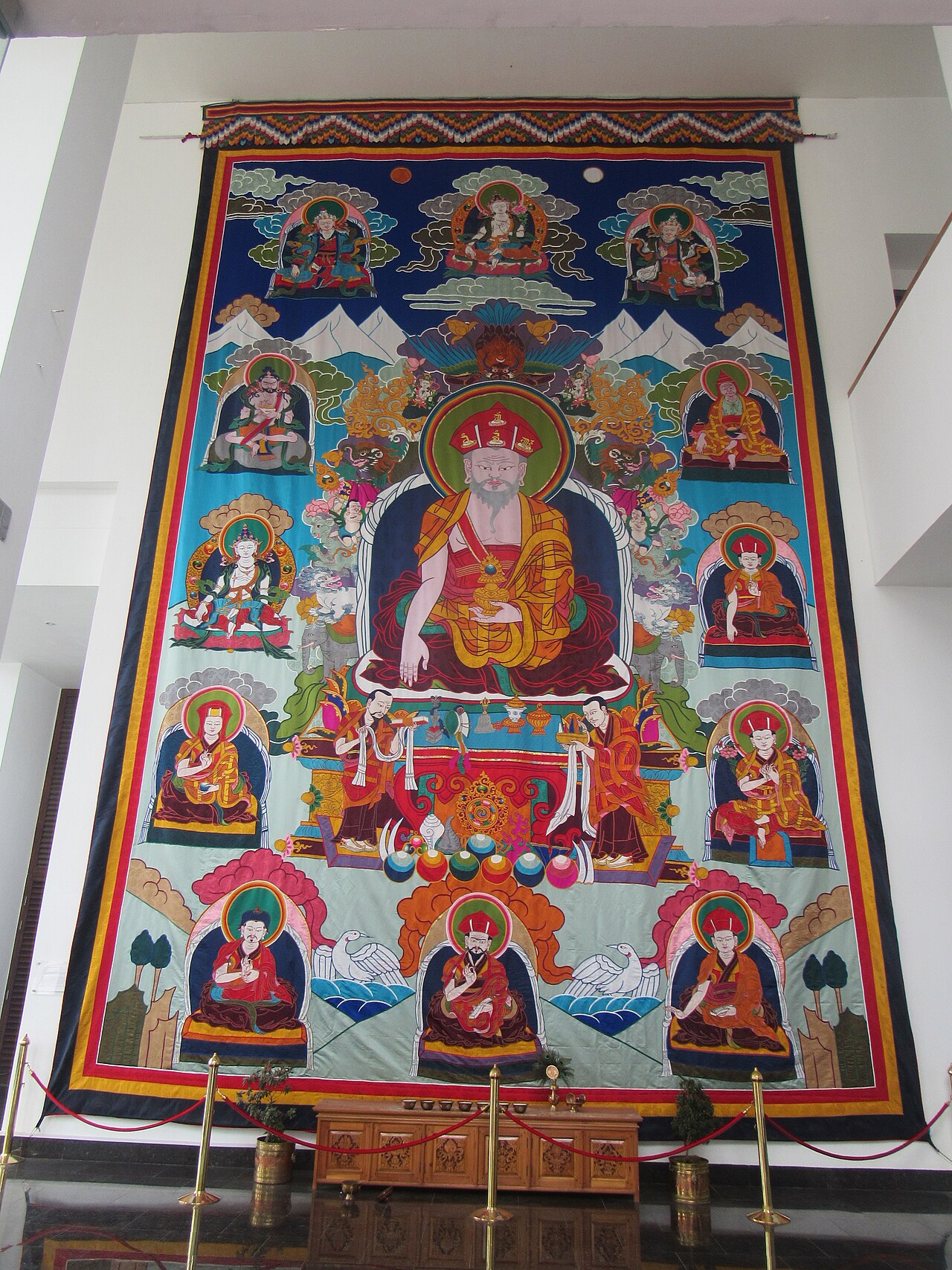

Thangka paintings are portable Buddhist scroll paintings created on cotton or silk applique, depicting deities, mandalas, scenes from the life of the Buddha, and other religious subjects central to Vajrayana Buddhism. In Bhutan, thangka painting is known as lhazo (literally "painting of deities") and constitutes one of the thirteen traditional arts and crafts collectively termed Zorig Chusum. Thangkas serve simultaneously as objects of devotion, instructional aids for Buddhist teaching, and sophisticated works of visual art governed by strict iconographic rules passed down over centuries.
The thangka tradition in Bhutan shares deep roots with Tibetan painting but has developed distinctive characteristics reflecting Bhutan's unique religious history, its ties to the Drukpa Kagyu and Nyingma lineages of Buddhism, and the influence of local artistic sensibilities. Thangkas are found in virtually every monastery, temple, and household shrine across the country. Large-scale thangkas known as thongdrel are unfurled during annual tshechu festivals, where viewing them is believed to confer spiritual liberation.
Historical Development
The origins of thangka painting in Bhutan are closely linked to the spread of Buddhism from Tibet and India into the Himalayan region. The tradition is believed to have entered Bhutan with the arrival of Buddhist teachers from Tibet beginning in the seventh century CE. Guru Rinpoche (Padmasambhava), who visited Bhutan in the eighth century, is credited with establishing many of the sacred sites and iconographic traditions that thangka painters continue to depict. The consolidation of the Bhutanese state under Zhabdrung Ngawang Namgyal in the seventeenth century further institutionalised the arts, including painting, as essential components of national religious and cultural identity.
Over the centuries, Bhutanese thangka painting absorbed influences from multiple regional traditions, including the Menri and Khyenri schools of Tibetan painting, as well as Newar artistic traditions from the Kathmandu Valley. By the eighteenth and nineteenth centuries, a recognisable Bhutanese style had emerged, characterised by rich colour palettes, elaborate background landscapes, and a distinctive treatment of cloud formations and textile patterns.
Iconography and Rules
Thangka painting is governed by precise iconographic canons (thig tshad) that prescribe the proportions, postures, hand gestures (mudras), attributes, and colour symbolism of each deity or figure depicted. These proportional systems are codified in Buddhist treatises and transmitted through oral instruction from master to apprentice. A thangka painter cannot freely invent compositions; rather, each element must conform to established religious standards to ensure that the painting functions as a valid object of meditation and devotion.
Common subjects include the historical Buddha Shakyamuni, the bodhisattva Avalokiteshvara (Chenrezig), Guru Rinpoche in his eight manifestations, wrathful protective deities such as Mahakala, and complex geometric mandalas representing the architecture of enlightened consciousness. Scenes from the Jataka tales (stories of the Buddha's previous lives) and the lives of great Bhutanese saints also feature prominently.
Materials and Techniques
Traditional thangka painting begins with the preparation of a cotton canvas, which is stretched on a wooden frame, treated with a mixture of chalk and animal-hide glue, and burnished to create a smooth painting surface. The artist then draws the preliminary sketch using charcoal or pencil, carefully following the proportional grid prescribed by iconographic tradition.
Pigments are derived from both mineral and organic sources. Historically, Bhutanese painters used colours ground from lapis lazuli (blue), malachite (green), cinnabar (red), orpiment (yellow), and gold leaf for highlights and sacred inscriptions. Today, commercially produced pigments are also employed, though traditionalists continue to prepare natural colours. The pigments are mixed with a binding medium — traditionally animal-skin glue — and applied in successive layers, beginning with background colours and progressing to the fine details of faces, hands, and ornamental elements.
Gold is applied last, often to halos, throne ornaments, and sacred syllables. The final step is the painting of the eyes (spyan dbye), a ritually significant act that is understood to "open" the deity's eyes and bring the image to life. This step is sometimes accompanied by a consecration ceremony performed by a lama.
Thongdrel: Monumental Festival Thangkas
Among the most spectacular expressions of Bhutanese thangka art are the thongdrel — enormous applique thangkas that may measure ten metres or more in height. These giant sacred images are unfurled before dawn during major tshechu festivals at dzongs and monasteries throughout the country. The term thongdrel means "liberation through sight," reflecting the belief that merely beholding the image brings merit and can purify negative karma.
Each major dzong and monastery possesses its own thongdrel, typically depicting Guru Rinpoche, the Zhabdrung, or other figures of particular significance to the institution. The creation of a thongdrel is a major communal undertaking, often requiring years of work by teams of skilled artisans and the sponsorship of wealthy patrons or the government.
Training and Transmission
Historically, thangka painting was taught exclusively through the master-apprentice system, with young artists spending years under the guidance of an established painter, learning first to grind pigments and prepare canvases before progressing to painting itself. This traditional system continues alongside formal institutional training offered at the National Institute of Zorig Chusum in Thimphu, where students undertake a four-to-six-year programme that includes painting as one of its core disciplines.
The Bhutanese government has actively supported the preservation and transmission of thangka painting as part of its broader commitment to safeguarding cultural heritage. The art form is also sustained by continued demand from monasteries, temples, and private patrons who commission thangkas for religious use.
Contemporary Practice
While thangka painting remains fundamentally a devotional art, it has also become a source of income for skilled artists and a point of interest for international collectors and tourists. The balance between maintaining traditional standards and adapting to a modern market presents ongoing challenges. Some contemporary Bhutanese artists have begun to explore new subjects and styles while retaining traditional techniques, though strictly religious thangkas continue to follow canonical rules.
The enduring vitality of thangka painting in Bhutan reflects the central role of Vajrayana Buddhism in Bhutanese life and the effectiveness of institutions dedicated to preserving the country's artistic heritage. As both a spiritual practice and a fine art, thangka painting remains one of the most visible and revered expressions of Bhutanese culture.
References
Related articles
Know something about this topic? Edit this article or . Anonymous contributions welcome — no account required.