Tenzing Lamsang
From BhutanWiki, the people's encyclopedia of Bhutan · people · Verified
This article is about a living or recently deceased person. Edits must be supported by reliable, verifiable sources. Unsupported or potentially defamatory content will be removed.
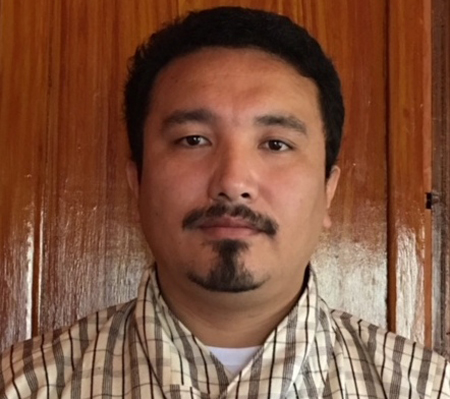
Tenzing Lamsang is a Bhutanese journalist and editor. He is the co-founder and editor-in-chief of The Bhutanese, an independent English-language weekly newspaper launched in Thimphu in February 2012, and serves as president of the Journalists' Association of Bhutan. Over more than a decade he has built a reputation as one of the country's most persistent investigative reporters, producing work on hydropower debt, lottery fraud, corruption in public procurement, and political accountability that is regularly cited by international press-freedom monitors when they need a Bhutan-based source independent of the state broadcaster and the paper of record.[1]
Born: Bhutan (year not publicly disclosed)
Education: St Joseph's School, North Point, Darjeeling; St Stephen's College, University of Delhi (reported)
Current role: Editor-in-Chief, The Bhutanese (2012–present); President, Journalists' Association of Bhutan
Previous roles: Reporter, The Indian Express (New Delhi); reporter, Kuensel; reporter, Business Bhutan
Known for: Investigative reporting on the Bhutan lottery scam, hydropower procurement, fuel pricing and public-sector corruption
Early life and education
Publicly available biographical material on Lamsang is limited, and he has not published a memoir or a detailed personal profile. According to the festival biography maintained by Bhutan Echoes (the literary festival formerly known as Mountain Echoes) and corroborated by his own public statements, he was educated entirely in India. He attended St Joseph's School, North Point, in Darjeeling, and then St Stephen's College at the University of Delhi, followed by two years of journalism work in Delhi before returning to Bhutan.[1] His birth year is not a matter of public record and is omitted here rather than guessed.
Early journalism career
Lamsang began reporting at The Indian Express in New Delhi, one of India's oldest English-language dailies, before returning to Bhutan to join Kuensel, the country's state-linked paper of record. He later moved to Business Bhutan, a privately held weekly, where he produced some of the earliest domestic reporting on irregularities in the Bhutan lottery, a state-linked business that generated substantial off-budget revenue through sales in Indian markets.[1] A 2011 special audit by the Royal Audit Authority subsequently confirmed much of the reporting on lottery-sector irregularities, including unaccounted printing, missing prize-money liabilities and contractual changes that disadvantaged the state.[2]
Founding of The Bhutanese
The Bhutanese launched on 21 February 2012 with Lamsang as founder, editor and principal reporter.[3] It was originally published twice a week, on Wednesdays and Saturdays, and moved to a single weekly Saturday edition in August 2013. The paper operates from Thimphu with a small staff of Bhutanese reporters and publishes an online edition at thebhutanese.bt alongside the print weekly. Content is predominantly in English with a Dzongkha section.
Like other private Bhutanese print outlets, The Bhutanese operates in a market where government advertising is the dominant revenue source and where structural financial pressure on independent publishers is well documented. Lamsang has returned to this theme repeatedly in his own editorials, describing the commercial environment for private media as unsustainable without regulatory or policy reform. The paper has survived through a mix of advertising, subscriptions and personal commitment from its editor, which outside observers, including a 2022 retrospective on the paper's tenth anniversary, have noted raises succession questions tied to the identity of a single founder.[4]
Investigative reporting
Under Lamsang's editorship The Bhutanese has pursued investigative beats that other Bhutanese outlets have been more cautious about. Recurring areas of coverage include:
- The Bhutan lottery scam. Building on reporting Lamsang began at Business Bhutan, the paper has followed the multi-year investigation by India's Central Bureau of Investigation into alleged under-printing and revenue diversion in Bhutan's lottery operations sold in Indian states. Coverage has included Bhutanese-government non-cooperation with Indian investigators and the absence of domestic prosecutions against named officials.[5]
- Hydropower debt and procurement. The Bhutanese has produced sustained critical coverage of cost overruns, contractual disputes and technical failures in Bhutan's Indian-financed hydropower projects, a sector that accounts for the bulk of external debt. See hydropower development in Bhutan.
- Fuel and commodity pricing. A 2023 investigation into overcharging by Indian oil companies on petroleum imports to Bhutan led to government intervention and a subsequent reduction in retail fuel prices; the story won that year's Best Investigative Story award at the annual Journalists' Association of Bhutan ceremony.[6]
- Banking and corporate fraud. Lamsang's 2023 Crime Story of the Year award recognised reporting on an alleged multi-million-ngultrum bank fraud case in Phuentsholing.[6]
- Policy controversies. The paper has reported critically on the expansion of the De-suung national service programme, enforcement of the Tobacco Control Act, land acquisition disputes, and the economic and legal framework around Gelephu Mindfulness City.
The paper's investigative record, combined with its editorial willingness to name officials, has made it a standard reference for outside observers writing about Bhutan. International press-freedom groups, academic researchers and foreign correspondents routinely cite The Bhutanese alongside Kuensel when constructing accounts of Bhutanese politics and governance.
Awards and recognition
Lamsang has been a frequent recipient of prizes at the Annual Journalism Awards organised by the Journalists' Association of Bhutan under the umbrella of the Bhutan Media Foundation. At the 7th Annual Journalism Awards in August 2023 he received three separate honours: the Jigme Singye Wangchuck Prestigious Award, recognising career contribution to Bhutanese journalism; the Best Investigative Story of 2023 award, for the fuel-pricing investigation; and the Crime Story of the Year award, for reporting on the Phuentsholing bank-fraud case.[6] He has reported winning Best Investigative Story of the Year on seven separate occasions over the life of the paper.[1]
The Jigme Singye Wangchuck Prestigious Award, named for the Fourth King, is awarded by the Journalists' Association of Bhutan and has in other years been given to institutional recipients such as Kuensel Corporation and the Bhutan Broadcasting Service. Lamsang's award was made to him as an individual for career contribution, and should not be confused with the 2025 award, which went jointly to BBS and Kuensel.[7]
Professional roles and public profile
Lamsang is president of the Journalists' Association of Bhutan, the country's principal professional body for working journalists, and has served on the board of the Bhutan Media Foundation, which administers training and award programmes for the Bhutanese press. He has participated in the South Asia Editors Forum and in the Transparency Advisory Group for South Asia, and has appeared as a speaker at the Jaipur Literature Festival and at Bhutan Echoes.[1]
He maintains an active public presence on X (formerly Twitter) at @TenzingLamsang, where his commentary on Bhutanese politics, Indian foreign policy and regional affairs is itself sometimes quoted by foreign journalists writing about the country. He has been cited or interviewed by The Diplomat, Himal Southasian, the Kathmandu Post and other regional outlets when Bhutanese voices are sought on politically sensitive topics.
Structural context and limits
Lamsang's work, and the survival of The Bhutanese, are frequently cited in discussions of press freedom in Bhutan as evidence of two things at once: that independent investigative journalism exists in the country, and that the conditions under which it operates are tightly constrained. Reporters Without Borders ranked Bhutan 152nd in its 2025 World Press Freedom Index, down from 33rd in 2022, and the Bhutan Media Foundation's own journalist surveys have documented high rates of self-censorship.[8] Criminal defamation provisions in the Penal Code, heavy dependence of private outlets on government advertising, and the small size of the market together define the environment in which any Bhutanese independent newspaper must operate.
Observers of the Bhutanese press note that even the most independent domestic outlets practise self-censorship on certain topics, particularly the royal family, political prisoners and the historical experience of the Lhotshampa in the late 1980s and early 1990s. This is a description of the environment rather than a judgement of any individual editor, and applies to the private press as a whole. The Bhutanese itself has written about defamation law and its chilling effect on Bhutanese journalism.[9]
Within those limits, Lamsang's output over more than a decade has established a body of work that is unusual in the Bhutanese context for its continuity, its willingness to name officials, and its engagement with financial and technical detail. See freedom of expression in Bhutan for the wider legal and policy picture, and Kuensel and BICMA for the adjacent institutional landscape.
See also
- Freedom of expression in Bhutan
- Kuensel
- Bhutan InfoComm and Media Authority (BICMA)
- Hydropower development in Bhutan
- Tobacco Control Act of Bhutan
- De-suung
- Gelephu Mindfulness City
References
- Tenzing Lamsang — Bhutan Echoes speaker biography
- No action against Bhutanese officials involved in the multi-billion Bhutan lottery scam — The Bhutanese
- The Bhutanese — Wikipedia
- The Bhutanese – courageous, informative and detailed — The Bhutanese tenth anniversary retrospective
- CBI says Bhutan government had not cooperated on lottery scam investigation — The Bhutanese
- Journalists honoured in the 7th Annual Journalism Awards — The Bhutanese
- BBS and Kuensel receive Jigme Singye Wangchuck Prestigious Journalism Award — Bhutan Broadcasting Service
- Bhutan country profile — Reporters Without Borders
- Defamation Law in Bhutan: Some Reflections — The Bhutanese
Related articles
Know something about this topic? Edit this article or . Anonymous contributions welcome — no account required.