Sustainable Development Fee
From BhutanWiki, the people's encyclopedia of Bhutan · society · Verified
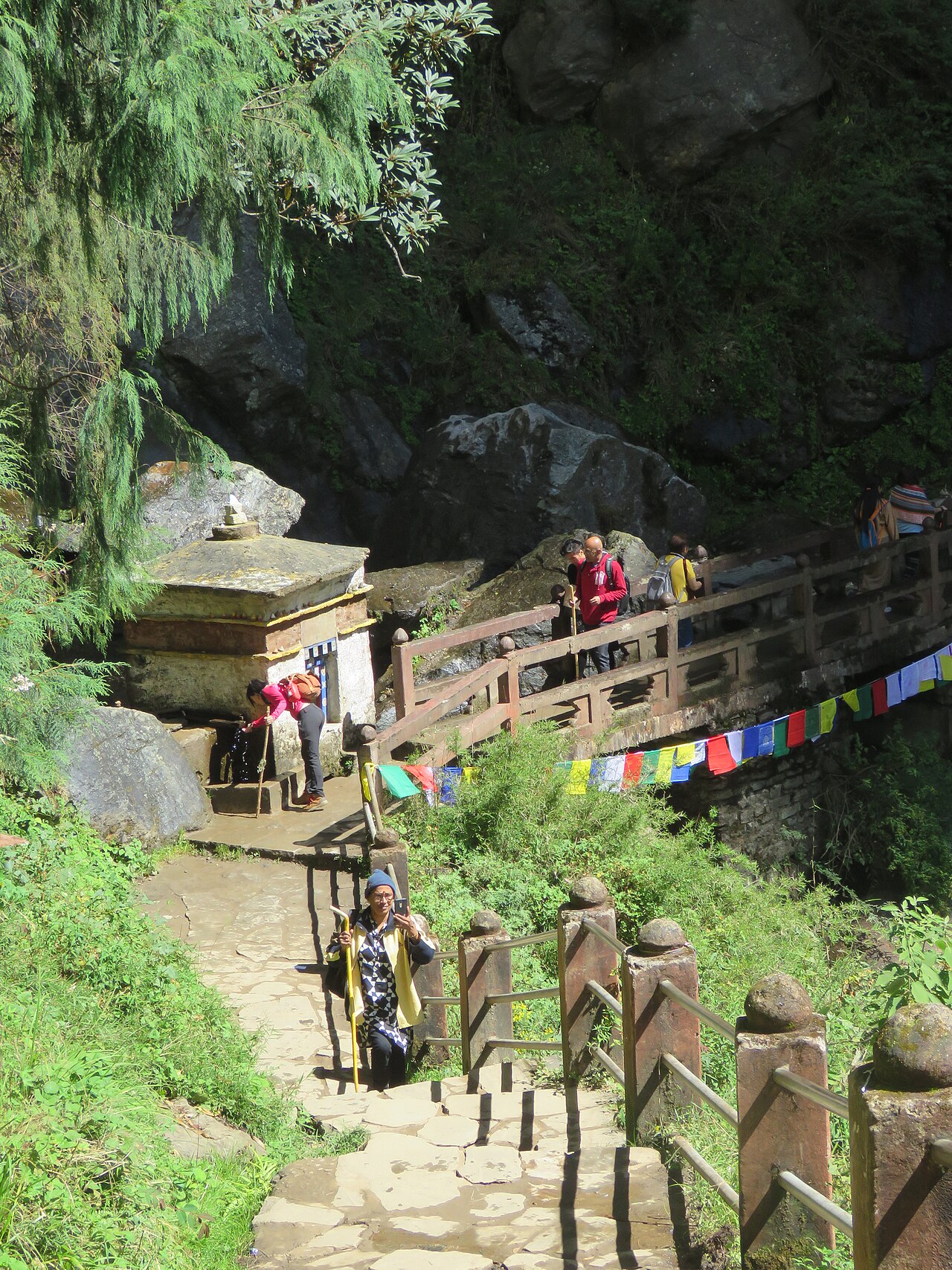
.jpg)
The Sustainable Development Fee (SDF) is a mandatory daily charge imposed on international tourists visiting Bhutan. Currently set at USD 100 per person per night, the fee is a cornerstone of Bhutan's distinctive approach to tourism — a policy framework often characterised as "high value, low volume" that seeks to maximise the developmental and cultural benefits of tourism while minimising its environmental and social costs. The SDF is paid in addition to accommodation, meals, transport, and guide fees, making Bhutan one of the most expensive tourist destinations in the world.[1]
The fee has been the subject of considerable debate both domestically and internationally. Proponents argue it protects Bhutan's fragile Himalayan environment, preserves its unique Buddhist culture, and generates revenue for public services without the mass tourism pressures experienced by neighbouring Nepal. Critics contend that the fee prices out middle-income travellers, has contributed to a sharp decline in visitor numbers, and disproportionately benefits the government while leaving tourism operators struggling with low volumes.[2]
Historical Background
Bhutan opened to international tourism only in 1974, when a small number of visitors were permitted to enter for the first time. From the outset, the Royal Government adopted a cautious approach, limiting tourist numbers and requiring all visitors to book through licensed tour operators. In 1991, the government formalised this approach by introducing a minimum daily package rate of USD 200 per day (USD 250 in peak season), which included accommodation, meals, transport, a guide, and an embedded royalty component that functioned as the precursor to the SDF.[3]
This bundled tariff system remained in place for three decades. Under the system, tourists paid a single all-inclusive daily rate to their tour operator, who then remitted the royalty portion to the government. The Tourism Council of Bhutan administered the system, which was widely credited with keeping Bhutan's natural and cultural heritage intact while generating revenue for national development.[1]
The 2022 Reform: Unbundling and the USD 200 SDF
In September 2022, Bhutan fundamentally restructured its tourism pricing model. The bundled daily tariff was abolished and replaced with an unbundled system in which the SDF was separated as a distinct, transparent charge of USD 200 per person per night. Under the new model, tourists paid the SDF directly to the government and separately negotiated accommodation, meals, transport, and guide services with their tour operators at market rates. The mandatory guide requirement was also relaxed for some categories of visitors.[2]
The reform was intended to modernise Bhutan's tourism industry, attract a younger and more independent traveller demographic, and increase transparency about where tourist expenditure was directed. However, the USD 200 daily SDF proved devastating to visitor numbers. In the first year of the new system, international arrivals plummeted, with many prospective tourists deterred by the fee — which, combined with accommodation and other costs, could bring daily expenditure to USD 350–500 per person. Tour operators, hotels, and guides across the country reported severe financial hardship.[4]
The September 2023 Reduction to USD 100
Facing an industry in crisis and mounting domestic pressure, the Royal Government announced in September 2023 that the SDF would be halved from USD 200 to USD 100 per person per night, effective immediately. The reduction was accompanied by additional incentives, including free SDF days for longer-staying visitors and discounts for children. The government acknowledged that the USD 200 fee had been set too high and that a recalibration was necessary to revive the sector.[4]
The reduction was broadly welcomed by the tourism industry, though some operators argued that even USD 100 remained prohibitively high for many potential visitors. Tourist arrivals showed signs of recovery in 2024, though numbers remained well below pre-pandemic levels. In 2019, Bhutan received approximately 315,600 international visitors; by contrast, 2023 figures were a fraction of that number.[3]
What the SDF Funds
The Bhutanese government has stated that SDF revenues are directed towards five priority areas:[1]
- Free healthcare: Bhutan provides free basic healthcare to all citizens, and SDF revenues contribute to sustaining this system, including the operation of district hospitals and basic health units across the country.
- Free education: Universal free education through the secondary level is funded in part by tourism revenues.
- Environmental conservation: Bhutan maintains over 51% forest cover (constitutionally mandated minimum of 60%) and is the world's only carbon-negative country. SDF funds support national parks, wildlife corridors, and conservation programmes.
- Cultural preservation: Restoration and maintenance of dzongs, monasteries, and cultural sites.
- Infrastructure development: Roads, bridges, and tourism-related infrastructure, particularly in rural areas.
Regional vs International Tourist Rates
The SDF applies only to international tourists. Citizens of India, Bangladesh, and the Maldives — countries with which Bhutan has special bilateral arrangements — are exempt from the SDF and may enter Bhutan with minimal formalities (Indian nationals require only an Indian passport or voter ID). These regional visitors have historically constituted the majority of tourists visiting Bhutan, outnumbering international SDF-paying visitors by a ratio of roughly 2:1 or more. Regional tourists contribute to the economy through accommodation, shopping, and local transport but do not generate SDF revenue.[3][1]
Debate and Criticism
Arguments in Favour
Supporters of the SDF argue that it is essential for preserving Bhutan's unique character. Without the fee, they contend, Bhutan would face the same mass tourism pressures that have degraded cultural sites and natural environments in neighbouring countries. The fee ensures that tourism contributes meaningfully to national development and aligns with the Gross National Happiness philosophy, which prioritises wellbeing over economic growth metrics. The government has pointed to Bhutan's pristine environment and intact cultural heritage as evidence that the policy works.[1]
Arguments Against
Critics raise several objections. The fee excludes budget and mid-range travellers, creating an elitist tourism model that limits Bhutan's appeal to a narrow demographic. Tour operators, particularly smaller ones, have struggled with low volumes, and guides and porters have faced unemployment. Some analysts have questioned the transparency of SDF expenditure, arguing that there is insufficient public accounting of how the revenues are allocated. Others note that the exemption for regional tourists creates a two-tier system that Indian visitors have sometimes exploited by visiting in large numbers during festivals, placing pressure on infrastructure and cultural sites without contributing SDF revenue.[2][4]
See Also
References
- Tourism Policy — Wikipedia
- Bhutan's controversial new tourist tax — BBC Travel, January 2023
- Tourism in Bhutan — Wikipedia
- Bhutan Slashes Tourism Fees to Lure Visitors — The Diplomat, September 2023
- Bhutan Cuts Its Daily Tourist Fee in Half — The New York Times, September 2023
- How much does it cost to visit Bhutan? — Lonely Planet
- Revisiting the SDF — Kuensel
- Bhutan Overview — World Bank
Related articles
Know something about this topic? Edit this article or . Anonymous contributions welcome — no account required.