Regional Weaving Traditions
From BhutanWiki, the people's encyclopedia of Bhutan · culture · Verified
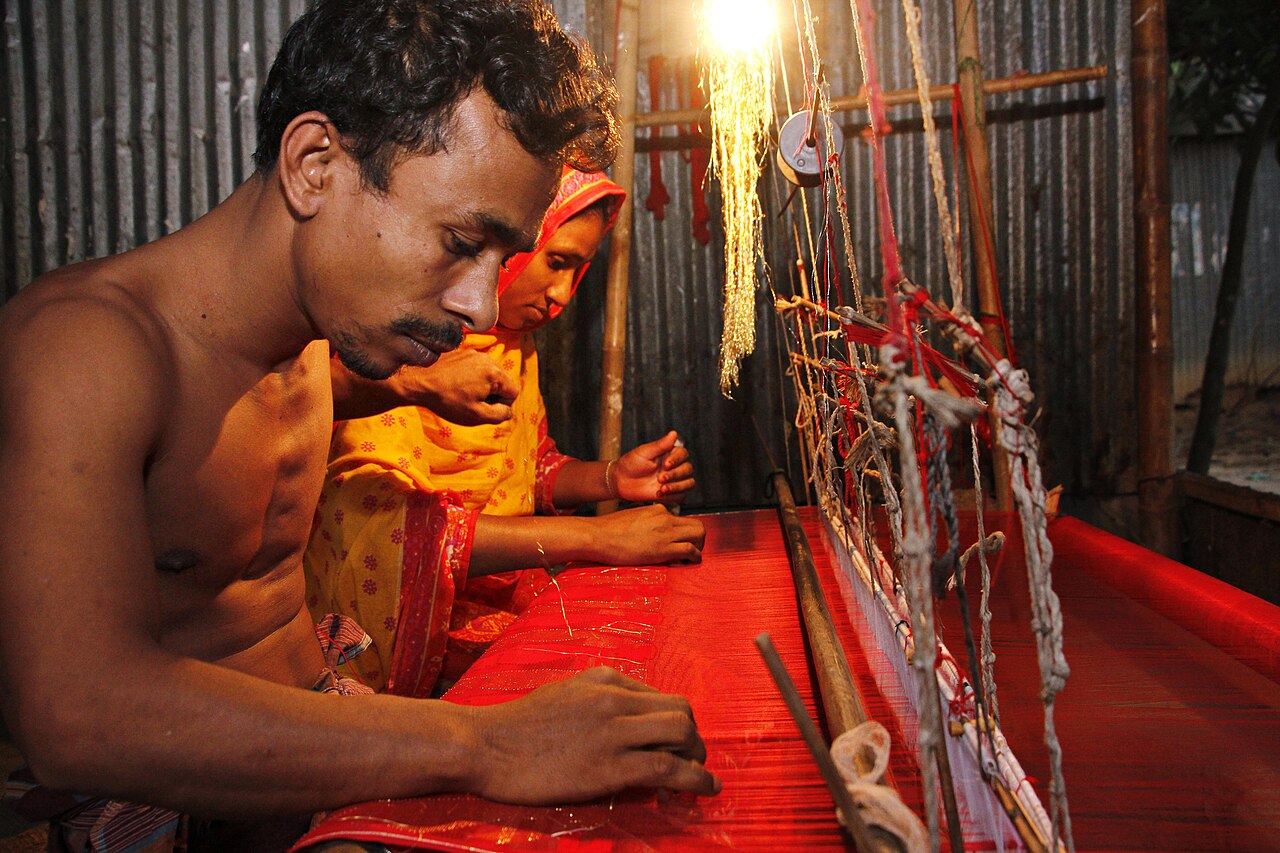

The weaving traditions of Bhutan are not a single, monolithic practice but a diverse constellation of regional traditions, each shaped by local ecology, cultural heritage, and the creative preferences of individual communities. Bhutan's geography — a series of deep river valleys separated by high mountain ridges — has historically limited communication between districts, fostering the development of distinct local textile cultures. The textiles of Lhuentse are readily distinguishable from those of Bumthang, and both differ markedly from the weaving traditions of the southern and western districts.[1]
This regional diversity is one of the most remarkable features of Bhutanese textile arts. In a country with a population of fewer than 800,000, the range of weaving techniques, materials, colour palettes, and pattern vocabularies is extraordinary by global standards. Each region's textile tradition reflects not only technical preferences but also the broader cultural identity of its people — the Sharchop of the east, the Ngalop of the west, the Kheng of central Bhutan, and the Lhotshampa of the south each have distinctive textile expressions.[2]
Understanding Bhutan's regional weaving traditions provides a map of the country's cultural diversity, revealing how geography, ethnicity, and history have combined to produce one of Asia's richest textile heritages. This article surveys the major regional weaving centres and their characteristic products.[3]
Lhuentse District: The Pinnacle of Brocade
Lhuentse district in northeastern Bhutan is widely regarded as the pre-eminent centre of Bhutanese weaving, producing the finest and most technically demanding textiles in the country. The district is particularly associated with kushuthara, the supplementary weft brocade that represents the apex of the weaver's art. The village of Khoma is the most celebrated weaving centre in Lhuentse, where virtually every household is engaged in textile production.[4]
In addition to kushuthara, Lhuentse weavers produce textiles using the trima (discontinuous supplementary warp) and hor (supplementary weft) techniques. The coexistence of multiple complex techniques within a single district speaks to the depth of weaving knowledge in Lhuentse, where girls begin learning at the loom from the age of six or seven. The district's relative isolation has been a double-edged factor — it has helped preserve traditional techniques from the homogenising pressures of modernisation, but it has also limited weavers' access to markets and economic opportunity.[5]
Lhuentse textiles are characterised by fine thread counts, dense pattern coverage, and a colour palette that traditionally emphasised naturally dyed silk in reds, yellows, greens, and blues on white or coloured grounds. The district's weavers are known for their ability to create extremely complex, multicoloured designs from memory, without written patterns or charts.
Bumthang District: Yathra and Wool Traditions
Bumthang district in central Bhutan is distinguished by its production of yathra (ཡ་ཐྲ), a type of wool textile that is unique to the region. Unlike the silk and cotton textiles of eastern Bhutan, yathra is woven from locally spun sheep's wool on a frame loom (a fixed, floor-standing loom), producing a heavier, warmer fabric suited to the cool climate of the high central valleys.[6]
Yathra textiles are characterised by bold, colourful geometric and figurative patterns on a wool ground. Common yathra motifs include stylised animals (yaks, horses, cranes), geometric diamonds and zigzags, and landscape elements such as mountains and rivers. The patterns are produced through a tapestry-like technique in which differently coloured weft threads are interlocked to create blocks of colour, giving yathra its characteristic graphic quality.[7]
Yathra has traditionally been used for blankets, cloaks, and the charkab — a warm outer garment worn by both men and women in the colder months. In recent decades, yathra has also been adapted for bags, cushion covers, and other products aimed at the tourist and export markets. The town of Zuney in Bumthang is a noted centre of yathra production, and the Bumthang region hosts periodic textile festivals that celebrate this distinctive tradition.
The dyeing of yathra traditionally employed natural dyes — particularly walnut brown, madder red, and indigo blue — though synthetic dyes have become common. Some weavers and cooperatives have returned to natural dyes in response to market demand for traditionally produced textiles.
Trashigang and Pema Gatshel: Eastern Diversity
Trashigang and Pema Gatshel districts in eastern Bhutan represent another major centre of weaving activity, with traditions that overlap with but are distinct from those of neighbouring Lhuentse. These districts are home to Sharchop communities with a strong tradition of textile production, practising hor, trima, and other supplementary weft techniques. The textiles of Trashigang and Pema Gatshel tend toward bolder patterns and more vivid colour contrasts than those of Lhuentse, reflecting local aesthetic preferences.[8]
The village of Radi in Trashigang district is known for its production of raw silk from locally raised silkworms (bura). This wild silk, called bura, has a distinctive texture — slightly rough and uneven compared to cultivated silk — and is prized for its natural lustre and durability. Bura silk production connects Bhutanese textile traditions to the broader Southeast Asian tradition of wild silk weaving. The processing of bura silk involves boiling the cocoons, extracting the fibre, and spinning it by hand — a laborious process that has declined with the availability of imported silk yarn.[9]
Pema Gatshel weavers are noted for their skill in mentsi mathra, a complex pattern of intersecting coloured stripes that creates an intricate plaid effect. This district also produces a variety of supplementary weft textiles and maintains distinctive regional patterns that mark Pema Gatshel textiles as distinct from those of neighbouring districts.
Western Bhutan: Thimphu, Paro, and Haa
The western districts of Thimphu, Paro, and Haa have weaving traditions that are generally less elaborate than those of the east, reflecting the historical dominance of the Ngalop ethnic group, whose cultural affiliations are more closely tied to Tibet than to the Southeast Asian-influenced traditions of eastern Bhutan. Western Bhutanese textiles tend toward simpler patterns — stripes, checks, and plain weaves — though skilled weavers in the west also produce supplementary weft textiles.[10]
The western districts are significant as the centres of institutional textile preservation. Thimphu is home to both the Royal Textile Academy and the National Institute for Zorig Chusum, where students from across Bhutan receive formal training in weaving and other traditional arts. These institutions play a crucial role in maintaining weaving knowledge, particularly for techniques that are declining in their regions of origin.
Southern Bhutan: Lhotshampa Traditions
The southern districts, home to the Lhotshampa (ethnic Nepali) population, have textile traditions that differ significantly from those of central and eastern Bhutan. Lhotshampa weaving traditions draw upon the broader South Asian textile heritage, with techniques and patterns that show connections to Nepali, Indian, and other South Asian weaving cultures. The aikapur technique, involving supplementary weft patterns on striped grounds, is associated with southern Bhutanese communities.[11]
The textile traditions of southern Bhutan have been less thoroughly documented than those of the east and centre, partly due to the political tensions surrounding the Lhotshampa community in the late twentieth century, which led to the displacement of a significant portion of the southern population during the Bhutanese refugee crisis of the 1990s. The documentation and preservation of Lhotshampa textile traditions remain important tasks for Bhutanese cultural institutions.
Central Bhutan: Trongsa and Zhemgang
The central districts of Trongsa and Zhemgang occupy a transitional zone between the weaving traditions of east and west. The Kheng people of Zhemgang have their own textile traditions, including distinctive striped and checked patterns and the use of locally sourced materials. Trongsa, historically a seat of political power, has weaving traditions that reflect its role as a crossroads between different regions of the country.[12]
In Zhemgang, the production of nettle fibre textiles represents an unusual and ecologically significant tradition. Wild nettle (Girardinia diversifolia) is harvested from forest areas, processed to extract its bast fibres, and spun into yarn that is woven into a rough but durable fabric. Nettle cloth was historically used for everyday garments and household textiles and represents one of the oldest textile technologies in the region, predating the use of cotton and silk.
Interconnections and Exchange
While each region has its distinctive traditions, Bhutanese weaving has never existed in isolation. Trade, migration, intermarriage, and royal patronage have facilitated the exchange of techniques, patterns, and materials across districts. A weaver from Lhuentse might incorporate a motif learned from a Bumthang textile, while a Trashigang pattern might find its way into a Thimphu workshop through the institutional training programs of the Zorig Chusum. These cross-regional exchanges have enriched the overall tradition while preserving the distinctiveness of each regional school.[13]
In the contemporary period, the challenge is to maintain the vitality of regional diversity in the face of pressures toward homogenisation. As Bhutanese society becomes more mobile and interconnected, the conditions that fostered distinct regional traditions — geographic isolation, limited communication, and strong community identity — are changing. The preservation of regional weaving diversity requires not only the documentation of techniques but the sustenance of the communities and economies that give these traditions life.
References
- "Textiles of Bhutan." Wikipedia.
- Myers, Diana K. "From the Land of the Thunder Dragon: Textile Arts of Bhutan." Asian Art.
- Royal Textile Academy of Bhutan. Official website.
- Royal Textile Academy of Bhutan.
- Kuensel (National Newspaper of Bhutan).
- "Yathra." Wikipedia.
- Royal Textile Academy of Bhutan.
- Myers, Diana K. "From the Land of the Thunder Dragon." Asian Art.
- "Textiles of Bhutan." Wikipedia.
- Myers, Diana K. "From the Land of the Thunder Dragon." Asian Art.
- "Lhotshampa." Wikipedia.
- Royal Textile Academy of Bhutan.
- Myers, Diana K. "From the Land of the Thunder Dragon." Asian Art.
Related articles
Know something about this topic? Edit this article or . Anonymous contributions welcome — no account required.