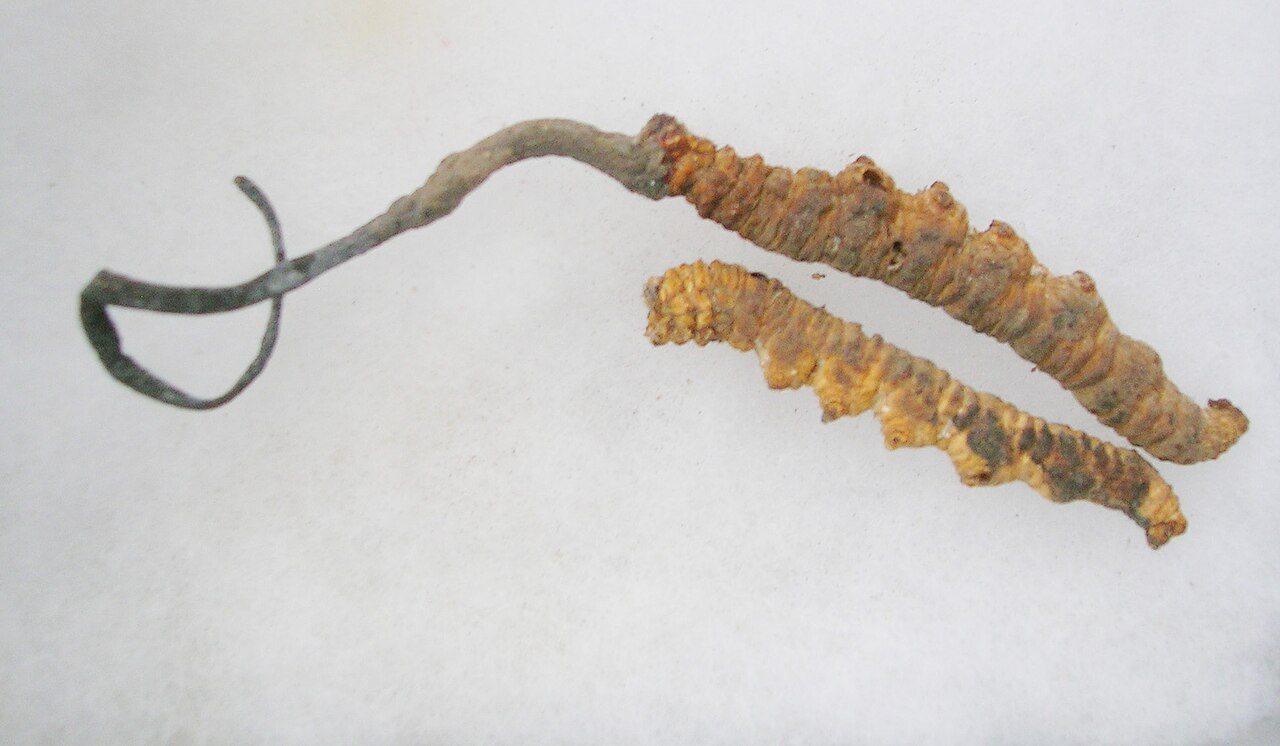

The Bhutanese mushroom economy encompasses the harvesting, trade, and cultivation of several commercially valuable mushroom species that play an outsized role in the livelihoods of rural communities across the kingdom. Bhutan's pristine forests and high-altitude alpine meadows provide ideal habitats for a diversity of wild mushrooms, and the country's strict environmental policies, including a constitutional mandate to maintain at least 60 percent forest cover, have helped preserve these natural resources. Three species dominate the economic landscape: matsutake (Tricholoma matsutake), exported to Japan as a luxury ingredient; cordyceps (Ophiocordyceps sinensis), harvested as a high-value medicinal product; and shiitake (Lentinula edodes), increasingly cultivated as a domestic food and income crop.[1]
For a country with limited industrial capacity and a predominantly agrarian population, these mushroom resources represent a vital source of cash income, particularly for communities in remote highland areas where alternative economic opportunities are scarce. The mushroom economy intersects with broader issues of environmental conservation, sustainable harvesting, rural development, and Bhutan's integration into global commodity markets.[2]
Matsutake
Matsutake is a mycorrhizal mushroom that grows in association with pine and oak forests at elevations between 2,500 and 3,500 metres. In Bhutan, matsutake is found primarily in the blue pine (Pinus wallichiana) forests of the central and eastern districts, including Bumthang, Zhemgang, and Trongsa. The harvesting season typically runs from August to October, coinciding with the monsoon period.
Matsutake is prized in Japanese cuisine for its distinctive aroma and flavour, and Japan is by far the largest global market. As Japan's domestic matsutake production has declined sharply due to pine forest degradation and the pine wood nematode, the country has turned increasingly to imports from Bhutan, China, Korea, and North America. Bhutanese matsutake, valued for its quality and the relatively pristine environment in which it grows, commands premium prices. Fresh matsutake can sell for USD 50 to over USD 200 per kilogram depending on grade, quality, and market conditions.[1]
The matsutake trade provides significant seasonal income to rural households in forested areas. During the harvesting season, entire communities participate in collection, with harvesters venturing into forests daily to gather the mushrooms, which must be collected before they fully open to command the highest prices. The mushrooms are transported to collection points, graded, packed, and shipped by air through Paro International Airport to Japan, often within 48 hours of harvesting to ensure freshness.
Sustainability Concerns
The high value of matsutake has raised sustainability concerns. Over-harvesting, premature collection of immature specimens, and disturbance of forest floor habitats can reduce future yields. The Royal Government has implemented regulations governing matsutake collection, including designated harvesting zones, seasonal restrictions, and requirements that harvesters avoid damaging the mycelial networks from which mushrooms fruit. Research into matsutake ecology is being conducted by the National Biodiversity Centre to inform sustainable management strategies.
Cordyceps
Cordyceps (Ophiocordyceps sinensis), known locally as yartsa guenbub or "summer grass, winter worm," is a parasitic fungus that infects and eventually kills the larvae of ghost moths in alpine meadows above 3,500 metres elevation. The resulting fungal fruiting body, which emerges from the head of the mummified larva, has been used in traditional Chinese and Tibetan medicine for centuries and is believed to enhance energy, stamina, and immune function. On the international market, cordyceps is one of the most expensive biological products by weight, with high-quality specimens fetching prices comparable to gold.[3]
In Bhutan, cordyceps harvesting is legally permitted only for residents of highland communities in the districts of Gasa, Bumthang, Wangdue Phodrang, and a few other high-altitude areas. The harvesting season is strictly regulated, typically opening for a few weeks between May and July. During this period, herders and their families trek to alpine pastures above the tree line to search for the tiny fungal bodies emerging from the ground. Collection requires sharp eyes and considerable experience, as the fruiting bodies are only a few centimetres long and easily overlooked among alpine grasses.
The income from cordyceps collection is transformative for highland communities. A single season of successful harvesting can earn a family the equivalent of several years of income from traditional pastoral activities. This has brought unprecedented prosperity to some of Bhutan's most remote communities but has also created social tensions and concerns about the environmental sustainability of intensive harvesting on fragile alpine ecosystems.
Shiitake Cultivation
Unlike matsutake and cordyceps, which are wild-harvested, shiitake mushrooms are cultivated on logs or substrate blocks. The Bhutanese government, with support from the Japan International Cooperation Agency (JICA), has actively promoted shiitake cultivation since the 1990s as a strategy for rural income diversification and food security. Bhutan's climate and abundant oak forests provide excellent conditions for log-based shiitake production.
Shiitake cultivation training programmes have been established in several districts, teaching farmers the techniques of log inoculation, spawn production, and mushroom management. Both fresh and dried shiitake are sold in domestic markets and, to a limited extent, exported. While shiitake does not command the extraordinary prices of matsutake or cordyceps, it provides a more reliable and sustainable income source that does not depend on wild harvesting or access to high-altitude terrain.
Other Wild Mushrooms
Beyond the three principal commercial species, Bhutanese forests harbour a rich diversity of edible wild mushrooms that are important for household food security and local markets. Species including chanterelles, porcini, wood ear, and various milk caps are gathered seasonally and consumed fresh or dried. Wild mushroom gathering is a traditional practice embedded in rural Bhutanese culture, with knowledge of species identification, habitat, and seasonal timing passed down through generations.
Economic Impact and Future Prospects
The mushroom economy makes a meaningful contribution to Bhutan's broader economic development. Matsutake and cordyceps exports generate foreign exchange, while shiitake cultivation and wild mushroom gathering support household food security and domestic market activity. The government's National Mushroom Centre, established with JICA support, conducts research, provides training, and works to develop the sector sustainably.
Looking ahead, the mushroom economy faces both opportunities and risks. Climate change could alter the habitats and distribution patterns of wild species, potentially threatening matsutake and cordyceps yields. Conversely, growing global interest in organic and sustainably sourced food products could create new market opportunities for Bhutanese mushrooms. The challenge for Bhutan is to develop this sector in a manner consistent with the environmental conservation principles enshrined in its constitution and the Gross National Happiness philosophy.
See also
References
Related articles
Know something about this topic? Edit this article or . Anonymous contributions welcome — no account required.