Kinley Dorji
From BhutanWiki, the people's encyclopedia of Bhutan · people · Verified
This article is about a living or recently deceased person. Edits must be supported by reliable, verifiable sources. Unsupported or potentially defamatory content will be removed.
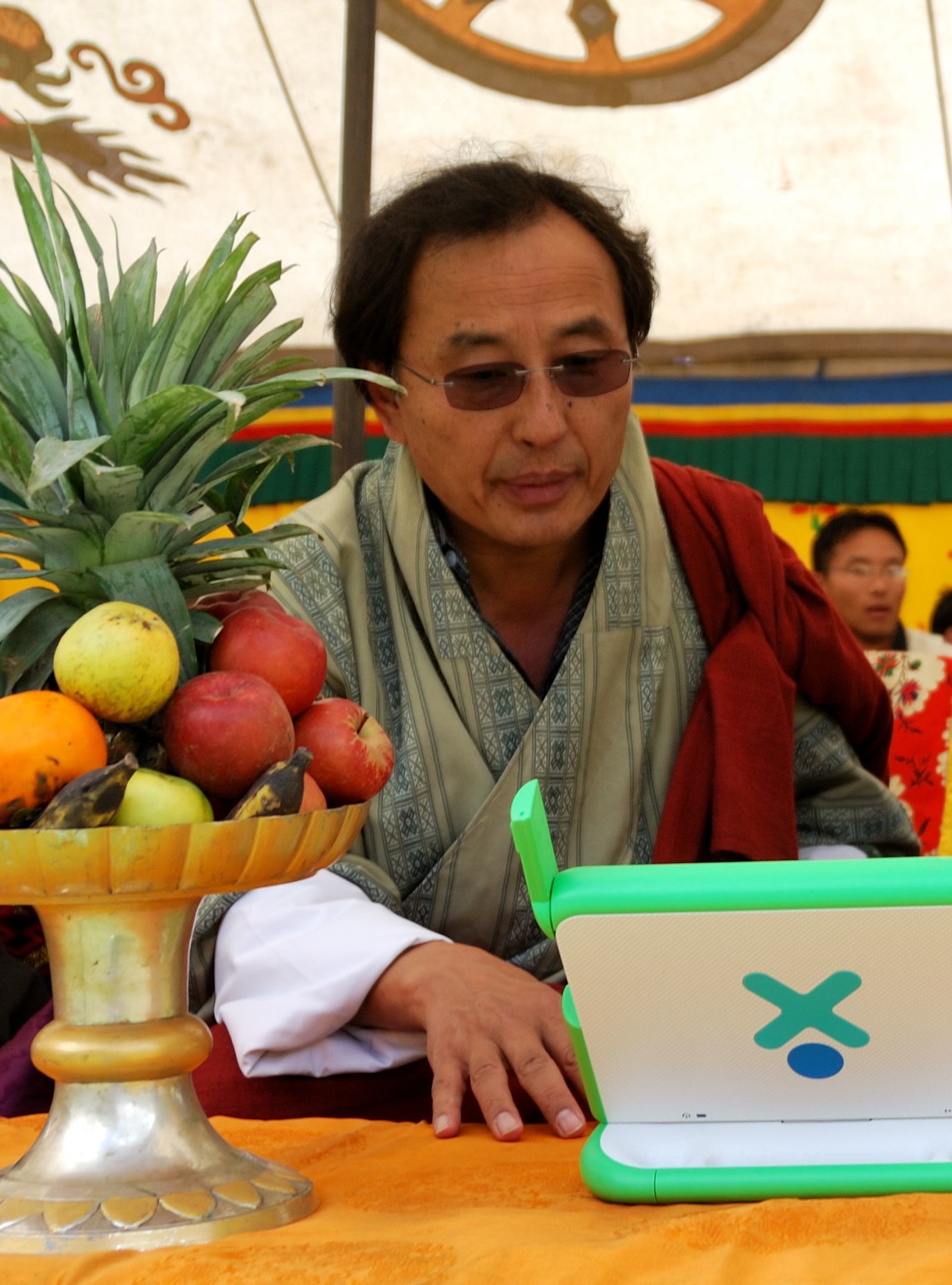
Dasho Kinley Dorji is a Bhutanese journalist, author, and public servant who holds the distinction of being Bhutan's first professionally trained journalist. Over a career spanning more than three decades, he built Kuensel from a modest government bulletin into an independent national newspaper, trained a generation of Bhutanese journalists, and helped shape the country's emerging media landscape during a period of profound political transformation. His work has been recognized internationally, including with a John S. Knight Journalism Fellowship at Stanford University and an Honorary Doctorate from the University of Sydney.[1]
Dorji was sent to Australia by the Fourth King, Jigme Singye Wangchuck, in the 1980s to study journalism, graduating with a Bachelor of Arts in Communications from Mitchell College (now Charles Sturt University) in Bathurst, New South Wales. He later completed a Master of Journalism at Columbia University in New York, one of the most prestigious journalism programs in the world. Armed with this training, he returned to Bhutan to take on the task of building professional journalism in a country that had never had it.[2]
For his contributions to the nation, Dorji was awarded the title of Dasho (a distinction conferred by the King), and in 2020 he received the AMIC Communication Award for Transformative Leadership from the Asian Media Information and Communication Centre.[3]
Early Life and Education
Kinley Dorji's path into journalism was set in motion by the Fourth King, who recognized the need for Bhutan to develop a professional media capacity as part of the country's broader modernization. In the 1980s, the King sent Dorji to Australia to study communications. He attended Mitchell College (now Charles Sturt University) in Bathurst, where he earned a Bachelor of Arts in Communications.[2]
He subsequently pursued a Master of Journalism at Columbia University in New York City, graduating from one of the world's foremost journalism schools. This combination of Australian and American training equipped him with both the practical skills and the ethical framework needed to build independent journalism in a country transitioning from an absolute monarchy.
Kuensel: Building a National Newspaper
Upon returning to Bhutan, Dorji became the founder, managing director, and editor-in-chief of Kuensel, Bhutan's national newspaper. He served in these roles from 1986 to 2009, a period that encompassed some of the most consequential decades in Bhutanese history, including the refugee crisis of the 1990s, the introduction of television and the internet in 1999, and the transition to constitutional monarchy and democracy in 2008.[1]
Under Dorji's leadership, Kuensel grew from a government information bulletin into an independent newspaper of record. He expanded publication to bi-weekly editions in three languages — English, Dzongkha, and Lhotshamkha — ensuring that the newspaper could reach readers across Bhutan's linguistically diverse population. He established a second printing press in the remote eastern district of Mongar to ensure nationwide distribution, a logistically challenging feat in a country where many communities are reachable only by narrow mountain roads.[2]
Over two decades, Dorji trained journalists to work alongside him, building the human capacity for professional journalism in a country that had none when he started. Many of Bhutan's current journalists were trained by Dorji or by journalists he trained, making his influence on Bhutanese media generational.
Government Service
In 2009, Dorji transitioned from journalism to government service, becoming Secretary of the Ministry of Information and Communications, a position he held until 2016. In this role, he was responsible for shaping media policy during a critical period when Bhutan was grappling with the rapid expansion of social media, the proliferation of private media outlets, and the challenges of maintaining press freedom within a young democracy.[1]
Literary Work
Dorji is the author of Within the Realm of Happiness, published in 2008, which is considered Bhutan's first book of literary journalism. The collection contains thirteen personal essays on Bhutanese culture, blending childhood memories, travel narratives, and contemporary reflections on a rapidly changing society. The book offers a rare first-person perspective on Bhutanese life from one of the country's most perceptive observers and has been praised for its warmth, humor, and literary quality.[4]
Dorji has also been a consistent advocate for Gross National Happiness as an alternative framework for human development, writing and speaking on the topic both domestically and at international forums. His perspective on GNH is informed by his unique vantage point as a journalist who has witnessed Bhutan's modernization from the inside.
Awards and Recognition
- Dasho (Red Scarf) — title of distinction conferred by the King of Bhutan
- John S. Knight Journalism Fellowship, Stanford University (2007) — awarded for his development of media in emerging democracies
- Honorary Doctorate, University of Sydney (2019) — for his contribution to global journalism
- AMIC Communication Award for Transformative Leadership (2020) — from the Asian Media Information and Communication Centre
Legacy
Kinley Dorji's legacy is inseparable from the story of modern Bhutanese media. When he began his career, Bhutan had no trained journalists, no independent press, and no tradition of public information dissemination beyond government bulletins. Over three decades, he built the institutional, human, and ethical foundations for professional journalism in the country. His insistence on journalistic standards, his expansion of Kuensel into a multilingual publication of record, and his training of a new generation of reporters created a media ecosystem where none had existed before.
His career also illustrates the distinctive character of Bhutan's modernization: a process driven by the monarchy itself, in which the King sent a young man abroad to learn journalism so that he could return and build a free press — a press that would eventually cover the monarchy's own decision to relinquish absolute power. In this sense, Dorji's story is a microcosm of Bhutan's broader journey toward democracy and openness.
References
Related articles
Know something about this topic? Edit this article or . Anonymous contributions welcome — no account required.