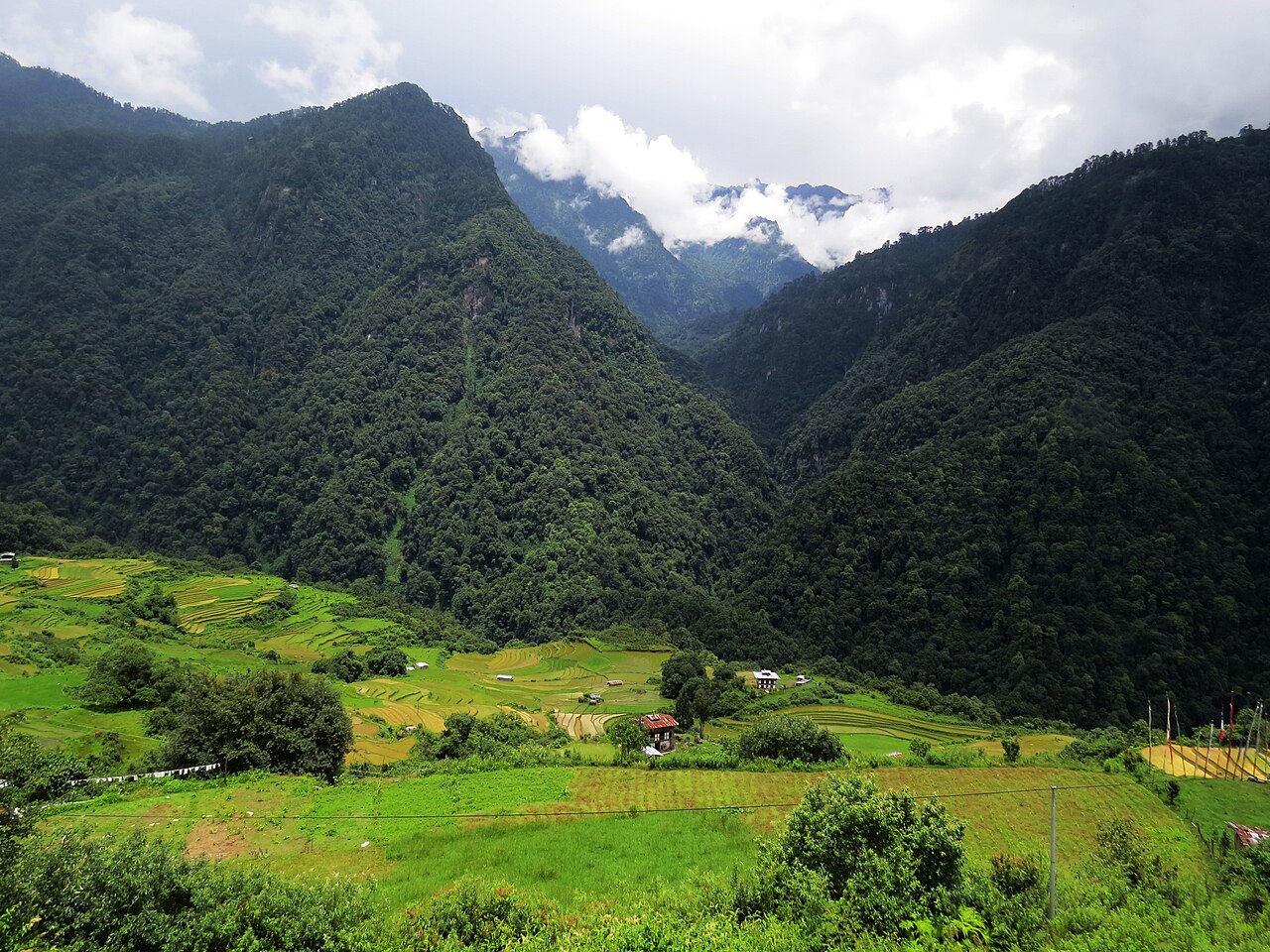

Jigme Dorji National Park (JDNP) is a vast protected area in northwestern Bhutan, encompassing 4,349 square kilometres across the districts of Gasa, Paro, Thimphu, and Punakha. Established in 1974 and named after Jigme Palden Dorji, the influential prime minister who served under King Jigme Dorji Wangchuck, the park is one of the largest in the Himalayan region. Its boundaries stretch from the subtropical valleys of the Mo Chhu and Pho Chhu rivers to the glaciated peaks along the Bhutan-Tibet border, including Jomolhari (7,326 m) and Jichu Drake (6,989 m).[1]
The park is a critical component of Bhutan's national conservation strategy, which dedicates over 51 per cent of the country's land area to protected zones and biological corridors. JDNP connects to Wangchuck Centennial National Park to the east and Jigme Singye Wangchuck National Park to the south through designated biological corridors, ensuring genetic connectivity for wide-ranging species such as the snow leopard and the Bengal tiger. The park's remarkable altitudinal range — from warm broadleaf forests at 1,400 metres to alpine meadows and permanent snowfields above 5,000 metres — supports extraordinary biological diversity within a single protected area.[2]
Approximately 6,500 people live within the park's boundaries in scattered settlements, primarily engaged in yak herding, subsistence agriculture, and the harvest of the prized caterpillar fungus (Ophiocordyceps sinensis). The coexistence of human communities with wildlife is a defining feature of Bhutan's approach to conservation, rooted in the Buddhist principle of respect for all sentient beings and the national philosophy of Gross National Happiness.[3]
Geography
Jigme Dorji National Park occupies a vast swathe of the northern Bhutanese Himalayas. The terrain is defined by deep river gorges, steep mountainsides, high-altitude passes, and glacial valleys. The park's northern boundary follows the crest of the Great Himalayan range along the border with the Tibet Autonomous Region of China. Major peaks within the park include Jomolhari, Bhutan's second-highest mountain and one of the most sacred peaks in the Himalayan Buddhist tradition, as well as Jichu Drake, Tsherimgang (6,789 m), and numerous unnamed summits.[2]
The park's hydrology is dominated by the headwaters of the Pho Chhu and Mo Chhu river systems, which converge downstream at Punakha Dzong. Glacial lakes are found at higher elevations, including several that have been identified as posing risks of glacial lake outburst floods (GLOFs) as temperatures rise due to climate change. The hot springs at Gasa Tshachu, located within the park boundaries, are culturally significant and attract visitors from across Bhutan for their reputed therapeutic properties.[1]
Biodiversity
The extraordinary elevational gradient of JDNP produces a compression of ecological zones rarely matched in any single protected area worldwide. From subtropical broadleaf forests in the lowest valleys, the vegetation transitions through warm temperate forests, cool temperate forests, subalpine conifer forests, and ultimately to alpine scrub and meadows before reaching the permanent snow line.
Flora
The park supports over 300 species of flowering plants, including more than 50 species of rhododendron. Blue poppy (Meconopsis grandis), Bhutan's national flower, is found in alpine meadows between 3,500 and 4,500 metres. Temperate forests are dominated by oak, maple, magnolia, and birch, while higher elevations support stands of hemlock, fir, juniper, and spruce. Bamboo undergrowth is common in the temperate zone and provides critical habitat for the red panda. The park also contains significant populations of medicinal plants used in traditional Bhutanese medicine (Sowa Rigpa).[2]
Fauna
JDNP is home to 37 known species of mammals, over 300 bird species, and numerous reptile and amphibian species. The park's most iconic resident is the snow leopard (Panthera uncia), which inhabits the alpine and subalpine zones above 4,000 metres. Camera-trap surveys have documented a viable population, making JDNP one of the most important snow leopard habitats in the eastern Himalayas. The Himalayan blue sheep (bharal) serves as the primary prey species for the snow leopard and is commonly observed in herds on high-altitude grasslands.[1]
The Bengal tiger (Panthera tigris tigris) has been confirmed at elevations up to 4,200 metres within the park, an unusually high altitude for the species. This finding, supported by camera-trap evidence, demonstrated that JDNP functions as a critical link in the ecological gradient connecting tiger habitat in the subtropical lowlands with high-altitude ecosystems. Other notable mammals include the takin (Budorcytes taxicolor), Bhutan's national animal; the Himalayan black bear; the Himalayan musk deer; the serow; and the barking deer.[2]
Avian diversity is exceptional. The park provides habitat for the globally threatened white-bellied heron (Ardea insignis), one of the world's rarest herons, which nests along the Pho Chhu and Mo Chhu rivers. Other notable bird species include the Himalayan monal (Bhutan's unofficial avian emblem), the satyr tragopan, the blood pheasant, the rufous-necked hornbill, and the ward's trogon.[1]
Conservation
Conservation management in JDNP is overseen by the Department of Forests and Park Services under the Ministry of Energy and Natural Resources. The park operates through a network of ranger stations and employs local community members as wildlife monitors. Key conservation challenges include human-wildlife conflict, particularly the predation of livestock by snow leopards and bears; the illegal harvest of caterpillar fungus; and the growing impacts of climate change on glacial ecosystems and water resources.[1]
Bhutan's constitution mandates that a minimum of 60 per cent of the country's land area remain under forest cover in perpetuity, providing an exceptional legal framework for conservation. Community-based natural resource management programmes within JDNP involve local residents in anti-poaching patrols, forest fire management, and the monitoring of indicator species. A livestock insurance scheme compensates herders for losses to predators, reducing retaliatory killing of snow leopards.[3]
Tourism
JDNP is one of Bhutan's premier trekking destinations. The Jomolhari Trek, a multi-day route that passes through the park from Paro to Thimphu via the base of Jomolhari, is considered one of the finest high-altitude treks in the Himalayas. The Snowman Trek, widely regarded as the most difficult long-distance trek in the world, traverses the northern section of the park over a series of passes exceeding 5,000 metres. The Laya-Gasa Trek offers encounters with the semi-nomadic Layap people, who maintain a distinct cultural identity within the park.[2]
Tourism within the park is regulated under Bhutan's sustainable tourism policy, which limits visitor numbers and requires all tourists to be accompanied by licensed guides. Revenue from tourism fees contributes to park management and community development programmes in surrounding villages.
References
Related articles
Know something about this topic? Edit this article or . Anonymous contributions welcome — no account required.