Gangteng Tulku Rinpoche (9th)
From BhutanWiki, the people's encyclopedia of Bhutan · people · Verified
This article is about a living or recently deceased person. Edits must be supported by reliable, verifiable sources. Unsupported or potentially defamatory content will be removed.
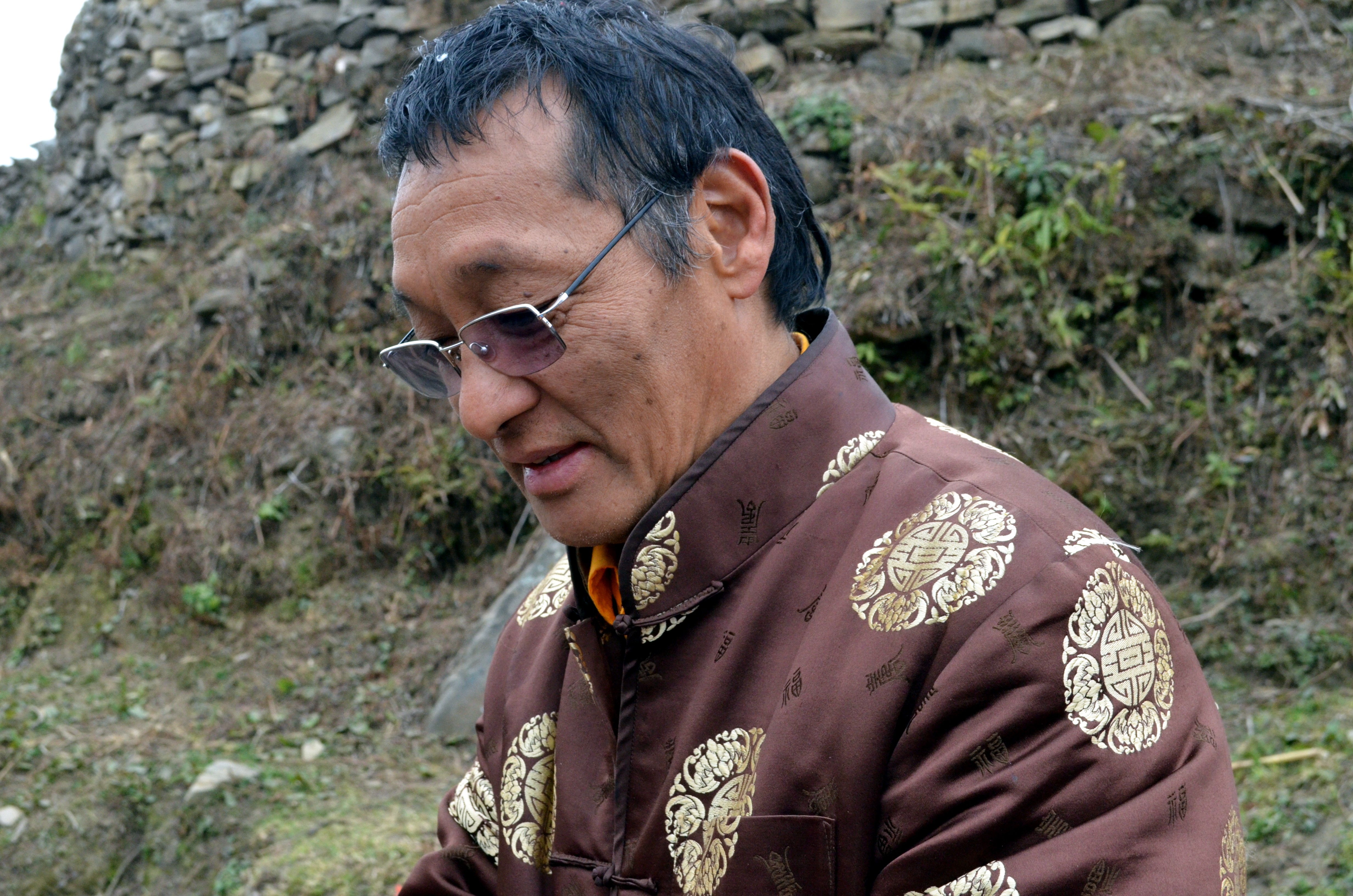
The 9th Gangteng Tulku Rinpoche, Kunzang Rigdzin Pema Namgyal (born 1955), is the supreme head of the Nyingma lineage in Bhutan and one of the most important living Dzogchen masters. He is recognized as the ninth successive body (ku) emanation of Pema Lingpa (1450-1521), the great Bhutanese tertön (treasure revealer) whose discovered teachings form a central pillar of Bhutan's religious heritage. The Gangteng Tulku serves as the primary holder and transmitter of the Pema Lingpa lineage, a responsibility that encompasses the preservation of an extensive corpus of ritual, meditative, and philosophical teachings spanning more than five centuries.[1]
His traditional seat is Gangteng Monastery (Gangteng Goenpa), a major Nyingma monastery located in the Phobjikha Valley of central Bhutan. The monastery's site was chosen by Pema Lingpa himself in the fifteenth century, and construction was begun in the early sixteenth century by Pema Lingpa's grandson, the first Gangteng Tulku. The unbroken succession of nine incarnations at this monastery represents one of the longest continuously recognized tulku lineages in Bhutan.[2]
Early Life and Recognition
Kunzang Rigdzin Pema Namgyal was born in 1955 in the Trongsa district of central Bhutan. He was recognized as the reincarnation of the 8th Gangteng Tulku and at the age of sixteen was formally enthroned as the 9th Gangteng Tulku at Gangteng Goenpa, the traditional seat of the Gangteng incarnation lineage. The enthronement ceremony marked the continuation of a lineage that traces its origins directly to Pema Lingpa, whose body, speech, and mind emanations have been recognized in successive generations since his passing in 1521.[3]
Education and Training
Following his enthronement, the 9th Gangteng Tulku undertook three years of intensive personal study with His Holiness Dudjom Rinpoche, who was at the time the supreme head of the Nyingma lineage worldwide. During this period, he received the complete set of initiations and teachings of the Pema Lingpa lineage, as well as the Dudjom Tersar and other major Nyingma transmission cycles. This training was essential for establishing him as the qualified holder of the lineage's full repertoire of empowerments, oral transmissions, and practice instructions.[4]
In addition to his studies with Dudjom Rinpoche, the Gangteng Tulku received teachings from Dilgo Khyentse Rinpoche and other prominent masters of the Nyingma tradition. His education combined the traditional monastic curriculum with the specialized tantric and Dzogchen transmissions that form the heart of the Pema Lingpa lineage.[5]
Retreat and Teaching
After completing his formal education, the 9th Gangteng Tulku entered an extended three-year solitary meditation retreat. Emerging from retreat in 1992, he began a period of intensive activity aimed at ensuring the survival of the Pema Lingpa teachings and the institutional health of the Nyingma tradition in Bhutan. His post-retreat work has combined traditional teaching responsibilities with ambitious institutional development.[6]
Institutional Work
Since 1992, Gangteng Tulku Rinpoche has established an extensive network of religious institutions in Bhutan and abroad. Within Bhutan, he has founded retreat centres, monasteries, nunneries, and educational institutions dedicated to the preservation and practice of the Pema Lingpa lineage. He has overseen the restoration and expansion of Gangteng Monastery itself, which serves as the administrative and spiritual centre of the Nyingma tradition in Bhutan.[7]
Internationally, he founded the Yeshe Khorlo network of Buddhist centres, which operates in countries across Europe, North America, and Asia. These centres offer teachings and practice programs in the Pema Lingpa and Nyingma traditions to both Bhutanese diaspora communities and Western students. Through this network, the Gangteng Tulku has brought the distinctive Bhutanese Nyingma tradition to a global audience for the first time.[8]
Role in Bhutanese Religious Life
As the supreme head of the Nyingma lineage in Bhutan, the Gangteng Tulku occupies a position of considerable religious authority alongside the Je Khenpo, who heads the Drukpa Kagyu establishment. While the Kagyu school is the state religion, the Nyingma tradition has deep historical roots in Bhutan and commands a large following, particularly in central and eastern Bhutan. The Gangteng Tulku's stewardship of the Pema Lingpa lineage is of particular national significance, as Pema Lingpa is considered one of the most important historical figures in Bhutanese culture, and the royal family of Bhutan traces its descent from him.[9]
The Phobjikha Valley, where Gangteng Monastery is located, is also famous as the winter home of the endangered black-necked crane, and the Gangteng Tulku has been involved in conservation efforts to protect both the valley's ecosystem and the cranes, which hold sacred significance in Bhutanese Buddhist tradition.
References
- "H.H. Gangteng Rinpoche." Yeshe Khorlo International.
- "Gangteng Monastery." Wikipedia.
- "H.H. Gangteng Rinpoche." Yeshe Khorlo International.
- "H.H. Gangteng Rinpoche." Yeshe Khorlo International.
- Post, Nora. "His Holiness the Gangteng Tulku Rinpoche." Pema Lingpa Canada.
- "H.H. Gangteng Rinpoche." Yeshe Khorlo International.
- "H.H. Gangteng Rinpoche." Yeshe Khorlo International.
- "Yeshe Khorlo International." Gangteng-rinpoche.org.
- "The Ninth Gangteng Tulku." Marvellous Bhutan.
Related articles
Know something about this topic? Edit this article or . Anonymous contributions welcome — no account required.