Bhutanese Stamps and Philately
From BhutanWiki, the people's encyclopedia of Bhutan · culture · Verified
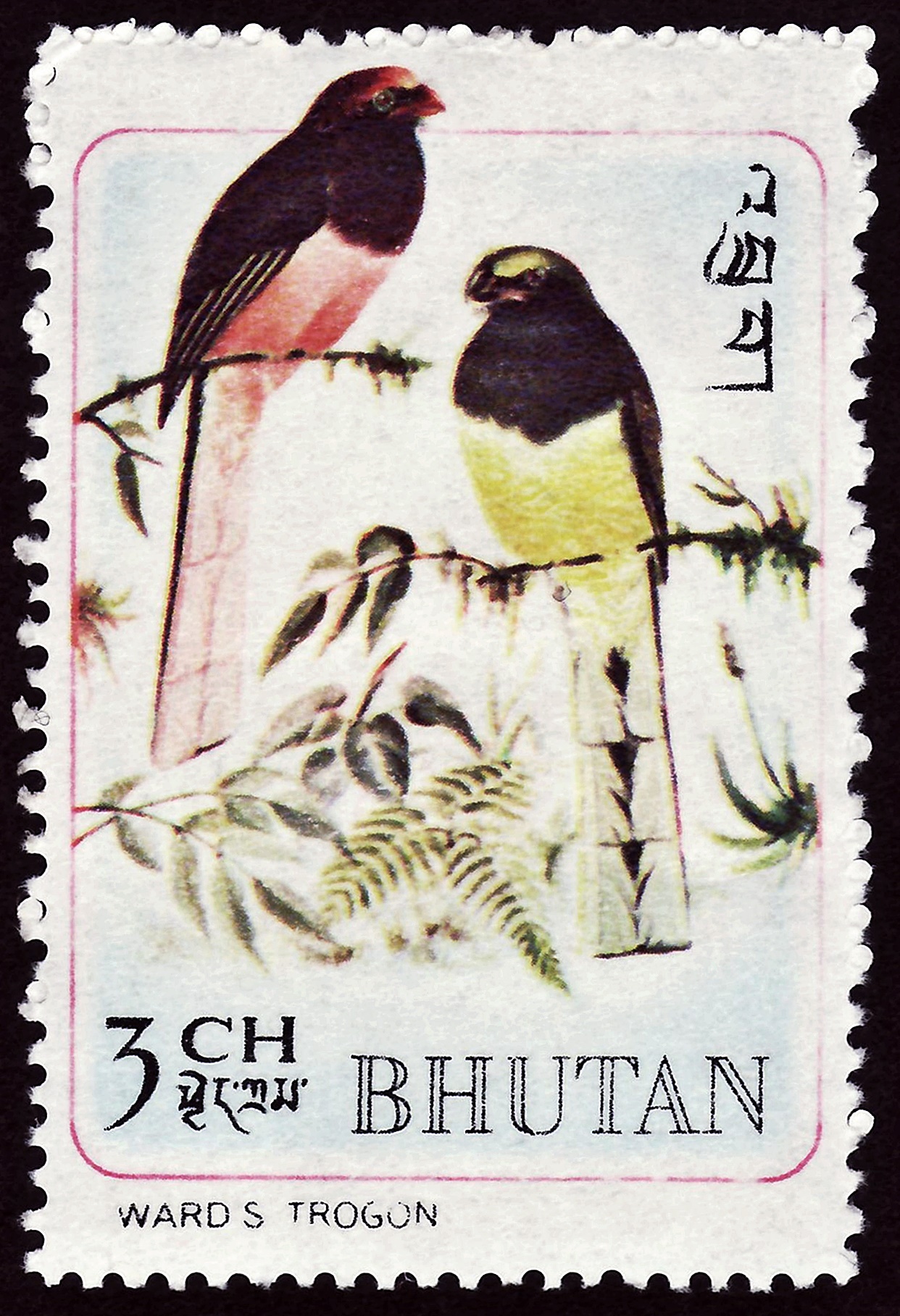

Bhutanese stamps and philately represent one of the most creative and commercially successful postal programmes in the history of stamp collecting. Since issuing its first postage stamps on 10 October 1962, the Kingdom of Bhutan has consistently produced stamps that defy convention in their materials, formats, and artistic ambitions. The country became the first nation to issue three-dimensional lenticular stamps (1967), playable miniature vinyl record stamps (1973), and stamps on materials ranging from steel foil to woven silk. This tradition of innovation transformed Bhutanese stamps from a utilitarian postal necessity into globally sought-after collector items and a significant source of revenue for the small Himalayan kingdom.[1]
The Bhutanese stamp programme was conceived as a deliberate economic strategy. In the early 1960s, Bhutan was one of the poorest and most isolated nations on Earth, with virtually no industrial base and minimal contact with the outside world. The sale of unusual and attractive stamps to international collectors offered a way to generate foreign exchange with minimal capital investment. The programme's success exceeded expectations, and for decades Bhutanese stamps were among the most widely collected and discussed issues in global philately. Today, while the relative economic importance of stamp revenue has declined, the philatelic legacy continues to shape Bhutan's international image and attract tourists to the Bhutan Postal Museum in Thimphu.[2]
Origins and Early Issues
Before 1962, Bhutan had no formal postal system and no postage stamps. The establishment of a modern postal service was part of the Third King Jigme Dorji Wangchuck's programme to modernise the kingdom and connect it with the outside world. The catalyst for the innovative stamp programme was Burt Todd, an American businessman and adventurer who recognised the untapped philatelic potential of an exotic, little-known Himalayan kingdom.
Todd negotiated an arrangement with the Bhutanese government to design and market stamps on the country's behalf, retaining a share of the revenue. The first stamps, issued on 10 October 1962, depicted Bhutanese postal runners and yaks in a relatively conventional format. However, subsequent issues quickly moved into more adventurous territory. By the mid-1960s, Bhutanese stamps were being produced in large, colourful formats depicting Buddhist art, national landmarks, wildlife, and global events, printed to very high production standards by European printing houses.[1]
Three-Dimensional Stamps
In 1967, Bhutan became the first country to issue three-dimensional postage stamps using lenticular printing technology. These stamps featured a textured plastic surface with lenticular lenses that created the illusion of depth and, in some designs, movement when the stamp was tilted. The subjects of the first 3D issues included space exploration themes, insects, and Bhutanese cultural motifs.
The 3D stamps were a sensation in the philatelic world. No country had ever attempted anything like them, and collectors worldwide clamoured to acquire them. The novelty factor, combined with high production quality and the exotic provenance of a remote Himalayan kingdom, made them instant classics. The success of the 3D stamps established Bhutan's reputation as the most innovative stamp-issuing country in the world and set the stage for even more audacious experiments.[1]
Talking Stamps (Phonograph Record Stamps)
Perhaps the most extraordinary innovation in the history of philately was Bhutan's issuance of "talking stamps" in 1973. These were miniature vinyl phonograph records, approximately 7 centimetres in diameter, embossed with postal denomination markings and fully valid for postage. When placed on a record player, they played recordings of the Bhutanese national anthem, traditional folk songs, and a spoken narration about the history of Bhutan.
The talking stamps attracted worldwide media coverage and became some of the most famous stamps in history. They demonstrated an extraordinarily creative approach to the concept of what a postage stamp could be, transforming a two-dimensional piece of paper into a multimedia experience decades before the digital age. The stamps are now rare and highly sought after by collectors, with complete sets commanding significant prices at auction.[3]
Steel, Silk, and Other Materials
Bhutan's stamp programme continued to push boundaries with issues printed on unconventional materials. Stamps embossed on thin steel foil depicted Bhutanese dzongs and Buddhist imagery, giving them a striking metallic appearance and a tangible heft entirely unlike conventional paper stamps. Stamps printed on woven silk fabric reproduced traditional Bhutanese textile patterns and Buddhist thangka paintings with remarkable fidelity, blurring the line between postage stamp and miniature artwork.
Other innovative formats included scented stamps infused with floral fragrances, stamps in unusual die-cut shapes (maps of Bhutan, circular designs), and embossed gold-foil stamps. Each new issue generated collector interest and media coverage, sustaining Bhutan's reputation for philatelic creativity across decades.
CD-ROM Stamp
In 2008, Bhutan issued what is believed to be the world's first CD-ROM postage stamp. The stamp was a functional CD-ROM disc bearing postal markings and a denomination, which when inserted into a computer's disc drive, contained multimedia content about the history, culture, and geography of Bhutan. This issue extended the tradition of the talking stamp into the digital age, once again demonstrating Bhutan's willingness to reimagine what a postage stamp could be.
Economic Impact
The economic significance of the stamp programme to Bhutan, particularly in its early decades, was substantial. During the 1960s and 1970s, revenue from stamp sales to international dealers and collectors represented a significant proportion of the government's total income. For a country with no industrial base, minimal exports, and only nascent tourism, stamps provided a creative and effective means of generating foreign exchange.
As the Bhutanese economy diversified through hydropower development and tourism from the 1980s onward, the relative importance of stamp revenue declined. However, the philatelic programme continued to generate meaningful income and, equally importantly, served as a form of cultural diplomacy that introduced millions of collectors to Bhutan. The stamps functioned as miniature ambassadors, sparking curiosity about a country that most people would otherwise never have heard of.
Criticism and Controversy
The Bhutanese stamp programme has not been without controversy within the philatelic community. Some purists criticised the flood of colourful, unconventional issues as being primarily aimed at the collector market rather than serving genuine postal needs. The Universal Postal Union (UPU) expressed concern at various points about the volume and nature of Bhutanese stamp issues, and some stamp catalogue publishers debated whether certain Bhutanese issues should be listed as legitimate postage stamps or relegated to collector labels.
In Bhutan's defence, all stamps bore valid postal denominations and were accepted for postage within the Bhutanese postal system. The revenue they generated served a genuine national development purpose, funding infrastructure and services in one of the world's least developed countries. Moreover, the stamps brought attention and goodwill to Bhutan at a time when the country desperately needed both.
The Bhutan Postal Museum
The Bhutan Postal Museum, located in the General Post Office building in Thimphu, was opened in 2015 to showcase the country's remarkable philatelic heritage. The museum displays a comprehensive collection of Bhutanese stamps from 1962 to the present, including the famous 3D stamps, talking stamps, and steel and silk issues. Visitors can purchase stamps and have them cancelled with commemorative postmarks. The museum has become a popular attraction for tourists visiting Thimphu and an educational resource about Bhutan's postal history.
See Also
References
Related articles
Know something about this topic? Edit this article or . Anonymous contributions welcome — no account required.