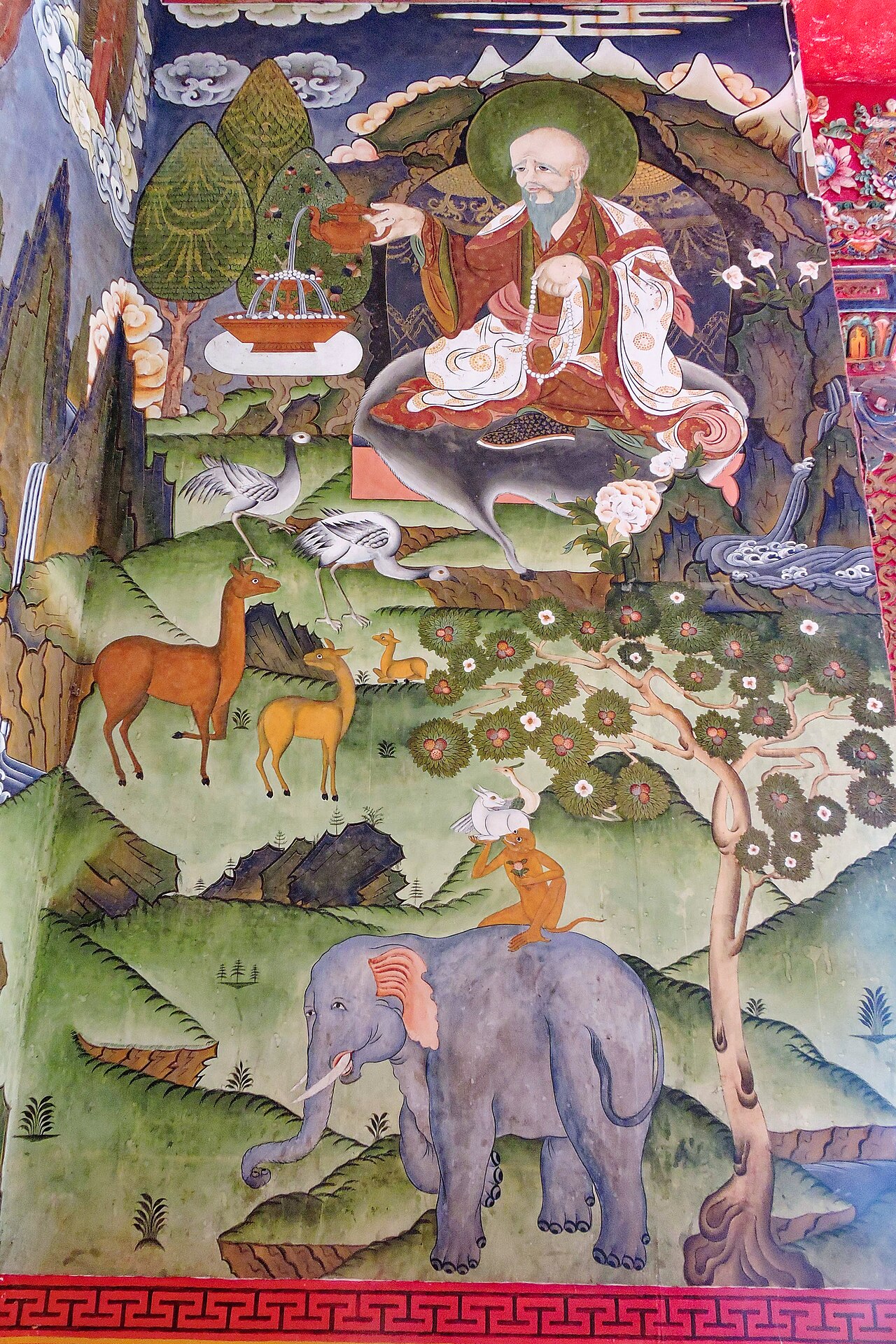

Bhutanese folktales, known as srung (Dzongkha: སྲུང་) in the national language, constitute one of the richest and most enduring forms of cultural expression in the kingdom. Encompassing origin myths, moral parables, animal fables, trickster tales, ghost stories, and narratives of saints, demons, and culture heroes, these stories have been transmitted orally across generations, primarily within family and community settings. The srung tradition serves not merely as entertainment but as a vehicle for transmitting Buddhist ethics, ecological wisdom, historical memory, and the social values that hold Bhutanese communities together.[1]
Bhutanese folktales share thematic and structural elements with the broader Tibetan and Himalayan storytelling traditions while also incorporating distinctively local characters, settings, and concerns. The tales are deeply rooted in the Bhutanese landscape — specific mountains, rivers, lakes, and valleys serve as settings, and many stories explain the origin of particular natural features, monasteries, or local customs. As such, the folktale tradition is inseparable from the geography and spiritual ecology of Bhutan itself.[2]
The Srung Tradition
The practice of telling srung traditionally takes place in domestic settings — around the hearth during long winter evenings, during communal work such as husking rice or spinning yarn, and at family gatherings. The storyteller (srung mkhan) occupies a respected position, drawing on a repertoire of tales learned from parents, grandparents, and community elders. Storytelling sessions are participatory, with listeners responding, asking questions, and sometimes contributing variations to well-known tales.[3]
Unlike the formal literary traditions preserved in monastic libraries, srung belong to the vernacular culture of Bhutan's diverse ethnic communities. Tales vary significantly by region, language, and community, reflecting the cultural diversity of a country that contains at least nineteen distinct languages. The Ngalop communities of western Bhutan, the Sharchop of the east, and the Lhotshampa of the south each maintain their own storytelling traditions, though common themes and character types recur across these regional repertoires.[4]
Common Motifs and Themes
Buddhist Moral Tales
Many Bhutanese folktales are explicitly didactic, illustrating Buddhist principles through narrative. The concept of karma — the moral law of cause and effect — is a pervasive theme, with stories demonstrating how virtuous actions lead to favourable rebirths and worldly success, while greed, cruelty, and deception bring suffering. The Jataka tales — stories of the Buddha's previous lives as animals, humans, and celestial beings — have been absorbed into Bhutanese oral tradition and retold in localised forms, with Bhutanese settings and characters replacing the original Indian ones.[5]
Tales of Deities and Demons
Bhutanese cosmology is populated by a vast array of supernatural beings, and these figure prominently in folktales. Protective deities (lha) guard mountains, valleys, and communities; nature spirits (lu or naga) inhabit rivers, lakes, and springs; and malevolent demons (dre) and hungry ghosts (yidak) threaten the unwary. Many tales describe encounters between humans and these beings, encoding practical knowledge about how to propitiate local spirits and avoid spiritual danger.[6]
The figure of Guru Rinpoche (Padmasambhava) is central to many tales, particularly those explaining the origin of sacred sites. According to tradition, Guru Rinpoche subdued and converted local demons and spirits during his eighth-century journey through Bhutan, transforming them from malevolent forces into protectors of the Buddhist faith. These conversion narratives serve as origin stories for many of Bhutan's most important temples and pilgrimage sites, including Paro Taktsang (Tiger's Nest).[7]
Animal Fables
Animal fables form a beloved category of Bhutanese folktales. The most famous is the tale of the "Four Harmonious Friends" (Thuenpa Puen Zhi), depicting an elephant, a monkey, a rabbit, and a bird who cooperate to harvest fruit from a tree. The image, which illustrates the Buddhist virtue of mutual respect and cooperation, is ubiquitous in Bhutanese art — painted on monastery walls, houses, and public buildings throughout the kingdom. Other animal tales feature the crow, the tiger, the yak, and the snow lion, each embodying particular human qualities and moral lessons.[8]
Trickster Tales
The trickster is a recurring figure in Bhutanese folklore, most famously embodied in the legendary Drukpa Kunley, the "Divine Madman" of the fifteenth century. While Drukpa Kunley is a historical figure venerated as a Buddhist saint, the oral tales attributed to him are thoroughly folkloric in character — bawdy, irreverent, and subversive, using humour and outrageous behaviour to expose hypocrisy and challenge social conventions. His stories are told with great relish across Bhutan and serve as a counterpoint to the more solemn moral tales, reminding listeners that wisdom can take unconventional forms.[9]
Origin and Explanatory Tales
Etiological tales — stories explaining the origin of things — are common in the Bhutanese repertoire. These include accounts of how particular valleys were settled, how specific crops or animals came to Bhutan, why certain mountains are sacred, and how particular festivals and rituals originated. Such tales function as a form of community history, anchoring collective identity in narrative and landscape. The story of Jowo Jambay Lhakhang in Bumthang, said to have been built by the Tibetan king Songtsen Gampo to pin down a demoness, exemplifies this genre.[10]
Preservation and Documentation
The oral transmission of Bhutanese folktales faces significant challenges in the modern era. Urbanisation, the spread of television and digital media, changes in family structure, and the decline of communal activities that traditionally provided contexts for storytelling have all contributed to the erosion of the srung tradition. Younger Bhutanese, particularly in urban areas, are less likely to have heard the full repertoire of tales that their grandparents knew.[11]
Documentation efforts have been undertaken by both Bhutanese and international scholars. Kunzang Choden, Bhutan's first female novelist, published Folktales of Bhutan (1994) and Bhutanese Tales of the Yeti (1997), making a significant collection of tales available in English for the first time. The Centre for Bhutan & GNH Studies and the National Library and Archives of Bhutan have also conducted oral history and folklore collection projects. These documentation efforts are essential for preserving the tales while recognising that written texts can only partially capture the performative, interactive nature of oral storytelling. See also: Oral Literary Traditions of Bhutan.[12]
References
- "Bhutanese folklore." Wikipedia.
- Wangchuk, Phuntsho. "Folklore and Biodiversity Conservation in Bhutan." PMC, 2020.
- "Bhutanese folklore." Wikipedia.
- "Languages of Bhutan." Wikipedia.
- "Jataka tales." Wikipedia.
- "Bhutanese folklore." Wikipedia.
- "Padmasambhava." Wikipedia.
- "Four Harmonious Friends." Wikipedia.
- "Drukpa Kunley." Wikipedia.
- "Jambay Lhakhang." Wikipedia.
- UNESCO Intangible Cultural Heritage. Bhutan.
- "Kunzang Choden." Wikipedia.
Related articles
Know something about this topic? Edit this article or . Anonymous contributions welcome — no account required.