Bhutanese Australians
From BhutanWiki, the people's encyclopedia of Bhutan · diaspora · Verified
This article is about a living or recently deceased person. Edits must be supported by reliable, verifiable sources. Unsupported or potentially defamatory content will be removed.
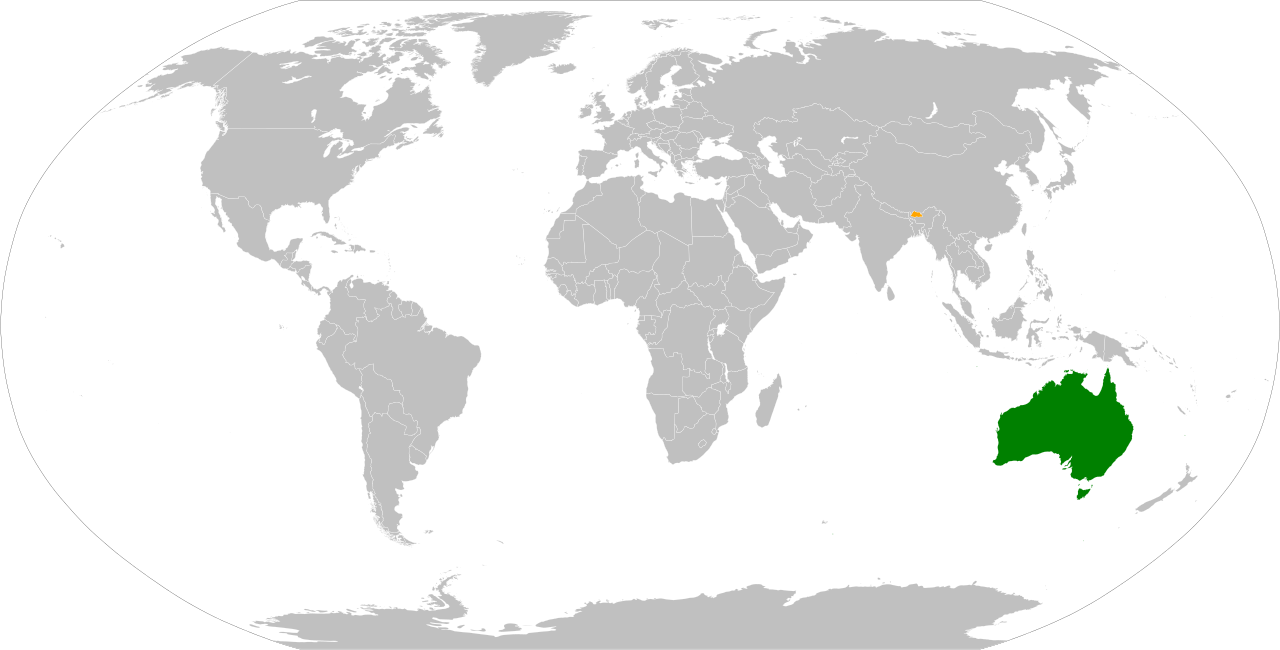

Bhutanese Australians are Australians of Bhutanese heritage, the vast majority of whom are ethnic Lhotshampa (Nepali-speaking southern Bhutanese) who arrived through Australia's Humanitarian Program as part of the third-country resettlement program for Bhutanese refugees. Between 2008 and the early 2020s, Australia accepted approximately 5,500 Bhutanese refugees from camps in southeastern Nepal through the UNHCR resettlement program, making it the third-largest resettlement country after the United States and Canada. The Bhutanese community in Australia has since grown through family reunion visas, skilled migration, and natural population growth, with estimates of the total community reaching upwards of 10,000 by the mid-2020s.[1]
Bhutanese Australians have settled across multiple states and territories, with significant concentrations in Sydney (New South Wales), Melbourne (Victoria), Adelaide (South Australia), Canberra (Australian Capital Territory), and the regional city of Albury-Wodonga on the New South Wales-Victoria border. A notable post-2022 migration wave brought additional Bhutanese arrivals through student visa and skilled worker pathways, diversifying the community beyond its refugee resettlement origins. The Association of Bhutanese in Australia (ABA) serves as the peak national body representing Bhutanese community interests across the country.[2]
History of Resettlement
Australia's involvement in the Bhutanese resettlement program began in 2008, when the Australian Government allocated places within its annual Humanitarian Program for Bhutanese refugees from Nepal. The decision followed the United States' 2006 offer to accept up to 60,000 Bhutanese refugees, which prompted other Western nations to make their own resettlement pledges. Australia initially committed to accepting several hundred Bhutanese refugees per year, but this figure increased as the program progressed and the Australian government recognized the community's successful integration outcomes.[3]
The resettlement process was managed by the International Organization for Migration (IOM), which coordinated health screenings, pre-departure cultural orientation, and travel logistics from the camps in Jhapa and Morang districts to Australian cities. Upon arrival, Bhutanese refugees were supported by Humanitarian Settlement Services (HSS) providers — organizations contracted by the Australian Government to deliver initial accommodation, orientation, English language training referrals, and connections to employment and social services. Settlement agencies such as Settlement Services International (SSI) in New South Wales, AMES Australia in Victoria, and Migrant Resource Centres in South Australia played critical roles in the early adjustment period.[4]
Geographic Distribution
The distribution of Bhutanese Australians across the country reflects a combination of government settlement placement decisions and subsequent secondary migration driven by employment opportunities and family networks. Sydney, particularly the Western Sydney local government areas of Blacktown, Liverpool, and Parramatta, hosts the largest single concentration of Bhutanese Australians. Melbourne's southeastern and western suburbs, including areas around Dandenong, Werribee, and Sunshine, also have substantial Bhutanese populations.[2]
Adelaide has become a significant centre for Bhutanese settlement, with communities concentrated in the northern and western suburbs. The South Australian government actively encouraged refugee settlement as part of its population growth strategy, and lower housing costs relative to Sydney and Melbourne made Adelaide an attractive destination. Canberra's Bhutanese community, while smaller, benefits from the Australian Capital Territory's strong employment market and access to government services. The regional city of Albury-Wodonga, straddling the New South Wales-Victoria border, developed an unexpectedly large Bhutanese community, drawn by affordable housing, meatpacking and food processing employment, and the presence of early settlers who established a migration chain.[2]
Post-2022 Migration Wave
Beginning around 2022, a new wave of Bhutanese migration to Australia emerged, distinct from the humanitarian resettlement program. This wave consisted primarily of Bhutanese nationals arriving on student visas and temporary skilled worker visas, many originating directly from Bhutan rather than from the refugee camps. Some were ethnic Ngalop or Sharchop Bhutanese seeking educational and economic opportunities, while others were Lhotshampa who had remained in Bhutan or who had been living in India and Nepal outside the formal camp system. This diversification broadened the demographic profile of the Bhutanese Australian community and sometimes created complex social dynamics between the established refugee-background community and newer arrivals with different experiences and perspectives on Bhutanese politics and identity.[5]
Community Organizations
The Association of Bhutanese in Australia (ABA) is the primary national organization representing Bhutanese Australians. Founded in the early years of resettlement, the ABA operates through state and territory chapters, with active branches in New South Wales, Victoria, South Australia, and the ACT. The organization coordinates cultural events, advocates for community needs with government agencies, and facilitates communication between geographically dispersed Bhutanese communities across Australia. The ABA organizes annual celebrations of Hindu festivals such as Dashain and Tihar, as well as commemorations of significant dates in the Bhutanese refugee experience.[6]
Beyond the ABA, numerous local and state-level organizations serve Bhutanese Australians. These include sports clubs, women's groups, youth organizations, and religious associations. Bhutanese community radio programs broadcast on multilingual community radio stations in several cities, providing news, cultural programming, and community announcements in Nepali. Hindu temples and Buddhist centres serve as important gathering places, and several communities have established their own dedicated prayer halls and community centres.[6]
Employment and Integration
Employment patterns among Bhutanese Australians reflect both the challenges and successes of refugee integration. Early arrivals frequently found work in manufacturing, meatpacking, aged care, cleaning, and food processing — sectors with high demand for labour and lower English language requirements. Over time, as English proficiency improved and Australian qualifications were obtained, many Bhutanese Australians moved into healthcare, community services, transport, and small business ownership. The second generation — children who arrived young or were born in Australia — have increasingly entered higher education and professional careers.[2]
Challenges persist, particularly for older arrivals who face difficulties with English language acquisition, recognition of prior qualifications and experience, and navigation of complex Australian bureaucratic systems. Mental health concerns related to the trauma of displacement, loss of homeland, and the stresses of acculturation have been documented across the community. Settlement services and community organizations have worked to connect affected individuals with culturally appropriate support services, though gaps remain, particularly in regional areas.[4]
Cultural Life
Bhutanese Australians maintain a vibrant cultural life that blends traditions from Bhutan and Nepal with Australian influences. Annual Dashain and Tihar celebrations are major community events, often drawing hundreds of attendees for cultural performances, traditional food, and religious observances. Nepali-language media, including newspapers, social media groups, and community radio, play important roles in maintaining linguistic and cultural connections. Community members participate in multicultural festivals and events across Australian cities, contributing traditional dance, music, and cuisine to the broader Australian cultural landscape. The community's integration into Australian society while maintaining distinct cultural identity represents the broader experience of the Bhutanese refugee diaspora worldwide.[6]
References
- Australian Department of Home Affairs. "Country Profile: Bhutan." https://www.homeaffairs.gov.au/research-and-statistics/statistics/country-profiles/profiles
- Australian Bureau of Statistics. Census of Population and Housing. https://www.abs.gov.au/census
- UNHCR Australia. "Resettlement." https://www.unhcr.org/en-au/resettlement.html
- Australian Department of Home Affairs. "Humanitarian Settlement Program." https://immi.homeaffairs.gov.au/settling-in-australia/sets-program/overview
- Australian Department of Home Affairs. "Visa Statistics." https://www.homeaffairs.gov.au/research-and-statistics/statistics/visa-statistics
- Association of Bhutanese in Australia (ABA). Facebook page. https://www.facebook.com/ABAustralia/
Contributed by Anonymous Contributor, Adelaide
Related articles
Know something about this topic? Edit this article or . Anonymous contributions welcome — no account required.