An opinion piece from the BhutanWiki Editorial Team. Separate from the neutral encyclopedia articles on this site. Browse all editorials at /articles?category=editorial.
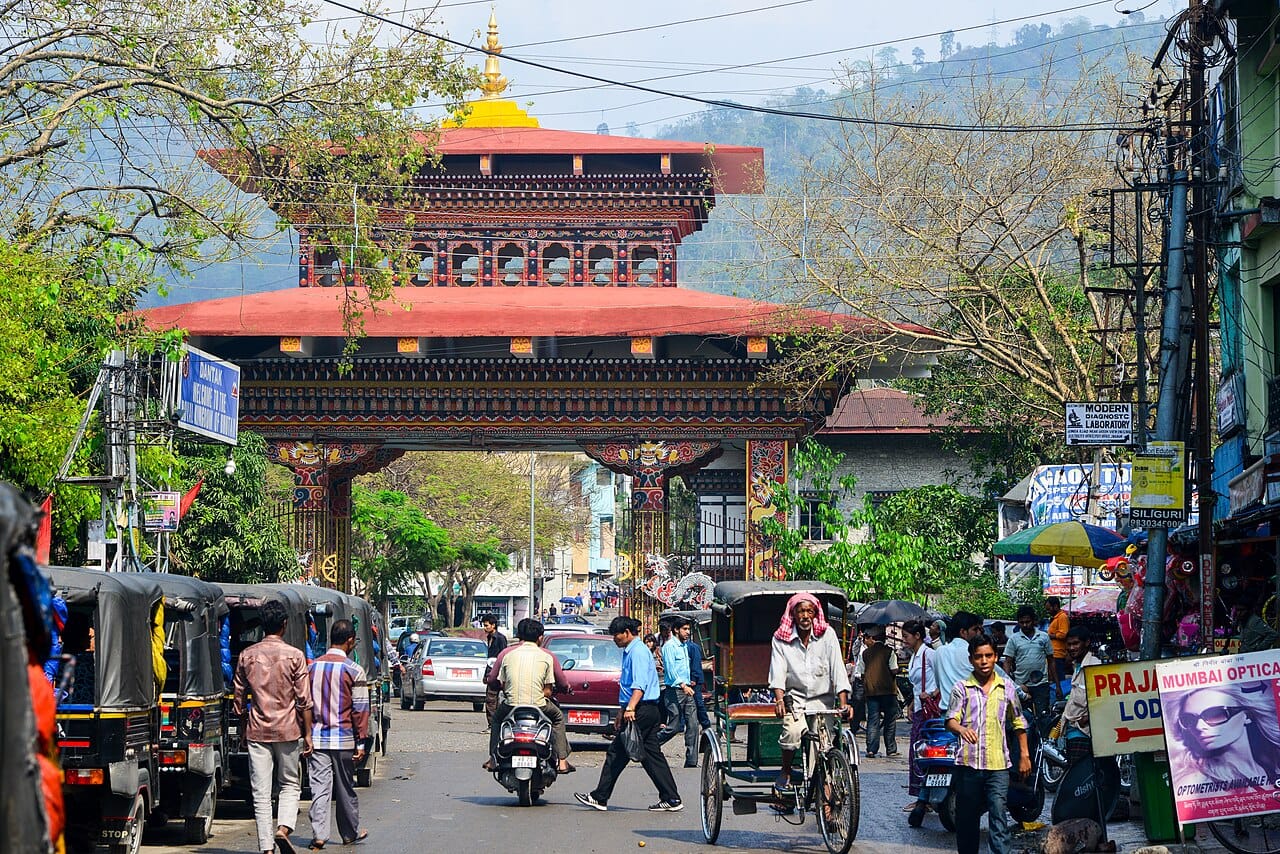

In Thimphu this autumn, the entry data pack on Bhutan Telecom works out to about Nu 80 a gigabyte (~USD 0.90). A few hundred metres across the Jaigaon gate, the same gigabyte on an Indian network costs roughly six rupees — about seven US cents. No mountain explains that gap, and no hidden villain is needed to explain it either: the telecom regulator's own costing study, reported by The Bhutanese in August, found that delivering a gigabyte costs Bhutan Telecom between Nu 36 and Nu 46, while the effective price customers pay is about Nu 76. The government promised in Parliament, in July 2024, to cut data prices by half. Twenty-seven months on, the promise is still a promise, and the gigabyte still costs what the only two sellers say it costs.
We are the BhutanWiki Editorial Team — Bhutanese in Thimphu, in Phuentsholing, and in cities some of us did not choose. The encyclopedia we write is neutral and cited to the decimal. This page is where we say what the citations add up to.
The free half of the ledger
Bhutanese are used to a different arithmetic, and it is real. Healthcare is free at the point of care. School is free. A rural household's first 100 units of electricity are free, and the units after that cost Nu 1.28 to 2.66 (~USD 0.01–0.03) against a cost-reflective rate of Nu 5.63 — among the cheapest power in Asia, because the rivers are ours. Fuel at the pump was subsidised by Nu 2.17 billion (~USD 25 million) this year. A Bhutanese flying Paro to Bumthang pays Nu 5,899 (~USD 67) for a seat a tourist buys for USD 204. None of this is small, and nothing in this piece asks for any of it to end.
Here is the stranger fact: parts of the shop shelf are cheap too. Petrol in Thimphu costs less than in Delhi. A smartphone costs less here than in India — so much less that phones bought tax-free in Bhutan were being carried back across the border, over Nu 2.7 billion (~USD 31 million) of them imported in a single year. And when the government's own competition authority priced 91 products in Phuentsholing against Jaigaon this spring, it found electronics six per cent cheaper on our side of the gate.
So Bhutan is expensive selectively, and the selection is the story. Where any trader may import and any shop may undercut, prices sit at or below Indian levels. The dear categories are the captive ones: eggs that only one state company may legally import, sand that only one state company may dig, meat sold through a vendors' association that fixed its prices, data sold by two operators at identical price points, cars sold through one franchise per brand. The state that gives so generously with one hand runs, with the other, some of the most expensive counters in South Asia — and its own referee has been saying so all year.
What the referee found
Take the tray of eggs: Nu 560 to 600 (~USD 6.4–6.8) in Thimphu this October, the highest price in the region, up 11.6 per cent in the first quarter alone, roughly double what it cost a few years ago. The Competition and Consumer Affairs Authority — the government's own watchdog — has already published why: the state-owned Food Corporation's position as sole legal importer, and the ban on private egg imports. When the state's referee names the state's company as the reason a staple costs double, the debate about whether captive supply costs Bhutanese money is finished. What remains is the question of why the whistle changed nothing.
The referee has blown that whistle all year, in its own published words. Taxes on pork, chicken and noodles were cut by fifteen percentage points in January, and retail prices fell by about one per cent; CCAA found the savings "retained by supply chain intermediaries". A cooking oil carrying five per cent GST rose fourteen per cent — a "possible market power issue", in CCAA's phrase. Doma source prices in Jaigaon fell twenty to thirty per cent this May while the Thimphu retail price fell four, which the authority put down to "retailer pricing power". In Thimphu's meat market, it documented a vendors' association — over ninety per cent of vendors were members — fixing prices while frozen beef imported at about Nu 200 a kilo (~USD 2.27) sold for more than double. In construction, it states plainly that NRDCL "holds the monopoly on sand extraction and distribution": the regulated price of a truckload was Nu 12,880 (~USD 146), and Thimphu builders paid Nu 30,000 to 45,000 (~USD 341–511). Every one of these findings sits on the public record under the government's own letterhead, most with a recommendation to investigate. The prices, so far, have outlived the reports.
Data is the same story with better documentation. On the most recent worldwide price survey, Bhutan's mobile data was the most expensive in South Asia — dearer than Nepal's, triple Bangladesh's, more than four times India's. Bhutan Telecom and TashiCell sell identical data volumes at five identical price points, which customers may describe however they like. The regulator's cost study now sits on the record beside an undelivered price-cut pledge, which together mean nobody can plead ignorance: the gap is known, measured, promised against — and still billed monthly.
The showroom experiment
Cars built in India enter Bhutan without a rupee of customs duty, which makes the showroom a clean experiment: tax cannot hide the rest. A Maruti Alto K10 retails here at Nu 713,893 (~USD 8,100). Taxes account for 30 per cent of that price, and roughly a quarter of it is explained by nothing on the public record. The experiment ran itself in August, when a buyer imported a Toyota Hycross directly, paid Indian GST and every Bhutanese tax, and still spent about Nu 2.6 million (~USD 29,500) — less than the Nu 2.7 to 2.8 million (~USD 30,700–31,800) the authorised dealer charges. What followed: Indian dealers stopped selling to Bhutanese customers, and the dealer's price did not move. To be fair where fairness is due, the unexplained margins are no state speciality — private exclusive distributors for Indian brands carry them too. The common thread in the showroom, as at the egg counter and the sand quarry, is a seller nobody is allowed to undercut.
The sky tells it the same way, kilometre for kilometre: this week's fares put Paro–Kathmandu at about USD 0.81 per kilometre, against USD 0.31 on Kathmandu–Delhi, USD 0.19 on Los Angeles–San Francisco and USD 0.07 on Delhi–Mumbai. Some of that premium is genuinely Paro — a hard runway, few certified pilots, a thin market. The rest is structure: telecom in Bhutan is Bhutan Telecom and TashiCell, aviation is Drukair and Bhutan Airlines, and in both pairs one company belongs to the state while the other belongs to the same private conglomerate. Whatever that arrangement is called, competition is not the word.
The government's answer
Ministers have answered this argument, and their answer deserves quoting. The Industry Minister told Parliament in May that "exclusive distributorship arrangements in Bhutan's small market do not automatically amount to monopolies if substitute products remain available", and that "high prices alone do not constitute a legal offence". The Finance Minister, asked about dying border towns, said "Bhutan should not enter a race that we cannot win". Both points carry real weight. Bhutan is small, remote, and parked beside the most cut-throat retail market on earth, and some of our prices truly are geography — in Lunana a bag of rice can cost Nu 5,000 (~USD 57), because it arrives on a ten-day walk from Gasa. Nobody blames a monopolist for a mountain.
But the receipts in this editorial were collected an hour from the border, and the people have already voted on the ministers' theory, on foot. In the government's own survey, 95 per cent of Phuentsholing residents shop in Jaigaon; seven in ten go every week; nine in ten say the reason is price. A Thimphu resident gave Kuensel the household version in February: "For us, the problem is not the percentage, it's the daily spending." As for the minister's legal point — that high prices break no law — he is correct in the least comforting way available. We wrote in August about a constitution that orders the state, at Article 9(10), to prevent commercial monopolies, and about the statute that was never written to serve it. That bill — a draft Competition and Consumer Protection Bill — finally reached Cabinet this month. Eighteen years after the Constitution asked, the tool is one signature from Parliament.
What we want
Pass the Competition and Consumer Protection Bill this winter — whole. With an authority independent of the ministries that own the monopolies, investigation powers that reach the state's own companies first, and penalties that change behaviour. A bill that reaches Cabinet and dies there would be the data pledge all over again.
Open egg imports. The government's own authority has already written the justification. A staple at double the regional price, traced by the state's referee to the state's sole importer, is not a finding that needs further study. It needs a decision.
Act on the referee's files. CCAA has recommended investigations into the pass-through failures on pork, chicken, noodles and cooking oil, and documented the sand gap and the doma margin. Open the investigations, publish the outcomes, and let the next report say what changed instead of what persists.
Deliver the 2024 data pledge with a date on it. The regulator has published what a gigabyte costs. The Cabinet has held the company's counter-offers for two years. Every month of silence shows up on every phone bill in the country.
Publish the costing study behind every administered price. Eggs, sand, data, fuel, fares. Citizens who are told a price is fair are entitled to see the arithmetic before the only seller names the number.
The direction, credit where due, has turned: the January tax reform cut car prices, some 690 direct vehicle imports were approved this year, Starlink holds an ISP licence, a third telecom operator has been floated, a SAARC airfare tier is back. Each of these is the government conceding, in deed, that the old arrangement overcharged its citizens — and every month the rest of the arrangement survives is a decision, renewed monthly, about whose money it runs on.
We write the encyclopedia with the opinions left out. This is the page where they go. A country rightly proud of what it gives its people for free can afford to be honest about what it charges them for everything else.
Reply, debate, push back
This is an opinion piece, not a neutral encyclopedia article. We have published our argument; now it is your turn. Agree, disagree, correct us, share your own experience. The discussion page is for you.