.jpg)
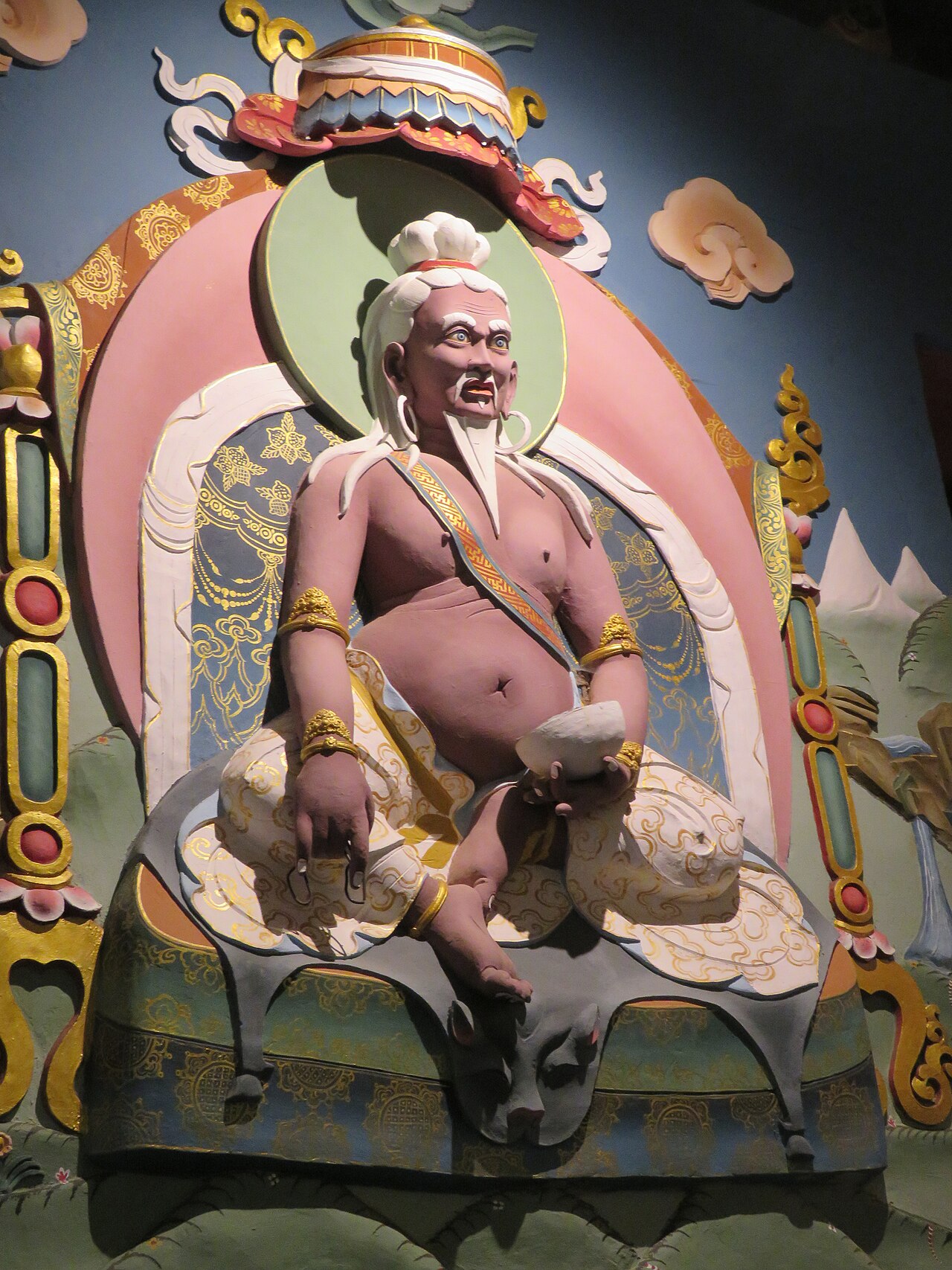
Thangtong Gyalpo (Tibetan: ཐང་སྟོང་རྒྱལ་པོ; 1385–1464 CE), also known as Chakzampa ("Iron Bridge Builder"), was a Tibetan Buddhist mahasiddha, physician, blacksmith, architect, and pioneering civil engineer. He is revered across the Himalayan Buddhist world for constructing iron chain suspension bridges that connected communities separated by treacherous rivers and gorges throughout Tibet and Bhutan. Beyond engineering, he is credited with founding the Ache Lhamo tradition of Tibetan opera, making him one of the most multifaceted figures in Himalayan cultural history.[1]
Born at Ölpa Lhartse in upper Tsang (modern Ngamring County, Tibet), Thangtong Gyalpo demonstrated extraordinary abilities from a young age. He became a Chöd master and tantric yogi, travelling extensively across the Himalayan region. His biographers describe him as an unconventional figure—part mystic, part inventor—whose spiritual realisations were inseparable from his practical contributions to society. Traditional accounts suggest he lived to the remarkable age of 125, though modern historians treat this claim with caution.[2]
Iron Chain Bridges
Thangtong Gyalpo's most celebrated achievement is the construction of iron chain suspension bridges. According to various historical accounts, he built between 58 and 108 such bridges across Tibet and Bhutan, along with numerous ferry crossings. Eight suspension bridges in Bhutan are specifically credited to him. His motivation was compassionate: after being refused passage on a ferry, he resolved to build bridges so that pilgrims and travellers could cross dangerous rivers safely and freely.[3]
He developed his own methods of smelting iron, reportedly even melting down needles donated by villagers to forge the enormous chain links. The chains he produced were of such quality that some have survived over five centuries without significant corrosion. His engineering innovations were centuries ahead of their time—iron chain suspension bridges did not appear in Europe until the sixteenth century, well after Thangtong Gyalpo had perfected the technology in the Himalayas.[4]
Arrival in Bhutan
Thangtong Gyalpo first arrived in Bhutan in 1433, drawn by reports of rich iron ore deposits. While meditating along the Paro Chhu (Paro River), he reportedly experienced a vision of a spiritual horse that compelled him to build a temple at the site. This became Tamchog Lhakhang (also spelt Tachog or Tachogang), meaning "Temple of the Hill of the Excellent Horse." He also constructed the Tamchog Chakzam, an iron chain bridge spanning the Paro River to provide access to the temple.[5]
Tamchog Lhakhang, situated on the road between Paro and Thimphu, remains an active place of worship and pilgrimage. The temple preserves original iron chain links from Thangtong Gyalpo's bridges—visitors today cross a reconstructed bridge that incorporates some of these historic chains. The site is maintained by the builder's direct descendants, making it one of the few privately owned temples in Bhutan with an unbroken lineage of custodianship spanning nearly six centuries.[6]
Ache Lhamo: Tibetan Opera
In addition to his engineering achievements, Thangtong Gyalpo is recognised as the founder of Ache Lhamo (literally "Sister Goddess"), the traditional Tibetan opera form. He established a troupe of seven performing sisters who sang and danced to raise funds for his bridge-building projects. This troupe is considered the origin of all subsequent Ache Lhamo performance traditions, which combine narrative song, dance, and chant to enact stories from Buddhist scripture and Tibetan folklore. The tradition spread across the Tibetan cultural sphere and remains a living performing art in Tibet, Bhutan, and the Tibetan diaspora.[7]
Other Contributions
Thangtong Gyalpo's legacy extends further still. He designed and built several large stupas of unusual form, including the great Kumbum at Chung Riwoche in Tibet. He established Gonchen Monastery in Derge and composed numerous spiritual texts and songs. As a physician, he is credited with developing medicinal formulas still referenced in traditional Tibetan medicine. His extraordinary range of accomplishments has led scholars to describe him as a Himalayan "Renaissance man," a figure whose spiritual practice, artistic creativity, and technical innovation were wholly integrated.[8]
Legacy
In Bhutan, Thangtong Gyalpo is venerated as a saint and cultural hero. His image appears in temples across the country, typically depicted as a white-bearded figure holding a length of iron chain. The annual celebration at Tamchog Lhakhang draws devotثes from across the kingdom. His dual legacy as both spiritual master and practical benefactor embodies a distinctly Himalayan ideal: that the highest religious attainment manifests not in withdrawal from the world, but in compassionate action within it.
See also
References
- "Thang Tong Gyalpo." Wikipedia.
- Stearns, Cyrus. "Tangtong Gyalpo: A Guide for Readers." Shambhala Publications.
- "Thangtong Gyalpo is more than just a legendary iron bridge builder." Daily Bhutan.
- "Thang Tong Gyalpo — Iron Chain Bridges." Wikipedia.
- "Tamchog Lhakhang at Paro." Tour Bhutan.
- "Tachogang Lhakhang." Druk Asia.
- "Thang Tong Gyalpo — Ache Lhamo." Wikipedia.
- "Thangtong Gyalpo." Khyentse Foundation.
Related articles
Know something about this topic? Edit this article or . Anonymous contributions welcome — no account required.