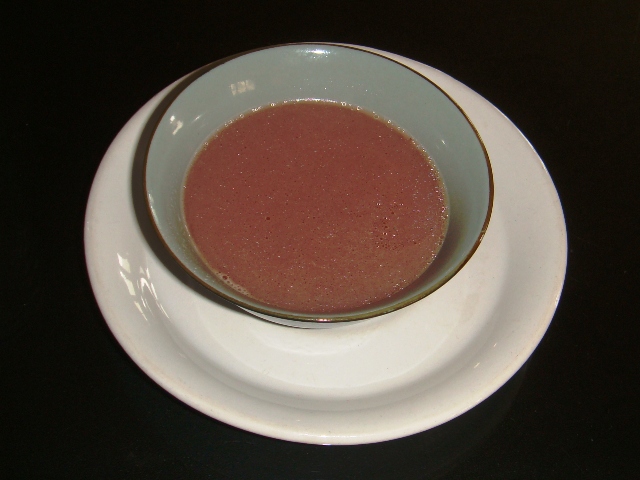

Suja (Dzongkha: སུ་ཇ, literally "churned tea") is the traditional butter tea of Bhutan, prepared by vigorously churning brewed tea leaves with yak butter and salt to produce a rich, savory, slightly oily beverage with a consistency closer to broth than to tea as understood in Western traditions. Suja is consumed throughout the day by Bhutanese people of all social classes and is offered to every guest who enters a Bhutanese home, making it one of the most important markers of Bhutanese hospitality and cultural identity.[1]
The beverage is closely related to the po cha of Tibet and the butter teas consumed across the Himalayan region, from Ladakh to Nepal's Sherpa communities. In Bhutan, suja occupies a position of particular cultural significance: it is served at religious ceremonies, offered to monks and lamas, presented to guests as a sign of respect, and consumed as a daily source of calories, fat, and warmth in a country where high altitudes and cold winters make a calorie-dense hot beverage essential.[2]
While modern Bhutan has seen the introduction of Indian-style sweet milk tea (ngaja) as an alternative, suja remains the ceremonial and traditional beverage of choice, particularly in rural areas, monasteries, and formal occasions. Declining suja consumption among younger, urban Bhutanese has prompted cultural commentators to describe it as a tradition worth preserving.
Preparation
Traditional suja preparation is a multi-step process. Tea leaves — typically a strong, brick-pressed variety imported from India or China — are boiled in water for several hours to produce a dark, concentrated brew. The tea is then strained and transferred to a jachung, a tall, narrow wooden churn (also called a dongmo in Tibetan contexts). Generous portions of yak butter and salt are added, and the mixture is churned vigorously with a plunger until fully emulsified.[3]
The churning process is essential: it breaks down the fat globules in the butter, distributing them evenly through the tea and creating a smooth, creamy texture. Without adequate churning, the butter floats on the surface in unappetizing pools. A well-made suja should be a uniform, opaque, pale pinkish-tan liquid with a velvety mouthfeel.
In contemporary Bhutanese households, the wooden churn has often been replaced by an electric blender, which achieves the same emulsification more quickly. Some families use commercially available butter or margarine in place of yak butter, particularly in urban areas where yak butter is expensive or difficult to obtain. However, purists insist that authentic suja requires yak butter for its distinctive flavour — slightly tangy, with an earthy richness that dairy butter from lowland cattle cannot replicate.
Ingredients and Variations
The core ingredients of suja are tea, yak butter, salt, and water. The proportions vary by household and region, but a typical ratio involves one tablespoon of butter and half a teaspoon of salt per cup of strong tea. In some regions, a small amount of soda (sodium bicarbonate) is added to deepen the colour and soften the brew.
Several regional variations exist across Bhutan:
- Ja nai — a lighter version with less butter, common in warmer seasons
- Ngaja — sweet milk tea made with sugar, powdered milk, and Indian-style tea leaves, which has become widely popular in urban areas as an alternative to suja
- Ara-blended suja — in some rural communities, a small amount of ara (traditional spirit) is added to suja for warmth during the coldest months
Nutritional and Physiological Role
Suja is a high-calorie beverage, with a single cup containing approximately 100-150 calories depending on the amount of butter used. In the high-altitude environment of Bhutan, where temperatures can drop well below freezing in winter and physical labor is demanding, suja serves as an efficient delivery system for fat, calories, and hydration. The salt helps maintain electrolyte balance, while the caffeine from the tea provides stimulation.[4]
Butter tea has been identified by nutritional anthropologists as an adaptive dietary practice in high-altitude Himalayan populations. The high fat content provides sustained energy in cold environments, the salt compensates for electrolyte loss at altitude, and the hot liquid aids in maintaining core body temperature. Bhutanese who perform physical labor — farmers, herders, construction workers — may consume six or more cups per day.
Cultural Significance
Suja is inseparable from Bhutanese hospitality. When a guest arrives at a Bhutanese home, the first act of welcome is to offer a cup of suja, often accompanied by zow (puffed rice) or biscuits. Refusing the first offering is considered polite (and the host will insist), but refusing entirely is a social offense. Guests are expected to accept at least one cup, and a good host will refill the cup repeatedly.[5]
In Buddhist monasteries, suja is served during prayer sessions, religious teachings, and communal meals. Monks may consume suja as their primary beverage, and large quantities are prepared in monastery kitchens for distribution during festivals and ceremonies. The act of preparing and serving suja in a monastic context is considered a form of merit-making, an offering of sustenance to the spiritual community.
During tsechus (religious festivals), weddings, funerals, and other communal gatherings, suja is prepared in large vats and served to all attendees. The beverage functions as a social lubricant, a symbol of communal solidarity, and a practical means of feeding large groups of people efficiently.
Suja in Modern Bhutan
The spread of Indian-style sweet milk tea (ngaja) and Western coffee culture has led to a decline in daily suja consumption, particularly among younger Bhutanese in Thimphu and other urban centres. Coffee shops have proliferated in the capital since the 2010s, and many young Bhutanese now prefer ngaja or coffee to the savory, buttery taste of suja.
This shift has prompted concern among cultural preservationists and older Bhutanese. Suja advocates argue that the beverage is not merely a drink but a repository of Bhutanese identity — a link to the pastoral, Buddhist way of life that distinguishes Bhutan from its neighbours. Some schools and cultural organizations have organized suja-making workshops and competitions to encourage younger generations to maintain the tradition.
Despite urban trends, suja remains ubiquitous in rural Bhutan, in monasteries, and at all formal and ceremonial occasions. It is likely to retain its cultural primacy for decades to come, even as everyday consumption patterns shift.
References
Related articles
Know something about this topic? Edit this article or . Anonymous contributions welcome — no account required.